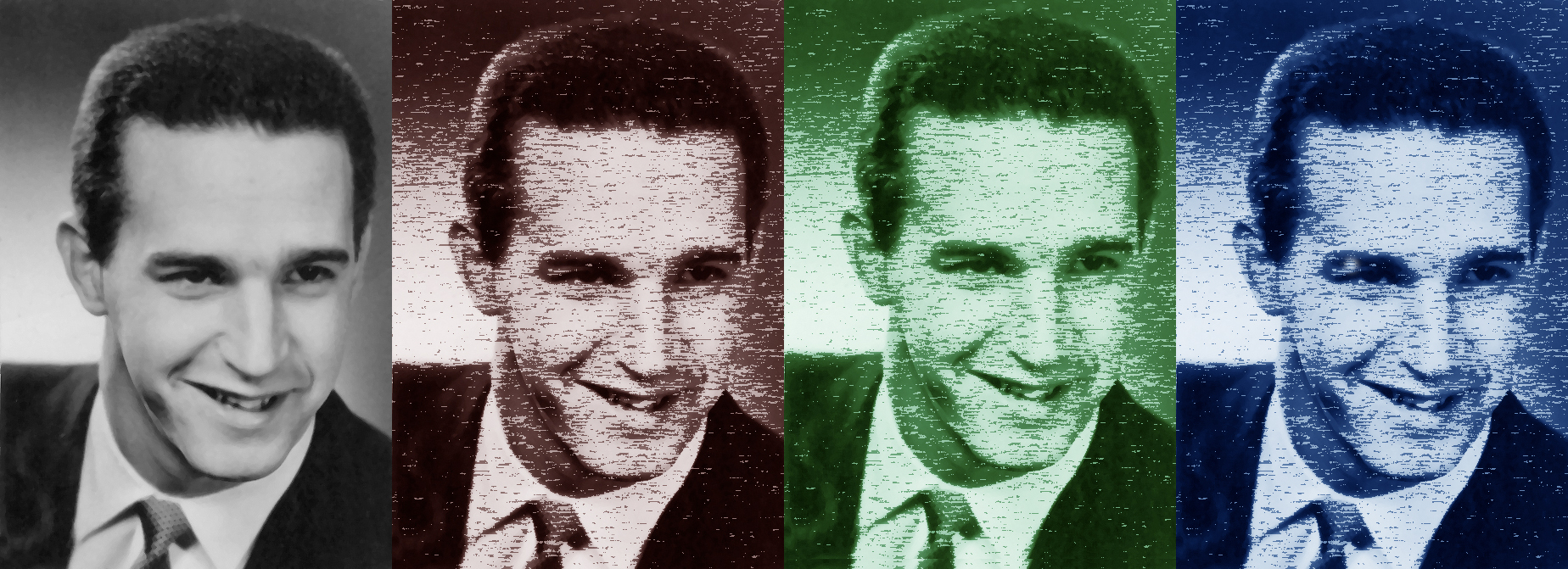
The better acquainted I become with Ronald Tammen and the person he was, the more inclined I am to doubt that he would have been thrilled about his crammed schedule on the Sunday of his disappearance. Why do I think this? Having spent my entire life as an introvert, I think I’ve become pretty adept at spotting one, and, deep down, I can’t help but believe that Ronald Tammen was an introvert too.
Ronald Tammen seemed to spend a lot of time on his own. The vast majority of people I’ve spoken with couldn’t associate him with a best friend or group of friends, which would make him particularly private. Yes, he was a joiner of organizations. Yes, he was busy. But those activities had an end purpose—to build up his résumé or to bulk up his bank account. Adjectives I’ve heard to describe him include serious, studious, and polite. Does that sound like someone who was the life of every party?
Introverts are listeners. We’re planners. We need time alone to recharge. Days with wide-open blocks of time are what we crave; days packed with people, meetings, and spur-of-the-moment demands drain us to the core. Ronald Tammen and I aren’t identical—he was far more entrepreneurial—but I think it’s a safe bet that when Ronald Tammen woke up that morning, knowing all the obligations that lay before him along with the impromptu interactions that would soon be carving into his Sunday, he would have let out a sigh. But Ronald Tammen was also irrepressibly responsible. He got out of bed and set his momentous day into motion.
Here’s a key takeaway about introverts: we make promises to ourselves all the time. If faced with a morning of meetings, we might treat ourselves to some reading or a walk at lunch. If we spend a day with swarms of people, that evening will be devoted to me time. These are the sorts of compensation techniques that help us succeed in life. If Ron Tammen did all of the things that people are claiming he did that Sunday, when did he finally wind down? Did he decide at the end of a long, hard day that now would be an excellent opportunity to upend his life, leaving his car, string bass, and everyone he knew behind? No reasonable introvert would do that. An introvert would at least wait until the next day, after a night’s rest. I’ll go out on a limb here: I don’t think Ronald Tammen knew when he got out of bed that morning that he would soon be walking away from his life. In one crucial moment, the young man who loved to plan may have left the planning to someone else.
In the last post, we discussed how busy Ronald Tammen was on his final official day on the grid. Our big revelation was that, in the morning and early afternoon of April 19, 1953, Ron was allegedly in Cincinnati making three 78 records—six recordings in all—with the Campus Owls for their competition entry for DownBeat magazine.
So King Records now takes the #1 spot in Ron’s itinerary for that day. Before I make the next reveal, here’s a brief synopsis of what we know (or think we know) about his actions from that point on:
With this timeline in mind, we now have one more impromptu brush with Ronald Tammen that supposedly happened on April 19. This information comes to us by way of a former resident of Fisher Hall—let’s call him Hal—who lived on the third floor. Although I haven’t yet been able to corroborate his story with anyone else, I wanted to share it because it’s so compelling and because Hal is so confident that it happened. (Several of Ronald Tammen’s family members have reviewed this post in advance, and I’ve included a couple observations from one of them below, where applicable.)
From the Fisher Hall resident: Ron was in Fisher Hall’s third-floor bathroom when he got into a fight with his younger brother Richard.
To say that Hal is an extrovert is an understatement. Hal was known as the guy who had his finger on the pulse of Fisher Hall. He pretty much knew everyone in the dorm, in addition to what the day-to-day goings-on were as well as what was churning in the rumor mill. Today, he’s a retired businessman who has enjoyed great success in the construction field, but back in 1953, he was the ringleader of a group of guys who would play hearts from early evening until well into the night. When they weren’t playing cards, they occasionally broke rules and ignored boundaries, but only in a harmless sort of way. If they got hungry, they’d been known to try to sneak food from the kitchen. If they wondered where an unmarked door might lead, they’d open it and go exploring.
Hal explained to me that on the evening that Ronald Tammen disappeared, he and some of the guys had been playing cards in one of the rooms on the third floor. And then, ever so nonchalantly, he dropped this little bombshell:
“Now the two Tammen brothers fought in the bathroom. And both of them were husky guys, not big, but quite husky…and that night they had a real bang-up in the third-floor bathroom.”
Upon reflection, Hal isn’t exactly sure what time the fight happened and he has no idea why it happened. He wasn’t there. He’d only heard about the fight after the fact. He also isn’t sure if there had been yelling or fists flying—just that the Tammens were in a fight, and someone broke it up. It wasn’t the first time that Ron and Richard had fought, he said, though it wasn’t out of the ordinary for fights to break out in the dorm either, usually between roommates. He just recalls hearing that Ron and Richard Tammen had fought in the third-floor bathroom sometime on the day Ron disappeared. (A Tammen family member questions the description of the brothers as husky, noting that they were slim to medium in build.)
Why Ron and Richard would be on the third floor of Fisher Hall at all is anyone’s guess, since Ron’s room was on the second floor and Richard, who was a freshman that year, lived in nearby Symmes Hall. When I asked Hal that question, he said that Ron often took showers on the third floor. (To find out why Ron did that, I suppose we’d have to ask him directly. Maybe it was so he could have some privacy and a little distance from the freshman guys he oversaw. Maybe the water pressure was better. Alas, we’ll never know.)
Hal’s hypothesis is that something terrible must have happened in relation to that fight. He imagines a scenario in which a second fight broke out, things got out of hand, and Ron died somehow—by accident. He pictures Richard carrying Ron’s body up a ladder to the attic and putting him in one of the large cisterns that Hal had discovered during one of his clandestine expeditions around Fisher Hall. Hal says that he spoke with the Oxford police about it, encouraging them to search the attic, but they had little regard for what he had to say and, at least to his knowledge, no one followed up. (The same Tammen family member finds it difficult to believe that Richard would have been able to carry Ron up a ladder to the attic, since Richard was smaller than Ron. Although they were both roughly 5’9″ in height, Richard was probably no more than 150 pounds in comparison to Ron’s 175 pounds at the time of his disappearance.)
Click on image to enlarge. A page from Dean Carl Knox’s notes showing Ronald Tammen’s height and weight at the time of his disappearance.
Hal also recalls Chuck Findlay, Ron’s roommate, interrupting their card game the night of Ron’s disappearance and asking the group if anyone had seen Ron. Hal says that he and several others took it upon themselves to check the rooms of everyone in Fisher Hall, to no avail. They also supposedly checked the entrances to the dorm to see if there were any tracks in the snow. It was the absence of footprints that signaled to Hal that Ron had never left the dorm. (Although Hal’s sleuthing instincts were excellent, I’m not sure they were infallible considering the amount of snow that had reportedly fallen that day. According to the National Oceanic and Atmospheric Administration (NOAA), the snowfall appears to have been between .01 and .04 inches per hour for most of the afternoon and early evening for Dayton and Cincinnati, and continued at that level in the early afternoon of April 20. This would be consistent with news accounts that described the weather as chilly with snow flurries. In short, the snow may have been sticking, but it probably hadn’t accumulated very much.)
Click on image to enlarge. Hourly precipitation (HPCP) for April 19-20, 1953, in Cincinnati and Dayton, Ohio, region. Source: NOAA National Climatic Data Center.
Hal isn’t the first person to suspect Richard. In contrast to his likable older brother, Richard could be a hothead and a bully. John, the oldest Tammen brother, credited Richard’s teachers with bringing out the mean in him by continuously smacking his dominant left hand in school. Some have wondered if Richard might have done something terrible to Ron in true biblical, Cain v. Abel fashion.
I think we should take a few steps back, however. We don’t know what the argument was about. But we might be able to piece a few things together, assuming, again, that it indeed happened:
By taking place in Fisher Hall’s third-floor bathroom, it’s pretty clear who the aggressor would have been. Something could have set Richard off, and he came to find his brother to have it out with him.
According to Ken McDiffett, the former head resident of nearby Collins Hall who had conducted his own research into the Tammen disappearance, Ronald and Richard supposedly spoke by phone at 8 p.m. That phone call probably had something to do with whatever they were arguing about, irrespective of whether the call took place before or after the fight.
If the fight took place after the 8 p.m. phone call, then Hal and his guys would have likely heard the commotion while they were playing cards, since the two bathrooms, which were located across the hall from one another, were nearby.
If Ron was in the third-floor bathroom to take a shower, he probably did so at the same time he was seen walking around in a towel. That would put the fight sometime within our 4-7 p.m. window, which is my guess regarding when the fight occurred.
As Hal said, the argument in the bathroom didn’t last. Someone broke things up. What’s more, according to Paul, the Delt, Ron attended song practice at around 9 p.m., which means that there would have been a cooling-off period. If the fight had resumed, it would have had to occur sometime after 10:30 p.m., when Ron returned from song practice. And if so, the altercation likely wouldn’t have taken place inside Fisher Hall, since more people would have heard it at that hour. Even if Ron didn’t attend song practice, any possible rematch sometime after 8 p.m. would have had to occur outside, again, because too many people would have noticed it inside Fisher Hall. This makes the cistern theory less plausible.
Richard’s behavior after his brother disappeared was all over the map—from reticence to defensiveness to panic. Robert Tammen, the youngest of the Tammen siblings, doesn’t remember Richard ever talking about Ron’s disappearance when he was home on break. A former dorm counselor said that, when he asked Richard if he knew where Ron might be, Richard’s demeanor turned sour, and he said something like, “I’m not my brother’s keeper.” Paul, the Delt, remembers Richard bursting into the fraternity house living room the Saturday after Ron went missing, when a group was watching a baseball game, and asking if anyone had seen his brother. Of course, if Richard had spoken with his brother the day of his disappearance, either by phone or in person, he remained tight-lipped about it when speaking with news reporters. (He’s on record as having last seen Ron at around 11 or 11:30 p.m., Saturday, April 18.) Any of those behaviors could be interpreted in a number of ways, some of which might arouse suspicions about Richard.
Two of Richard’s actions have led me to see things differently, however. First, news accounts had reported that Richard didn’t believe Mrs. Spivey’s claims that Ron had showed up on her doorstep in Seven Mile later that night because Richard had found some discrepancies in her story. If he had put his brother in the attic, or anywhere else, wouldn’t it have been to his advantage to go along with whatever Mrs. Spivey said, to throw people off the trail? Also, many years afterward, when the university had been publishing articles around Halloween that portrayed the Tammen case as a ghost story, Richard contacted Miami’s news bureau to ask them to stop. He didn’t want his brother remembered in that way. Those don’t sound like the actions of a guilty person to me.
I would give anything to talk with Richard, because, in my mind, what took place in that third-floor bathroom might not have begun as a fight at all. Perhaps Richard was pleading—loudly, aggressively—with Ron not to do something that Ron was determined to do, even to the point of throwing some punches at him. Angst and anger can look the same to a casual observer. Unfortunately, in October 2004, Richard died of carbon monoxide poisoning in an apartment fire that was ruled accidental, with the probable cause being “the careless use of smoking materials.”
Did Richard do something drastic? I don’t think so—even though I know he was no angel. I’m not the only person who has come to that conclusion either. The FBI has no records on Richard, and people familiar with the inner workings of the Oxford PD and university investigations have told me that they never heard his name mentioned as a suspect. The cold case detective from the 2008 Butler County Sheriff’s Department investigation also didn’t consider him a suspect.
Did Richard know something about Ron’s whereabouts that he would take to his grave? That’s a possibility I haven’t ruled out.
I think by now we’re well aware that Ronald Tammen was a busy person. In addition to his status as a full-time student at Miami, he counseled a corridor full of freshman men in Fisher Hall, he was fairly active with his fraternity, and he played the string bass with the Campus Owls, a commitment that could usurp entire weekends, many times in other towns and states. So, yes, busy he was. But on Sunday, April 19, Ron Tammen was busy to the extreme. In fact, over the past several weeks, I’ve been hearing personal stories from his former acquaintances that, if true, rendered Ron Tammen’s schedule nearly as booked-solid as Scarlett O’Hara’s dance card.
First this caveat: the new revelations that I’ll be presenting in the next two posts were told to me by two men: the first a former Campus Owl and the second a former resident of Fisher Hall. Both people are energetic, lucid, and articulate, and both feel confident in their memories. Nevertheless, at least for now, they alone are my sources.
From the Owl: Ron Tammen was recording at King Records in Cincinnati the day he disappeared.
One thing that I always found curious about the timeline that emerged from previous investigations was that no one on campus seemed to have interacted with Ron Tammen on April 19 before 3 p.m., which, according to Dean Carl Knox’s notes, is when someone supposedly first spotted Ron in his room studying psychology. (How the spotter surmised that Tammen was studying psychology at that hour isn’t clear.) That’s now changed. A retired minister, who in his wilder days played the trombone with the Campus Owls, told me that on the day that Ron Tammen disappeared, the band had spent the morning and afternoon at King Records in Cincinnati making three 78 RPM records—one song per side, six recordings in all. They recorded them as part of a contest submission to DownBeat magazine, a legendary publication still in existence that got its start covering big bands and jazz.
The competition was for the title of best college dance band for that year. The songs the Campus Owls chose to record were: Almost Like Being in Love, Squeeze Me, Deep Purple, Darn That Dream, Taking a Chance on Love, and Celestial Blues, a Woody Herman classic featuring an instrument called the celeste, which looks like a piano, but sounds like bells ringing.
“He was there,” the Owl told me. “In fact, after he disappeared, I’ve listened many, many times to the recordings that we made, and there are a few places where I can hear the bass playing, and I’d say, ‘Well, even though he’s not around, I can still hear him playing.’” (Hopefully, the recordings will be accessible from this website at a future date, however, some hurdles need to be jumped before that can happen.)
Learn more about the history of King Records at WVXU.
“He was what we called a utility musician,” the Owl said of his past band mate. “In other words, he was not really a soloist, a virtuoso, but he was the kind of person that you could bring in the band because he was reliable, he was steady, he wasn’t a show-off, and he fit in, and he really supported everybody else. We had some prima donnas in the group that really were specialists, but he was just a good, solid utility musician.”
There is one unknown regarding the above story: the time of return. At first, our Owl guesstimated that they arrived back in Oxford at about 5 or 6 p.m., however, that would conflict with Ron’s 3 p.m. study session. In a follow-up email, I asked him if they could have arrived a little earlier based on Dean Knox’s note, and he responded that it was possible.
“All I remember for certain is that we returned to Oxford in the afternoon. I remember that the sky was overcast, so looking back on that day I simply assumed it was late afternoon.”
For corroboration’s sake, it would have been a dream come true to have the recording date printed on the record labels, however, the labels are long gone from wear, tear, and an invasion of mold. Nevertheless, our Owl’s story still rings true, in my view. Not only does it explain why no one on campus had reported seeing Ron until late afternoon, it provides a good reason why Ron would have been talking about the Campus Owls in the dining hall that evening, as Ken McDiffett had told his wife. If he’d been with the Owls all day recording, of course he’d want to talk about their day.
According to the October 2, 1953, issue of the Miami Student, the winner of the DownBeat competition that year was a “West Coast college band,” while Indiana University’s Fred Dale Band took the number 2 spot, and the Campus Owls came in third. What the reporter neglected to mention was that one of the award-winning Owls, the solid utility musician on the bass, was the same person whose whereabouts were unknown to everyone concerned.
Coming next: Part 2, an argument in Fisher Hall’s 3rd-floor bathroom
Footnote: The Owl in this story lives in Houston, which, as you all know, has been deluged by Hurricane Harvey this week. For those who wish to help the city of Houston and other affected communities, here are some options.
Photo credit: Library of Congress, Prints & Photographs Division, FSA/OWI Collection, Reproduction number LC-USW3- 029978-E, LOT 820
Something I’ve discovered as I’ve been researching the Ronald Tammen disappearance is that there’s never a straightforward route to a solution. Scads of rabbit holes are lying in wait between point A and point Z, and the minute you start tunneling down one of them, there will invariably be an unrelated side burrow needing to be checked out. It’s kind of like driving from Cleveland to Cincinnati and getting caught up in every roundabout and cul-de-sac along the way. It’s a road trip, and road trips are generally awesome, but who really knows when we’ll be hitting I-275, let alone the Skyline Chili at 7th and Vine?
Case in point: For the past two weeks, I’d been placing calls and sending out emails to the former residents of Fisher Hall following up on our “woman from Hamilton” lead. The conversations have been captivating, and I’m amazed by the large number of octogenarians who are able to retrieve obscure college memories on demand. (Seriously, can you recall the name of your resident assistant from your freshman year of college or reel off the number of your dorm room or your class schedule? Some of these guys honestly can.) And then, during one such conversation, another side burrow came into view: a possible clue related to Ron’s blood type test.
Remember that story? On Wednesday, November 19, 1952—five months before he disappeared—Ronald Tammen had stepped into the office of Dr. Garret J. Boone, a family physician in Hamilton, Ohio, who also happened to be the county coroner. The reason for Ron’s visit was to have his blood typed, which seemed odd to Doc Boone. It was so odd, in fact, that, when he later realized that the young man was the same person who disappeared from Miami, he dug up Ron’s medical record and contacted university officials to see if the new information might help in their investigation. But the officials weren’t interested in what Doc Boone had to say. He was angry by the “brush-off” (his word choice) he’d received, and kept that potential lead to himself until 20 years later, in 1973, when he told Hamilton Journal-News reporter Joe Cella.
Doc Boone’s account left readers scratching their heads. Why a blood type test? It’s not exactly a high-priority medical procedure that warrants a full-fledged doctor’s visit. The two most obvious reasons for having one in those days were probably: a) to donate blood or b) to take a paternity test. (I’d originally thought that blood typing was required if a person wanted to get married, but most information sources state that, back then, the required pre-wedding blood test was for detecting sexually transmitted diseases and other health issues, as opposed to determining blood type.)
So what about a paternity test? A couple years ago, I spoke with a person at the DNA Diagnostics Center, a national paternity testing laboratory and affiliate of the American Pregnancy Association. Paternity tests in the 1950s were generally conducted six months after a baby was born, for the baby’s protection. Six months prior to November 19 would have been May 19, 1952, a ballpark guess for a potential baby’s birthday. Nine months before that date—roughly the time when the alleged baby would have been conceived—is August 1951, when Ron was fresh out of high school. Considering how rarely he dated back then, I’m sure Ron would have been free and clear of any worry that he’d fathered a child.
The second possibility is that he wanted to donate blood. In 1952, the American Red Cross was fairly new to its blood program. According to the organization’s timeline, its first national blood collection program began for the military during WWII and the first collection center for civilians was established in 1948 in Rochester, N.Y. The number of collection centers mushroomed to nearly 1600 the following year. But who would make a special trip—on a Wednesday—to a doctor 14 miles away to have his blood typed for the purpose of giving blood on a future date? Normally, if a person had blood donation on his mind, he’d walk into the collection center, they’d conduct a blood type test for him, free-of-charge, and he’d donate the blood then and there. Why visit a doctor in another town who was unknown to him and who certainly charged a fee? Or, as an alternative, why not get his blood typed at the student health center on campus, again likely for free?
According to the 1973 Hamilton Journal-News article, when Doc Boone asked Ron point-blank why he needed to have his blood typed, Ron responded, “I might have to give some blood one of these days,” which always sounded made up to me. If he really meant to give blood, there wouldn’t have been a “might” or “one of these days”—he would have said, “I want to donate blood.” (Granted, we’re working with a quote that was provided 20 years later from memory, so we can’t be sure of its accuracy, but Doc Boone obviously wasn’t very sold on Ron’s excuse either.) To me, that quote sounded way too secretive. Ron was up to something, I decided, and it had nothing to do with blood donation.
And then, last week, I talked to one of Ron’s fellow residents of Fisher Hall.
As I was asking my source, let’s call him Joe, about a possible woman from Hamilton, he said he hadn’t heard any rumor about her nor could he recall ever seeing Ron with a woman. But then he described one memory that did stand out: He remembered Ron asking him one day if he would accompany him to Dayton to a facility where people were paid to donate blood. (Although we can’t know with 100 percent certainty that the facility was operated by the Red Cross, it’s true that the organization sometimes paid donors during this time period.) Joe remembers being apprehensive about it, but Ron pretty much insisted that he join him.
“It was his nature to find something exciting to do,” said Joe. “If he got an idea to do something, he’d put it into effect.”
Joe needed the money for a pending night out with a girl, so he agreed to go along. He hitchhiked with Ron to Dayton—in the snow—and remembers quite clearly thinking, “This is crazy. This is nuts.” But he looked over at Ron, and Ron seemed fine with it. Joe said it was probably December when they made their trip, which would have been a month or so after Ron’s blood type test, though it could have been a little later.
I asked Joe if he needed to make a special trip to a doctor to have his blood typed beforehand, and he said, no, they probably took care of that at the collection center—either that, or he was already aware of his blood type. Joe was O positive, just like Ron.
Ron and Joe received $25 apiece for the pint of blood they’d each donated, and then they hitchhiked back to Oxford. It was the only time Joe had joined Ron for such an excursion. Other than their trip to Dayton, they had very little contact.
“He went his way and I went my way,” Joe said.
It’s important to understand how substantial $25 was back then. Twenty-five dollars in December 1952 was roughly the equivalent of $230 today, which isn’t chicken feed. In an old Honeymooners episode that first aired in the spring of 1956, Ralph Kramden considered putting his bus driver job in jeopardy and becoming a steam iron salesman for a prospective $40 a day. “Imagine that—$40 a day!” he said to Alice. Twenty-five dollars in one afternoon probably seemed just as huge to Ron Tammen. And compared to the amount Ron earned as a Campus Owl, which was also pretty good money, $25 was a tidy sum that only required that he lie down for a short while.
“I think we got paid about $12-15 for one gig,” one of Ron’s bandmates told me in an email. “One weekend I made $40 when we played three. That was a heck of a lot better than 35 cents an hour scraping dishes in a women’s dorm.”
When Ron first heard of this amazing moneymaking opportunity, he might have felt the need to have his ducks in a row before setting off for Dayton. It would be frustrating to show up at a blood bank more than 40 miles away only to be turned back because he didn’t know his blood type. Or, maybe the collection center only paid for a certain blood type, so he’d need to know if he was eligible before he made the trip. That still doesn’t explain why he chose to visit Doc Boone’s office, but not everything going on in a 19-year-old guy’s head back then is going to make perfect sense today. Who knows—maybe he happened to be in the neighborhood. Furthermore, maybe he chose to hitchhike with Joe to Dayton—in the snow, no less—as opposed to driving his own car so that none of his earnings would be wasted on gas.
By the early 1970s, the practice of paying blood donors became controversial as the opportunity to make good money in a physically undemanding way often drew people who were down on their luck and who were at high risk for diseases such as hepatitis. It was at this time that the American Red Cross switched over to a volunteer-only system.
Could it be that, in the end, Ron Tammen had told Doc Boone the truth—that he “might have to give some blood one of these days”?
The solution to this part of the Ronald Tammen puzzle may end up being just that obvious and that irrelevant to Tammen’s disappearance…and, in the words of Joe, also a little crazy and nuts.
Of all the movie genres that are out there, the one I adore most is the film noir. The shadowy lighting, the 1940s fashions, the witty repartee spoken in clipped sentences between drags on a smoldering cigarette, the monsoon-like levels of rainfall—such are the elements of a truly great mystery. But, perhaps above all, there’s the mysterious woman—the glamorous vixen who knocks on Humphrey Bogart’s office door late at night in need of a P.I., or the femme fatale who fixes Fred MacMurray a drink as the two plot out a new life insurance policy for her husband. Who is she? What’s her story?, we all think. I’d almost contend that no great mystery goes without one.
Well, hold onto your fedoras, Ron Tammen fans, because we have a mysterious woman too.
She sauntered her way into our saga back in 2010, when I was having a phone conversation with Ron Tammen’s freshman roommate. Tammen had resided in Fisher Hall both of his years at Miami—as a freshman and a sophomore—and, just as it was with Tammen’s sophomore roommate, his freshman roommate really didn’t have any stories to share about Tammen. He thought he was a nice guy, but that’s about it. And then he brought up her.
He remembered that Ron had told him that he was dating an older woman, although, to an 18-year-old guy, the term “older” could have meant anything—from someone in her early 20s to way up in her 30s even. She had a car. She wasn’t a student. She was from somewhere like Hamilton or Middletown, he said, and she would pick Ron up, and the two would drive off together. Some of the other Fisher Hall residents used to whisper about her, he told me. He didn’t recall her name, and in a more recent conversation, he said that he didn’t recall Ron ever mentioning her name to him. He’d never seen her before, so he couldn’t describe what she looked like.
While I found the revelation fascinating, I had no idea where to go with it. I couldn’t imagine that there would be any hard evidence I could seek in document form. The phrase “A woman from Hamilton or Middletown” is a tad too vague when searching a database or submitting a FOIA request. (Actually, I did try searching old newspapers to see if a woman from either of those towns might have gone missing at the same time that Ron did, in the event the two had run off together, but nothing turned up.)
I knew that what I was dealing with was the flimsiest form of evidence there is—hearsay—though that’s not to say that hearsay isn’t valuable. If I could find just one other person who remembered the same obscure details, then I’d be getting somewhere. I asked a few Delts and Fisher Hall residents if they’d ever seen or heard about Ron with an older woman, but that’s about all I could think to do.
After hearing so many “Nos” in reply, I began leaving that question off my list. It didn’t seem pertinent to where the story was heading. Besides, even if Ron Tammen was hanging out with an older woman during his freshman year, how would that relate to his disappearance during his sophomore year?
Then, just last month, I met with Ralph Smith (not his real name), the nearly 97-year-old man who’d been on the Oxford police force when Tammen disappeared. Ralph felt that there were two compelling clues in the case. One was public knowledge and one wasn’t.
The first clue, the one that had already been made public, had to do with the fish in Ron’s bed. To Ralph, that fish was the key to the mystery. He felt that Ron had been so startled and outraged by the fish that he confronted the culprit(s) and a fight ensued. He thought Ron was probably killed and thrown into the basement and never found. Ralph believes this theory so fervently that he wasn’t about to change his mind even after I told him who’d put the fish in Ron’s bed and why. It’s hard to abandon something we’ve believed in for so many years, I guess.
The second clue—the one that hadn’t made its way into public discourse (until now)—had to do with a woman.
Ralph mentioned her early in our conversation, when he told me that there was a report that someone had seen Ron “sitting in a car with a lady out front, and they drove off.” At first, I viewed his comment with skepticism, thinking that it sounded a lot like the hitchhiking reports that had been called in to the Oxford police shortly after Ron disappeared but that had been disproved. However, as he continued bringing up his two main talking points—the fish and the woman, the woman and the fish—I started taking his story more seriously. Here’s exchange number 2 (with light edits and extraneous conversation removed for readability):
RS: I thought, when they talked about him sitting in the car with some lady, I thought it might have been a lady friend or a girl that he liked or something. But why would he just drive off with her, unless she had so much money, that he’d leave his billfold, his contact with the bank?…
JW: OK, who saw him in a car with the lady? Do you remember?
RS: I don’t know. I think one of the fraternity members. I think that was made up…It’s possible that it did happen, but she lived in Hamilton, Ohio. I know that much.
JW: Do you know the name?
RS: No. No name was given.
JW: Was she older? Was she an older person?
RS: No, she was about the same age.
Later, with about 20 minutes left in our conversation, the topic of the woman in the car came up one more time, and I tried to extract any additional information about her that I could (again, transcript lightly edited for readability):
JW: When did you find out about the woman? Of him talking to a woman or sitting in a car?
RS: I think the next day or so.
JW: Somebody said that he saw Ron Tammen. In a car. With a woman.
RS: Yeah. And they never, they haven’t investigated the person. Nobody knows who the person was who said that, whether it was a fake deal to cover up for a cover-up or what. They definitely said that he was in a car. They saw him in a car about 45 minutes or close to an hour and all of a sudden they just drove off.
JW: And they drove off, but we don’t know what time.
RS: No. It was late. It was night, real late.
JW: OK, was this after the fish?
RS: After the fish deal. It was after the fish deal. After the episode with that…
JW: Interesting.
RS: So he had to go down, and either she called him, or he had called her. Why she came up there, that was never expressed. And she wasn’t investigated.
JW: But did they know her name at one point?
RS: They didn’t know her name. They just said she was a lady who drove up in a car and he got in, and they sit there and then all of the sudden they drove off.
JW: Do you remember what kind of car?
RS: There was no further investigation. Who the lady was or…
JW: OK, so Oscar Decker [the police chief in charge of the investigation] couldn’t act on it because there was no name.
RS: No names involved. The person that said it—they didn’t know the woman. And see, most…the only way, he might have been a fraternity brother or a resident of the same dorm, and she might have been at one of the parties that they had. That was the only way that she might have been known. Because, they all have their own woman at the party. You don’t have no two or three women.
JW: OK, and I don’t know what I would do with this, but do you remember what kind of car?
RS: No. It wasn’t even mentioned.
JW: A color of a car?
RS: The color of the car, nothing. The only thing that was mentioned was that somebody saw him in a car. They didn’t say if it was red, blue, or what or what kind of car, and they were sitting there and they saw them drive off. And no check was made on whether that was true or whether it was a make-up deal or some type of cover-up or whether it really happened and where she really lived. She wasn’t a student. She wasn’t a student. She was just a lady.
JW: From Hamilton? Do we know that for sure?
RS: From Hamilton, they said. They thought she was. So she might have been his connection for a party when he had…See, whenever fraternities on weekends, they all have parties.
JW: Right. And did this person who reported it…
RS: We have no idea who that person is and nobody has no idea who said it.
JW: Can I ask who they told? Did they talk to the university and you found out or did they tell the police? Who did the person who saw Ron in the car…
RS: None of that was ever mentioned.
JW: You don’t know who they told.
RS: No. That’s what I say.
JW: Nobody talked to the police.
RS: Word just got out that…
JW: Word got out.
RS: Yeah. Word just got out, just like, “yeah, I saw him in the car and they drove off.”
After my sit-down with Ralph, I touched base with Ron’s freshman roommate again to see if he could provide additional details about the older woman, but he couldn’t think of anything more to add. I’m currently following up with more Delts and Fisher Hall residents to see if anyone remembers seeing or hearing about Ron and a woman from Hamilton, either on the night in question or any other night. Of course, it still isn’t clear if the older woman is the same person as the woman from Hamilton or if there actually was a woman from Hamilton.
It could be something, or it could be nothing, but it’s another clue that was never investigated, which is something in and of itself.
A big thank you to the Miami University Alumni Association, which recently posted a link on its Facebook page that drew more than 1000 Miami alumni to this website.
If you’re a Miami alumnus who was there at the time and who recalls hearing something about Ron Tammen and a woman from Hamilton, I’d love to talk to you. Please write me through the contact form.
Ronald Tammen was born on July 23, 1933, which means that, if he’s still alive, he’d be 84 today. In celebration, I thought we’d steer clear of our usual topics of why and how he disappeared, and share a few stories that his friends and family members have told me—stories that, if Ron were still here, seated at a table with his cake aglow, would elicit that winning grin of his. Many articles have been written about Ronald Tammen over the years, yet very little information has been revealed concerning who Ron was as a human being. I hope the following stories, as told by the people who were fortunate enough to know him personally, will help.
P.S. These tapes were originally created for my own use, and not with the intent of playing them for the public. As a result, I apologize for my less-than-stellar interview style accompanied by the occasional clattering dishes, background voices, country-western tunes, wind gusts, etc. Needless to say, broadcast journalism was never my calling.
For accessibility purposes, a transcript is provided below each audio clip.
Ron Tammen’s prom date
Ronald Tammen’s date to the senior prom, a woman by the name of Grace, describes the qualities she liked best in Ron. (1:00)
A former Campus Owl discusses how good the band was when he and Ronald Tammen were members as well as some of the perks they enjoyed by playing in one of the best campus bands in the country. (2:23)
Ronald Tammen was a sophomore business major from near Cleveland who disappeared from Miami University, Oxford, Ohio, one snowy Sunday evening in April 1953. As the story goes, he was last seen near his room in Fisher Hall before he went missing. His roommate, who had been away for the weekend, returned later that evening to find the lights on, the radio playing, and a textbook open on Tammen’s desk. He’d left all of his possessions behind, including his wallet, his car, and the string bass he played in the campus dance band. For the past seven years, I’ve been investigating Tammen’s disappearance in an effort to shed new light on — and possibly even solve — the mystery of what happened to him. The following is one detour I took in the process.
___________________
The instant I saw the photos, I knew that I was in for a long slog with a new addiction. I’d already been searching for the boy—Ronald Tammen—for several years by that time, but now I would need to find the girl too. The two scenes, freeze-framed in black and white, had managed to survive one thrilling day that had come and gone ages ago—a day when stomachs fluttered and a pair of teens had adorned tux and gown with the weighty expectation of looking better than they’d ever looked in their young lives. A day when a mystery girl had accompanied Ronald Tammen to the 1951 Maple Heights High School prom.
Photo credit: Used with permission of Tammen family. Not for reproduction.
In the first shot, Ron and his date are faced forward, their eyes squinting into the sun. Her dress is white chiffon with a tiered bodice and simple jewel neckline. A similarly colored wrap hugs her neck and shoulders, bolero-style. Her corsage, an orchid, is enormous, bound to bother as the evening progresses. Her short hair is newly permed, the tight Lilt curls framing her face. (In cruel contrast, Ron’s hair glistens with product, an effort to tame his natural waves.) She is a dazzling girl next door, and anyone can see by her unprovoked smile that she’s been anticipating this moment for weeks. That smile might have been what had led Ron to ask her to the prom in the first place. She seems to be genuinely nice.
Ron is standing to the right of his date. Their shoulders are touching, possibly for the first time. He’s wearing a white jacket and shirt with a perfectly knotted black bow tie. A carnation pinned to his left lapel is the same deep shade of gray as the handkerchief peering out of his pocket—probably crimson in real life. He’s dashing without really trying. A half smile on his lips and a slight tilt of his head give him swagger. If someone had told me I was looking at a youthful Paul Newman before he made it big, I would have believed it.
It’s the second photo, the one snapped when neither of the pair is quite ready, that draws me in most. Ron’s sister Marcia, who would have been eight, is standing in front of Ron and smiling at the camera, an ornery, lopsided grin. Ron’s date is turned toward Ron, while Ron faces forward and is looking downward. His date’s smile has dimmed a little and she appears to be looking past Ron, perhaps in response to his expression, which is…what? It could be simple shyness or modesty, self-conscious embarrassment at the prospect of exchanging a glance with someone he doesn’t know very well. But there’s something else. Sadness? A pang of worry? His head is bowed as if he’s done something wrong.
Photo credit: Used with permission of Tammen family. Not for reproduction.
“Do you happen to remember her name?” I’d asked Marcia when she’d raised the topic of Ron’s senior prom with me one spring day in 2011. We were sitting in a Denny’s in Cleveland, our inaugural meeting. It would be two more years until I had the actual photos in my hand, but the subject had always intrigued me.
“Grace,” said Marcia. “But I couldn’t tell you her last name. She was one of the girls who lived down the street.”
“Was she in Ron’s class?” I asked.
“I don’t know. She could have gone to a parochial school for all I remember.”
It was a start. I’d already bought several Maple Heights High School yearbooks on eBay—covering Ron’s sophomore, junior, and senior years. Ron had even signed a couple of them—a big, loopy signature in perfect cursive. It would be easy enough for me to leaf through the pages of the 1951 issue, Ron’s senior year, stopping only at the Graces, and then asking Marcia to help me narrow the field to the one and only Grace to grace Ron’s arm at the prom.
Grace was an uncommon name back then, unlike the Carols, Jeans, and Peggys that populated the pages. Unfortunately, there wasn’t a single Grace in Ron’s senior class. There was one Grace in the junior class, a Grace P., and there appeared to be no Graces in the sophomore class either, though I barely looked at that section. The students seemed so young. You’d think that I would have tried to track down the lone Grace immediately, but I didn’t. In my mind, if Ron could have taken anyone to the prom, as so many of his friends had claimed, there really wasn’t any reason for him to look beyond his own age group. Or possibly, I had already locked onto what Marcia had said: that Grace may have attended a parochial school. Her comment had reminded me of a similar remark made by a former classmate of Ron’s when I’d asked her if she’d remembered Ron ever dating anyone.
“Not anyone from our school,” she’d told me. If there was a dance, Ron was the type of guy who would bring a girl from another school, she’d said.
A nearby Catholic school would certainly qualify as another school. But the possibilities were too wide open. I put Grace on the back burner and continued my main pursuit—trying to figure out what had happened to Ron.
In the spring of 2013, Marcia and I were catching up over coffee at a Wendy’s near her new hometown, a farm community in northeast Ohio. It was one of our usual rendezvous spots whenever I came to visit. As my list of discussion topics was winding down, she said that she’d been doing some digging in preparation for our meeting. She turned to a carryall bag and began pulling out some of her most cherished possessions. There were 8” X 10”s of Marcia and her four brothers—stunning high school senior portraits that, for as long as Marcia could remember, had been lined up on a bookcase in her parents’ home, the same place where Mr. Tammen used to put his hat at the end of the day. There was a photo of her mother Marjorie when she was probably in her 20s, her eyes as big as a doe’s and her hair in a flapper-esque ‘do.
There was a yellow-bound report that Marcia had written when she was a junior in high school. Titled “The Tammen Ancestors,” it described the origins of the two sides of her family and included a chart filled with relatives’ names, many of which had already become familiar to me. Marcia’s narrative described how the Tammens (on her father’s side) and McCanns (on her mother’s) had conducted their lives—where they had lived, how they had been employed, and whom they had married and conceived. There was one exception: Ron Jr. His life had been summed up in one forlorn sentence: “Ronald Henry Tammen Jr. was born July 23, 1933.”
I could understand why Marcia had so little to say about Ron. What else could she have written about him? That he had disappeared from his second floor room in Miami’s Fisher Hall when he was a sophomore and no one had seen him since? That would have sounded too tragic. Besides, everyone in Maple Heights had already heard the story by then. There was no reason to bring it up here. Also, at that time, the family still believed that Ron was alive, and there was no telling what had happened to him. For all Marcia knew, he was a grown man with a new name and identity living in a sunny climate and raising a family of his own—one that would never make it onto her chart. By then, memories of her brother were receding so fast that one of the few things that Marcia could state unequivocally was that he had indeed been born.
The next item that Marcia pulled from her bag was a picture in a frame. I immediately recognized it as a painting of Jesus standing outside a cottage door, knocking. The artist was Warner Sallman, an American painter who had created many of the iconic religious images that I’d seen since I was a kid in Sunday school. He’d also painted the close-up, profile view of Jesus with shoulder-length hair and beard. I’d seen that image so often in hospitals and nursing homes that I figured it was Jesus. The brown and gold tones made it appear ancient, as if it had been pulled from 2000-year-old Jerusalem rubble. But no, it was painted in 1940 by a guy from Chicago. Marcia’s picture, the one titled “Christ at Heart’s Door,” was painted a couple years later.
It wasn’t until Marcia had turned the frame around that I understood its significance. Marcia had won the picture as a child in a competition at church after memorizing 18 verses of the Bible. At the top, Marcia’s instructors had inked in the date of the competition: April 19, 1953, the same day that Ron had disappeared. What they’d written beneath the date gave me a chill: “Only one life—‘Twill soon be past. Only what’s done for Christ will last.” Did the universe already know what was about to happen? Was Ron’s life about to come to an abrupt end that day?
That’s not why Marcia had held onto the print, however. The painting itself had spoken to her and, for that reason, accompanied her throughout her life, tacked to the assorted walls of the houses and apartments she’d resided in since she was ten. Only after a friend pointed out the date to her did she realize that she’d been living with that picture for as long as she’d been carrying the grief of losing her brother.
As we prepared to leave, Marcia mentioned that she also had a couple videotapes that I was welcome to borrow. She suggested I drop by her home the next day to pick them up, along with all of the other materials that she said I could take with me to duplicate. As I drove away the following day, my priceless cargo in a manila envelope on the passenger seat, it occurred to me that Marcia and I had turned a corner. I had finally earned her trust. Out of all the people who had written about Ronald Tammen’s disappearance—and after 60 years, there were quite a few—I had managed to convince Marcia that I was in it for the long haul. We both wanted the same thing: to find out what happened to her brother, and we would be allies in that search.
The first video, titled “The Phantom of Oxford,” was a half-hour documentary produced in 1976 by a TV station in Dayton. I’d already seen that tape, a re-dredging of all of the details surrounding the mystery, and featuring interviews with some of the main players. The second video was shorter and more recent. It had been produced by a Cincinnati news team when investigators were trying to determine if a dead body found in Georgia in 1953 could have been Ron. (It wasn’t.) Within the first few seconds of the news segment, there it was: a photo of Ron and his date to the high school prom. Moments later came the second photo, the one of Ron gazing downward. Grace was on the front burner once again.
I screen-grabbed stills of the prom photos along with several other shots of the family and had a few copies made of each. I then mailed a set to one of Ron’s classmates and former neighbors who agreed to let me know if she or anyone else she kept in touch with recognized Ron’s date. After several weeks of hearing nothing, I revisited the possibility that his date might have attended a parochial school. I recalled that one of Ron’s friends whom I’d interviewed a couple years earlier had attended a Catholic high school in the area.
“Do you happen to recognize this person?” I asked him in a Facebook message. “I think her first name is Grace.”
“I’m sorry, I don’t,” he replied.
Of course, in the back of my mind I’d always wondered if Grace might not have been her name after all. I knew how my memory worked when it came to the names of people I used to go to school with. Some names I could call up, but others stayed on the tip of my tongue, stuck at the first letter. Perhaps her name was actually Gladys or Gloria. I ran my theory past Marcia, who said no, she was quite sure it was Grace.
Her certainty increased my momentum. I found an online database of yearbooks, which made it possible to search electronically for all of the Graces who attended schools in the area, both public and private.
The first person to turn up was Grace P., the same girl I’d spotted in the 1951 Maple Heights yearbook as a junior. Her senior picture looked somewhat like the Grace in my photo, though not identical. I found her married name from a brother’s obituary and gave her a call.
No one picked up, so I began to leave my message: “Hi, I’m looking for a person named Grace, who graduated from Maple Heights High School in 1952. I’m writing a book about the disappearance of Ronald Tammen…”
“Hello?” Grace P. interrupted.
That was par for the course. Early in my project, I was pleased to discover that the people I was attempting to track down for interviews—people in their late 70s and early 80s—picked up their phones no matter what, and usually on the first or second ring. But within the last year or so, many were letting their calls roll over to voicemail. The robots and scam artists had finally jaded them too. When I mentioned the name of Ronald Tammen, however, the screening ended, and we were talking one-to-one. Ron Tammen was my instant in.
“You’re writing a book about Ronald Tammen?” she asked.
“I am,” I said, and then explained a little about my project. “I don’t suppose you went to the prom with him, did you?”
“No,” she laughed. She said she hadn’t dated very much in high school. She had an Italian father who was pretty strict in that regard.
I’d already known her answer would be no. If she’d attended the prom with Ronald Tammen, she would have volunteered that information immediately, without my asking. I followed up with a question that I asked anyone who had known Ron in high school or college. Unfortunately, it was a question that usually yielded disappointing results.
“What kinds of memories do you have of Ron back then?”
“Not much, I’m afraid,” she said. “I was just a junior when he was a senior, so I didn’t know him very well.”
That was common. Ronald Tammen wasn’t exactly a well-known guy. Sure, everyone knew him—they’d seen him playing in the orchestra or singing in the choir. They admired him. But very few had stories to share.
I was back to square one. I returned to the database, and searched for more Graces in the Cleveland area during the 1950s. This time, another Grace from Maple Heights popped up, one I hadn’t noticed before. Her name was Grace H., and her last name, with its shortage of vowels, sounded Eastern European. She was standing in the back row of the home economics club in the 1951 yearbook. She’d managed to fly below the radar because, for whatever reason, she hadn’t appeared in any of the class photos that year—not with the seniors and not in the homeroom shots of juniors, sophomores, or freshmen. Her smile was unmistakable though, as were her curls. She was the one.
I checked an online phone directory on the off chance that she was still going by her maiden name, but came up empty. After conducting a few additional Google searches, I landed on a contact page for several alumni of Maple Heights High School. Miraculously, among the names included under the class of 1952, there was Grace’s. In addition to the discovery that her new last name is gentler to the ear and by far more common, there was an email address to a customer service account at a small business in Georgia. Even if she were no longer working there, I figured, someone might be able to point me to her home address and phone number, which someone promptly did. Roughly an hour after finding Grace’s name online, I was dialing her phone number. A couple seconds after that, I was talking to her machine.
“Hi, I’m writing a book about Ronald Tammen…,” I began.
There was a beep and some jostling and then a woman’s voice. The voice was deep and full, nothing like what I’d imagined from the girl in the photos. It was the voice of a woman who’d been around the block several times over. It was a voice like some of my rowdier aunts on my father’s side—not fancy, not terribly feminine, but warm and jovial and strong.
“You’re writing a book about Ronnie Tammen?” she asked, the word Ronnie revealing the utmost in familiarity, the word Tammen accented with disbelief. “He took me to the prom!”
Deep down, I felt myself do a double cartwheel.
“I was just thinking about him yesterday!” she exclaimed. And as I filled her in on my book project and the hoops I’d jumped through to find her, Grace began to cry.
Grace and I continued our conversation the following Friday, once I’d had the chance to pull together the million or so questions I wanted to ask her, and once she had time to recover from being blindsided by a certain ghost in her past. Marcia was right—Grace had lived in the same neighborhood as the Tammens, though her time there wasn’t exactly carefree. Grace’s mother had been a single parent in an era when divorce was considered a suitable reason for shunning in the eyes of neighbors.
“My mom was the anomaly,” she told me. “My mom was the one they talked about. They didn’t have any reason to talk about her. All she did was work all the time. But that’s what single moms do—they work all the time.” I was beginning to see where Grace had gotten her moxie.
“So the year that Ron took you to the prom—he was a senior and you were a junior?” I asked. I was basing this on the date provided on the alumni page I’d found online.
“I was a sophomore,” she corrected me.
Impressive. A junior going to the prom with a senior is one thing, but a sophomore and a senior? That was a much bigger deal.
Grace described herself as an average student, adding that, other than her involvement in the home economics club, she wasn’t a joiner. (This is in contrast to Ron, who signed on to just about everything that was offered.) Still, she managed to break into a circle of popular girls whose ranks included several cheerleaders and one majorette. So many years later, it was hard for her to explain her reason for being in that particular clique.
“Maybe I was the nice one,” she offered. She admitted that she was pretty and well-liked. In 1952, the year after Ron graduated from high school, she attended the prom with the star of the football team, the highest rung there is on the high school social ladder.
Grace and her friends called themselves the “slick chicks,” a name she regretted many years later after she became a member of the National Organization for Women. When she spilled that detail, I thought about how surprised Ron would have been to see his friend—pretty, well-liked, average Grace—marching in front of the White House in support of a woman’s right to equal pay. Another surprise for him would have been the news that she’d gotten married right before her senior year of high school.
“I was precocious,” she said. “The first one who got married, the first one who had babies, the first one who got a divorce.”
“Cool,” I said with a laugh.
No, I didn’t think it was cool that she’d gotten married and divorced at such a young age. I’m not a total jerk. It was that my perception of Grace had been changing by the minute. Here was a woman who had made a few bad gambles in her life and still managed to come out for the better. A survivor.
But that was all post-Ron. When Ronald Tammen asked Grace to the prom, she was still young and naïve and, like him, didn’t have any dating chops to speak of. She doesn’t exactly remember when she first became aware of Ron, but if her Maple Heights yearbooks are any indication, it was in 1950 during her freshman—his junior—year. In 1948 (when she was in the seventh grade and he was in the ninth), he signed his name—that big, loopy signature—but nothing more. His signature doesn’t appear anywhere in her 1949 yearbook. But in 1950, he penned the following: “To the girl with the smile in her voice.”
Grace and Ron had dated a few times before and after the prom, sweet little meet-ups featuring movies and ice cream, but when he took her to the prom, that was the high point of their relationship. She was over the moon with excitement.
“I thought I was a big deal because a senior took me to the prom,” she said. “He looked really good, and he was smart, and he was musical. I really liked that. It was a good package.”
“What do you remember most about that night?” I asked.
“It seems to me that it was in a big, very nice hotel, and the weather was very nice and there was a big patio, like an outdoor space,” she said. “I just remember walking outside and it was so…the weather was perfect and it was a beautiful night and, oh my gosh, you know? It was just…”
At that critical point, our phone connection broke up, and I didn’t catch her last few words, which she followed up with a girlish giggle. I knew where she was headed though. It was sublime. It was dreamlike. It was a moment so special that, above all of the other moments that had come and gone that evening, it seared itself into her consciousness, forever occupying brain space for as long as she’d live.
Several months after our conversation, while preparing her house to go on the market, Grace would discover the program from that evening. The dance had been held in the ballroom of the Park Lane Villa, an iconic building in Cleveland that had started out in the 1920s as a luxury hotel. The date was May 19, 1951, and they’d dined on fruit cup, garden salad, Swiss steak, mashed potatoes, and peas. There were dinner rolls and pie and ice cream, and, to drink, they had their choice of coffee or milk. Grace had saved the program from all those years ago. Grace had saved the program! So, yeah, it was a special evening.
“Did you ever neck with him in the back seat of a car?” I asked.
“Probably, but not so far that I even remember it because it was not…he was not…” She paused a beat. “In the next couple of years, I came to find out what aggressive was. He was not aggressive. He was nice. He was comfortable. He was my friend. And you know, there’s not any adjective that I could find to describe him that wasn’t a good thing.”
Weeks later, Ron would sign Grace’s yearbook for the last time. In it, he wrote, “To Grace: The sweetest and prettiest sophomore girl. I guess you know how I feel about you and I can only hope that you can go through life having a good time as I had going with you. Best of luck always, Ron.”
There was no formal break-up, although his yearbook sentiment almost conveys a tone of goodbye. Best of luck. She doesn’t recall ever seeing him during his visits home after he started at Miami.
Grace thought about the person she was during those years and what Ron might have seen in her—beyond her smile and her voice.
“He was good looking and he was on the wrestling team. He was somebody around school,” she said. (And by somebody, she means someone of substance.) “He could have taken anybody to the prom. And the fact that he took a sophomore says that he was shy and he was reaching to somebody who was not threatening to him.”
She was devastated when she heard the news about Ron. By then, she was a newlywed with a new last name. In the weeks that followed, she would worry about what might have happened to him, until she eventually concluded that someone he trusted must have lured him to a terrible end. As her life continued moving forward—after she married for the second, and then the third time—she’d think of him every so often, particularly when she read in the news that someone had gone missing. Decade after decade, she continued to carry Ronnie Tammen inside her, protected from view. Protected, that is, until 60-some years after the fact, when a late-morning phone caller seeking information about her friend caused the tears to flow as if it had happened that very week. As if she were the girl from the photo who had just been told that the handsome, perfect boy who had taken her to the prom was nowhere to be found.