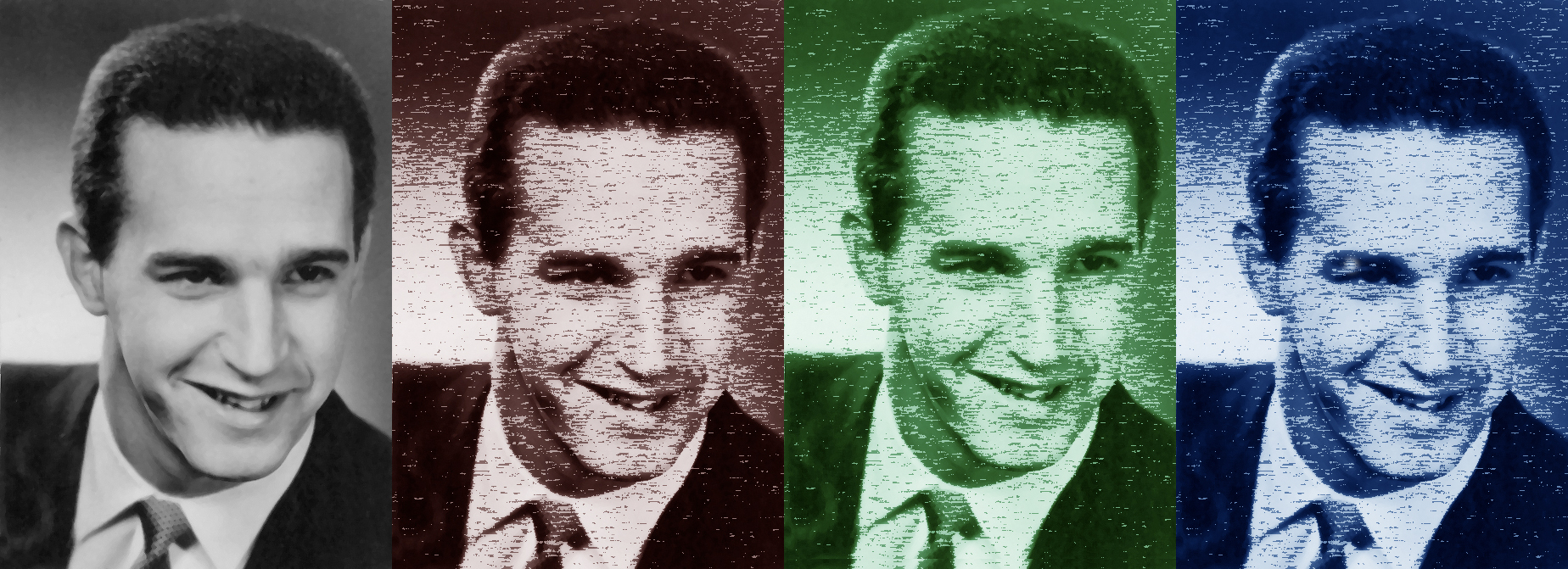
Whew! This has been one enormous post, especially Part 3. Hopefully you’ve found some of this information to be useful. But we still haven’t answered the question that I led with in Part 1. Let’s address it first.
Who did Ronald Tammen call ‘friend’?
Of course, these are just guesses, but I’d put James McCord at the top of the list. Based on their shared ST-102, REC-19 stamps as well as their lf’s, it seems as though their paths had indeed crossed. Maybe they’d met in Miami, when McCord was sitting in on meetings at JM WAVE. Renowned JFK researcher and author James DiEugenio shared a fascinating anecdote about McCord in an article posted on the Kennedys and King website:
“But beyond that, when Lisa Pease and I were publishing Probe magazine in the nineties, we met up with former CIA pilot Carl McNabb. He said that prior to the Bay of Pigs, he had been briefed at the Miami CIA station, since he was part of the aerial facet. He noticed that McCord was in the room and he was struck by how taciturn he was. Afterward, he asked the briefer who he was. He told him his name. He then added that he was [then-CIA Chief of Operations/Plans Richard] Helms’ Zap Man. McNabb later showed me the very old notes with this information recorded on it. I asked him what the term meant. He replied McCord was his liquidator.”
Is it just me, or do the names “Zap Man” and “liquidator” sound like supervillains?
Speaking of supervillains, perhaps Morse Allen, who did much of the day-to-day work on Project Artichoke, and James McCord, who was right there with him as part of the CIA’s Security Research Staff, had known Ron as one of Project Artichoke’s star research subjects.
If they weren’t friends, maybe Ron considered McCord to be more of a boss figure. If so, perhaps Ron had signed on to work for McCord Associates, James McCord’s security firm at the time McCord was involved with Watergate.
Ron also may have been friends with some of the Cuban exiles as well as their American associate Frank Sturgis. As you may recall, Sturgis had 10s in the upper right corner of several of his FBI records, just like Ron did. Sturgis’s 10s on records from the 1950s and ‘60s mainly had to do with his counter-revolutionary activities in Cuba and Guatemala. A 10 from October 1973 deals with his conviction in a case in Florida involving an auto theft ring and whether his Watergate testimony had influenced that conviction. One 1977 document with a 10 in the right corner described how Sturgis, Bernard Barker, and Eugenio Martinez were seeking pardons from their Watergate convictions. My ongoing theory is that the 10’s signify a heads-up to the FBI’s liaison to the Secret Service. Ron Tammen, Frank Sturgis, Bernard Barker, and the others might have all been work friends whose antics were keeping the Secret Service on alert.
My third choice is that he may have been friends with Richard Cox. Do you remember how a former professor at Miami University had written to the Army’s Criminal Investigative Division in 1952 letting them know that he and his wife, also a professor, were familiar with someone who looked very much like Richard Cox during their time in Oxford? Both felt certain that it was he. In his letter to the CID, the man said that the individual was an employee “of a shop or restaurant or even, perhaps, of the university” in Oxford, Ohio, for the period of January through September 1950, before he and his wife moved to the Chicago area. In an FBI report, his wife told agents that she and her husband believed the young man worked in a “public or semi-public place such as a restaurant or filling station.” Maybe Richard Cox had been recruiting young college men in that town for the CIA for a few years, bonus points if they were gay, and he and Ron struck up a friendship. Or maybe they met in Florida working for the CIA and somehow stumbled upon the uncanny coincidence that they were both two young men from the Buckeye state who’d disappeared from their college dorms within three years of each other. Small world!
In all seriousness, can you imagine Ron Tammen hanging out with James McCord, Frank Sturgis, and Richard Cox in a secret Miami meeting spot? If that ever happened, I would’ve loved to have been a fly on that pink stucco wall.
Or maybe they met on the beach. Can you picture it?

Look, I’m sorry to have to change the subject, but I need to tell you guys something, and there’s no easy way for me to do it.
What’s up?
I recently realized that I was mistaken about something, and I’ve promised that I’d let you all know whenever that happens. It has to do with my post “Ron, Dan, Jim, and Hank: four all-American ‘bad boys’ in the summer of ’73.”Don’t get me wrong—I still stand behind most of that write-up, which also discusses Watergate, James McCord, Daniel Ellsberg, and Hank Greenspun, only less in-depth than we’ve done today. What I got wrong was the part about Richard G. Hunsinger, the FBI administrator who’d grown up in Oxford, Ohio. As it turns out, he didn’t sign the FBI report dated June 15, 1973.
I really did think that the initials RGH looked like how Richard G. Hunsinger wrote them. What’s more, I thought that the signature next to his initials looked like it came from Willistine Goode, Hunsinger’s capable assistant. It, too, resembled her signature. But I was oh so wrong, and the actual signer makes more sense.
The signer of that FBI report was the special agent in charge of the Chicago Field Office in 1973, Richard G. Held. In 1976, Held would be promoted to associate director of the FBI by Clarence Kelley after Nicholas P. Callahan had been fired for financial wrongdoing. Of course, it makes total sense that the SAC of the Chicago office would sign the form that they themselves had submitted to Headquarters. I’m embarrassed that I immediately jumped to Hunsinger. Please forgive. I will try to do better.
Wow. Who knew that you’d have to study so much handwriting in this project?
Do you know what would have been helpful before I got started with this project? It would have been helpful if I’d received training in handwriting analysis. I’m not talking about the kind of handwriting analysis in which you can tell someone’s personality by their handwriting. I don’t really care about that. I’m talking about forensic document examination in which you can identify whether two or more handwriting samples were written by the same person. Think about all of those scribbles and scrawls on Ron’s FBI records. Wouldn’t it be fantastic if we could identify the people who’d written them?
Why don’t you just hire someone?
Forensic document examiners aren’t cheap. It’s a lot like hiring an attorney. The science of examining handwritten letters on documents takes hours and hours, with every one of those hours costing several hundred dollars. Because I’m not rolling in dough, I need to be judicious, and to consider hiring one only when the outcome of that examination would be most worthwhile. But that’s just me.
Pro tip: If you’re someone who’s just starting out career-wise, and you’re also considering doing some FOIA research of your own, I’d highly recommend getting certified in forensic document examination. Imagine having that skill at your fingertips as you were poring over old FBI or CIA records. It could set you way ahead of the pack.
Have you ever hired a forensic document examiner?
I have.
And?
Totally worth it. But that’s a story that’ll have to wait until another day.
In honor of Ron Tammen’s anniversary, comments are being opened up free-for-all style. Ask me anything you want to about Ron Tammen. No question is too stupid. No comment is too weird. Just nothing mean, please. I don’t respond to mean. Also, I won’t be revealing any people’s names that I’m protecting, so please don’t try. Also, I can’t say anything about the lawsuit either.
Lastly, don’t forget to fill out your quiz and hopefully win one of those bracelets. I’m loving mine!
Let’s go!
***********************
ADDENDUM
Oh. Em. GEE, Kenneth W. Whittaker and E. Howard Hunt were neighbors??
As you can imagine, I’ve been learning as much as I can about the White House Plumbers, since, oh, I dunno, I think Ron Tammen may have known one or more of them. Well guess what? Remember Kenneth W. Whittaker, the special agent in charge of the FBI’s Miami Field Office whose 1-gamma scribble looks a lot like a notation on one of Ron’s FBI records? (See part 1.) Well, today I learned that Kenneth W. Whittaker was neighbors with E. Howard Hunt of Watergate fame (see part 3) beginning in 1977, after Hunt was released from prison for his Watergate escapades.
Neighbors.
Look, I understand that it’s a small world and all. I even make a point of saying that to people when the situation calls for it. But neighbors?
Here’s Kenneth Whittaker’s affidavit that he wrote on behalf of E. Howard Hunt when Hunt was seeking a pardon for his Watergate escapades. (He didn’t get it.) I don’t know about you, but there are coincidences, and then there are coincidences, and I’m not so sure I believe that having Howard Hunt move in next door to the former SAC of the FBI’s Miami Field Office would qualify as a bona fide coincidence. Would you?


In re: the ‘Miami markings’, why:
a) do you think it’s a ‘1-sigma’, and not simply ‘12’?
b) do you think it’s a ‘downward facing z’ rather than say, someone’s initials (For example, I see ‘mr’).
Do you know if the Psychology Department did student surveys during the Switzer years? I mean, it could seem real innocent to ask a bunch of kids questons that might just reveal how susceptible to hypnosis they might be.
Good question. I’m not sure! They surveyed students about their academic skills and interests, but I don’t know if they’d do one on susceptibility to hypnosis.
Speaking of susceptibility to hypnosis, I encourage you to watch episode 1 of the Discovery channel’s new show Conspiracies and Coverups. It focuses on mind-controlled assassins and whether a person can be hypnotized to kill. The host is ex-CIA. It’s very good. The link is on the finale page in the comments.
I don’t mean them blatantly asking them about the susceptibility, but asking general questions-some pertinent, some not, all reasonable in a psychology classroom setting-that taken together would suggest you have a good candidate. I got started on the Conspiracies and Coverups but don’t have time to finish.
I don’t know—maybe? I’m thinking it might be useful as a first step to assess how open they’d be to it. I think they’d still need to see them in person to truly get a picture of how susceptible they are.
Whoa. That show was super interesting. And it’s fascinating how they selected the most susceptible people out of a large group. The fact that the host is ex-CIA makes the phenomenon more believable (to me, anyway). Here’s a link – hope it works https://go.discovery.com/show/conspiracies-coverups-discovery-atve-us
Thank you, Anna! I’ll definitely watch tonite.
I just finished this program. I HIGHLY recommend to anyone who follows this blog. It’s extremely well done, and as Anna pointed out, the host was once a covert operative with the CIA. He’s credible. As he put it, if he and the hypnotist he collaborated with could accomplish what they did with hypnotic control of someone in roughly 48 hours, imagine what the CIA could do in 15 years.
Wow, very interesting as usual.
I know I’ve mentioned this a few times before but I still can’t for the life of me figure out why they are being so secretive if he was involved in criminal activity. They aren’t secretive about the others involved with Watergate, JFK, etc, at least not to the level they seem to be when it comes to Ron.
I’ve long felt that Ron was a plant by the government and was tasked with infiltrating these groups. It’s the only reason I can think of that they have gone to such great lengths to cover him up. If he had been outed as a plant for the government, it could have put him in danger.
The introduction of Richard Cox into this puzzle kind of makes me feel this way even more, because he was also potentially linked to the CIA and like you said, what are the chances that two men who disappeared and are believed to have been involved with the CIA would happen to cross paths again 20 years later as part of a criminal enterprise?
That would be an insane coincidence. Do you think they both were really criminals?
Right back at ya’ — interesting thoughts, as usual! I think Richard and Ron’s cases are a little different even though I think both were recruited by the CIA. I feel as though Richard Cox was his own person. What I mean by that is, I don’t think he was being drugged or hypnotized but was working as an operative, in which case the CIA would never give up his name, no matter what.
But Ron…I’ve come to believe that he was being hypnotized and possibly drugged as part of Project Artichoke. Also, because Ron has a bunch of 10s on his FBI docs, which Richard Cox did not have, I think the FBI and Secret Service considered Ron dangerous, especially with regard to the people the Secret Service is supposed to protect–presidents, VPs, and other dignitaries. From what I can tell, the vast majority of people with 10s on their FBI docs could be labeled as dangerous, and many 10s were on records dealing with assassinations, other murders, bomb plots, etc. That’s why I’ve come to believe that Ron may have been a hypnotic assassin. Maybe that wasn’t his full-time job, maybe he was working as a run-of-the-mill operative most of the time, but perhaps there were situations when his handlers felt the need to program him to kill. Either that or maybe he’d turned into someone who killed without programming. I don’t know.
There’s a program on the Discovery Channel right now called Conspiracies and Coverups, and the first episode is on mind-controlled assassins. I haven’t watched it yet, but plan to. (It first aired April 1.) If the CIA had successfully programmed Ron to do some horrible deeds, such as assassination, then that’s something that our government would likely do everything in its power to keep secret, even after all these years. The CIA never really admits to anything…plausible deniability, and all that. So I can’t fathom someone from the CIA actually admitting that, not only is it possible to create a hypnotic assassin, but it’s been done, and here’s the guy we successfully programmed to kill Officials X, Y, and Z, etc., etc., etc. I think that’s what makes Ron’s case so frustrating. It seems that the more we learn about him, the less likely someone will come forward. But again…I don’t really know. Still trying to figure it all out.