Back in Ron Tammen’s day, long before social media forced us to remain in continuous contact with everyone we’ve ever met, even the bullies and mean girls, I think friendships came and went organically. If someone you liked was in your immediate proximity—if they lived on your block, or worked at the same place, or bowled in the same league—you would likely call that person your friend. Once they moved away, unless you both were extraordinarily gifted at staying in touch, that friendship would probably fizzle out. It was what it was, and people were fine with it. Before I specify who I think Ron’s friends were, I need to establish when and where I believe those friendships took place.
The time
The time period I’m referring to is roughly five years before I was moving into Brandon Hall as Kenny and Stevie belted out their “forever and evers” in the background.
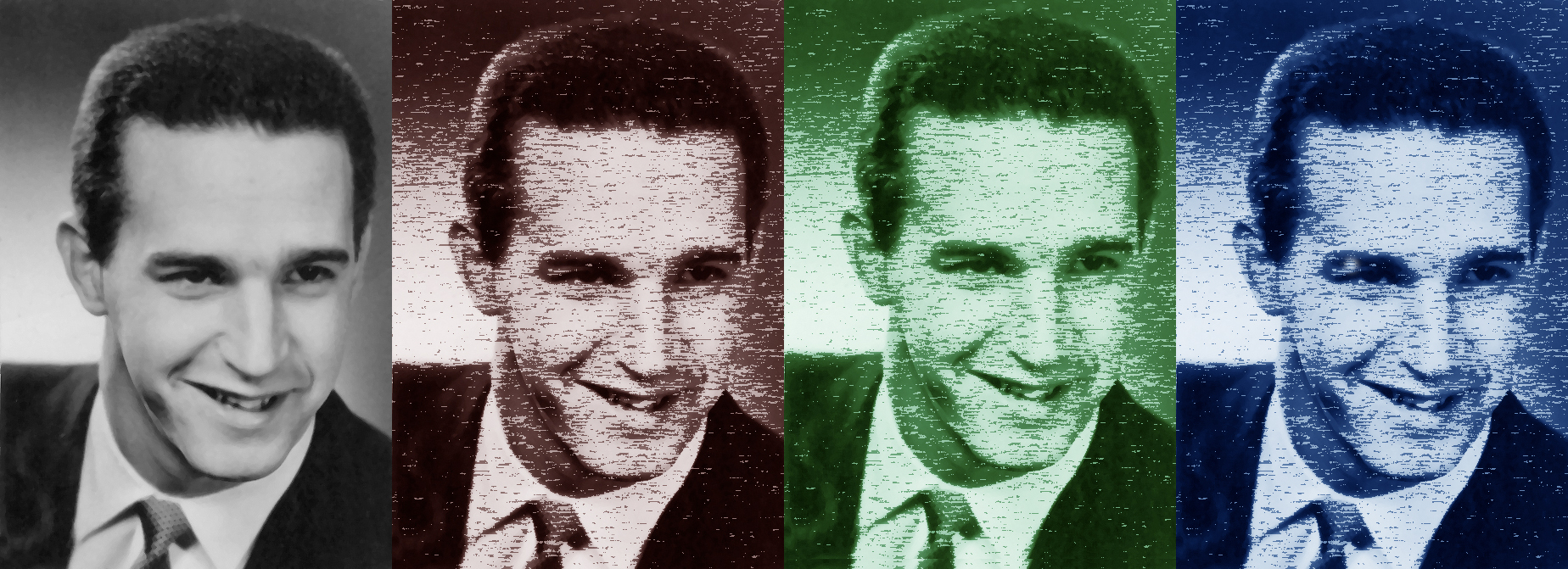
The year was 1973, 20 years after Ron disappeared. Serendipitously (and I’ll be forever and ever grateful to him for this), Joe Cella, a reporter for the Hamilton Journal News, had written an anniversary article about Ron’s disappearance, and he included the photo of Ron that he’d been carrying around in his wallet since 1953.

The very same day that the article ran, on Monday, April 23, 1973, someone placed an anonymous phone call to the FBI’s Cincinnati Field Office to report that a worker at Welco Industries was indeed Ron Tammen, and, a few days later, a special agent drove to Blue Ash to fingerprint the guy. A couple weeks later, on May 9, 1973, Cincinnati’s special agent in charge (SAC) sent the Welco man’s prints to FBI Headquarters to run a comparison, and a couple more weeks later, on May 22, 1973, they were told that Ron and the Welco man weren’t the same person.
The agents in the Cincinnati Field Office might have been disappointed by the outcome, but I, for one, am not. We’ve all benefited from that seemingly pointless effort made by the Cincinnati Field Office, because, thankfully, the FBI wasn’t finished looking into Ron Tammen. For more than a month after FBI Headquarters had sent its response to Cincinnati, Tammen’s FBI records had made the rounds to various divisions and people within the Bureau, as witnessed by the scribbles and stamps that were placed in key locations on his documents. Those markings tell a story that runs from May 9, 1973, when Cincinnati sent in the Welco man’s prints, through at least June 27, 1973, the last date-stamp on Headquarters’ response to Cincinnati, a snippet in time that also happens to be historically significant. Of course, his story began long before that and extended long after, but this is our starting point.
The place
Until today, I haven’t offered up a guess regarding where I think Ronald Tammen was living in the early 1970s. Recently, I posted about how Ron’s FBI records had things in common with not one, but two larger-than-life personalities from Las Vegas—Ash Resnick and Hank Greenspun—which tells me that he may have spent some time there.
But I’ve also had suspicions that Ron was living somewhere else. And that place was……………….
……………Miami.
No, not the Ohio Miami, as in Miami University. I can’t imagine him ever showing his face there again, though the thought of that happening decades after his disappearance is rather tantalizing.
No, I think he may have been spending most of his time in Miami, Florida. And guess what? I think I may have discovered new evidence to support that theory.
What new evidence?
As you well know, I’ve been writing about the scribbles on Ron’s FBI records for a while now, but what you don’t know is that I’ve been holding back. I haven’t mentioned two of the scribbles to you yet because I’ve found them to be particularly baffling. Oddly enough, they appear on the same page, dated June 5, 1953. It’s the FBI Headquarters’ response to the Cleveland Field Office after they submitted a write-up on Mrs. Tammen’s phone call reporting her son missing. In their response, Headquarters informed Cleveland that Ron already had an FBI number–#358 406 B—from the time he’d been fingerprinted in 1941 as a second grader, which, incidentally, is another serendipitous occurrence in this case for which I will be forever (and ever) grateful.

Down near the bottom of the page on the righthand side are three marks—two that are similar to each other and one that looks different. The two similar marks look like script z’s that have been tipped over so that they’re facing downward, which tells me that their off-kilter position was on purpose and not a fluke. The third mark looks like the number 1 with a loopy gamma symbol next to it. I suppose it could also look like a stylized letter H, but, to my eyes, it’s more the former and less the latter. Let’s examine these pieces of evidence more closely.

Evidence #1: The 1-gamma also appears on documents originating from the Miami Field Office
To date, I’ve found only three other documents that have the 1-gamma symbol on them, and all three of them originate from the FBI’s Miami Field Office. Also, they’re all from 1972. The symbol appears next to the KW made by the SAC of the Miami Field Office during the early 1970s, Kenneth W. Whittaker. Maybe Kenneth made the 1-gamma or perhaps it was another agent or an administrative assistant of his, also out of Miami.
In the first two documents, it appears in the “From” line, next to “SAC, Miami.” In the third document, it’s written at the bottom of the page, on the line that says “Approved.”


That symbol seems intentionally cryptic to me. I wonder if Kenneth or his assistant chose to use it on its own at times when they wanted other people in the FBI to know that the folks in Miami had reviewed a certain record but they didn’t want outsiders to know. Could that be what happened on page 3 of Ron Tammen’s missing person records? I realize it’s a gamble to suggest here that Miami is its likely origin. I don’t recall ever seeing the initials of a special agent from one of the field offices on a report that hadn’t originated with them. Nevertheless, I’m putting myself out there this time because…
Evidence #2: The face-down z also appears on at least one Miami-related document
The face-down z’s are even more perplexing. As I’ve said, Ron has two of them. Do you know who else has a bunch of face-down z’s on his records? Richard Cox, the sophomore cadet from Mansfield, Ohio, who disappeared from West Point Military Academy on January 14, 1950.
Here’s a sampling:


See what I mean? They’re all written the same way, and they’re all in the bottom righthand corner of the document, or at least in its general vicinity. For a while I thought it might have been made by someone in the Identification Division since both Ron Tammen and Richard Cox had gone missing. Also, Richard Cox’s z’s appear next to a stamp for the FBI Reading Room, which sounded like an innocuous library-type room where someone could go, you know, read, though I had no idea what it was. For those reasons, I didn’t dwell on the z’s too much.
Recently, however, I stumbled upon a face-down z on a record concerning someone with very strong Florida ties. His name was Meyer Lansky, and, in case you didn’t notice, he was the subject of two of the earlier 1-gamma documents above. The record in question is from J. Edgar Hoover, long-time director of the FBI, to the assistant attorney general in charge of the DOJ’s Tax Division. Meyer Lansky’s face-down z also looks like a near match to Ron’s. We haven’t spoken of Meyer Lansky yet on this blog site.

Who was Meyer Lansky?
Meyer Lansky was a Jewish-American mobster who’d immigrated to the United States at a young age from Belarus, which at that time was part of the Russian empire. Despite his small size—he was 5’4” tall as a grown man—he was huge in the Mafia world. If the Mob had a CFO, he would have been it, and he’s credited with making the Mafia a national and even global financial phenomenon. In his earlier days, he was friends and business partners with Bugsy Siegel and, together, they started the Bugs and Meyer Mob, precursor to the less-adorable-sounding Murder, Inc., which was responsible for committing hundreds of murders in the 1930s and early 1940s. Lansky invested in casinos in Las Vegas and Havana, Cuba, and he oversaw illegal gambling houses in south Florida as well. When Fidel Castro came to power on January 1, 1959, Lansky lost a boatload of money. He was linked to the Mafia-CIA plots to assassinate Castro, along with his longtime associates Santo Trafficante, John Roselli, and others.
In 1970, Meyer Lansky was indicted for tax evasion, a crime that had brought down many of his fellow mobsters. He fled to Israel, hoping to be welcomed there at a time when that country was encouraging people of Jewish ancestry to make their home there. But his criminal record made him ineligible for citizenship and, in 1972, Israel sent him back to the U.S. Kenneth Whittaker was the man who arrested Lansky upon his arrival at the Miami International Airport. He was acquitted for some tax evasion charges, while others were dropped. Lansky spent his retirement quietly in Miami Beach until his death in 1983.
What’s interesting about Lansky’s face-down z is that it’s written on a document dated December 21, 1953, which could mean that Ron Tammen’s z’s were written during that same time period versus the 1970s. If so, it could introduce a datapoint regarding Ron’s whereabouts shortly after he disappeared. It’s something worth pondering.

Could it be that everyone’s face-down z’s originated from the FBI Reading Room and not the Miami Field Office?
I’m really happy you’re asking this question, because I’ve done a little digging. Now that we have the Freedom of Information Act, the term Reading Room has a different connotation. Today, it’s frequently used to describe a location, real or virtual, where the public can access FBI records. The FBI Vault, which stores electronic versions of their records online, is considered the FBI’s electronic reading room.
But before FOIA became law in 1966 and people were permitted access to FBI records, the FBI used the term Reading Room differently. Individuals in the FBI Reading Room were tasked with reviewing special agents’ outgoing reports and other communication pieces and scrutinizing them for typographical and grammatical errors. This was J. Edgar Hoover’s team of crackerjack copyeditors, and an agent could, and would, be reprimanded with letters of censure if they made an error.
From what I can tell, I don’t think the Reading Room was used for just any outgoing FBI mail though. Otherwise, I’d be seeing a lot more “Reading Room” stamps from that era. I do know that it was used for correspondence from the director and it was also used by special agents who were conducting special investigative work and reporting on that work, some of which was classified, to high-level recipients, such as the U.S. president, assistant attorneys general, officials in the State Department and CIA, and foreign dignitaries. The Reading Room was a last stop for a report after it had gone “up the chain of command,” in one special agent’s description.
So yes, it could be that the face-down z’s came from someone in the Reading Room. But even if that were the case, and we still don’t know if it is, the fact that these three individuals have the same mark on their documents, a mark that I haven’t come across anywhere else, seems to link them together somehow. And because we know that one of the three men was based out of Miami, my current theory is that the city of Miami may be what ties them together. Granted, it’s just a theory, but I think it’s worth looking into. As it turns out, there are other reasons to suspect a Miami connection as well, which we’ll be discussing soon.
What about Richard Cox? Do we know if he lived in Miami?
Great question. Let’s save it for Part 2.

It’s really amazing how much the seemingly inconsequential issue of him being fingerprinted as a child has driven your search.
Truly! That has been huge.