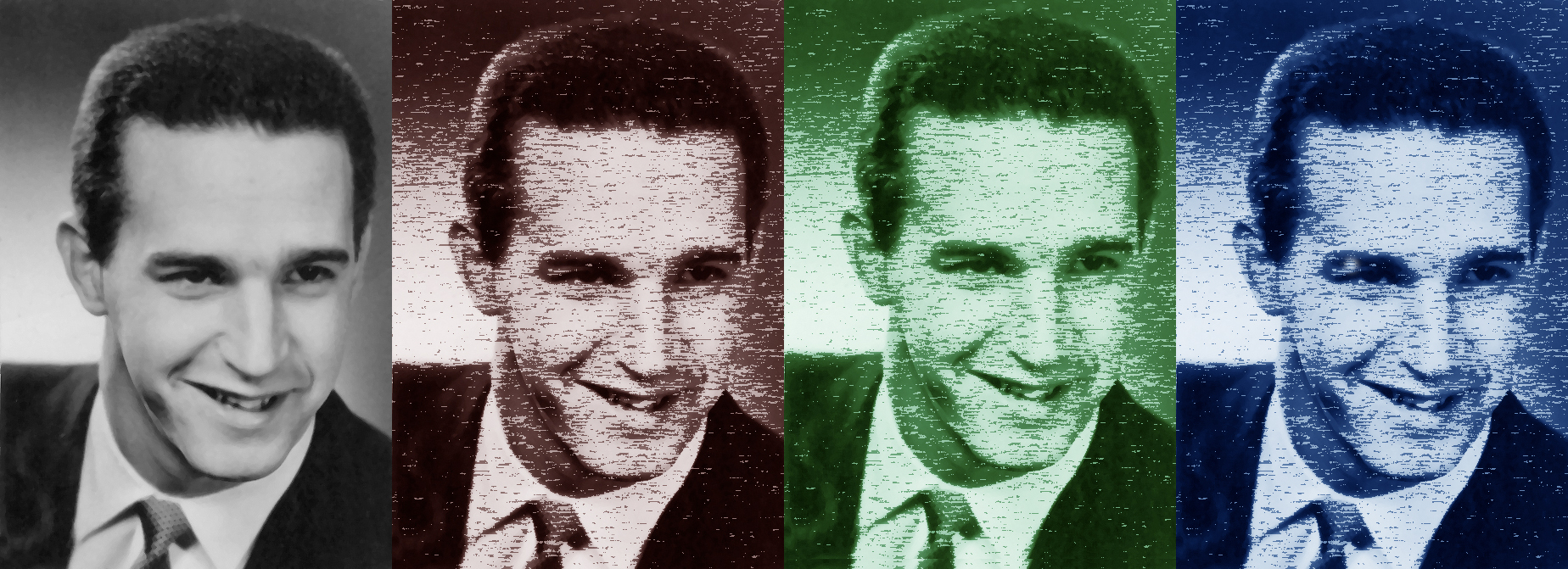
Let’s see…so far, we’ve been discussing the FBI’s Security Index, the notorious list of so-called dangerous people whose rolls included Ronald Tammen and Richard Cox, but curiously enough, excluded Lee Harvey Oswald, at least at the time of President Kennedy’s assassination, even though they knew all about his activities with Cuba and the Soviet Union. We also were able to guesstimate that someone from the FBI had written “see index” on the front page of Ron’s missing person documents in or around 1973, since it was written in the same handwriting, and therefore by the same person, as the same phrase that appears on a document from July 30, 1973. We didn’t discuss the content of the July 30 document…just the “see index” part and its date.
So let’s briefly discuss the content of the July 30, 1973, document.
In the “from” line is “Director, FBI,” who by then was Clarence Kelley. The person in the “to” line was the SAC (i.e., special agent in charge) of the FBI’s Las Vegas Field Office, who was Vern Loetterle. The subject is lengthy and in all caps: ALLEGED PLANNED BURGLARY OF THE OFFICE OF HENRY GREENSPUN, A LAS VEGAS PUBLISHER, IN EARLY 1972 (INTELLIGENCE DIVISION).
There’s quite a bit to unpack here at some point, but let’s not do that now. Let’s simply start by saying that Clarence had gotten Greenspun’s first name wrong. It was actually Herman, but everyone called him Hank. Hank Greenspun owned the Las Vegas Sun newspaper, and he used its editorial page like a weapon to wield his power and advance his political views, which evidently is a practice that hasn’t changed at all, especially since social media has entered our lives. (Hi, Elon! Hey, Zuck!)
Here’s the story in a nutshell, which I’ve gleaned from several FBI reports on this topic: In early 1972, E. Howard Hunt—yes, THAT Howard Hunt—approached a security guy employed by Howard Hughes’ Tool Company—yes, THAT Howard Hughes—and told him about a robbery that he and his friends were planning to pull off. What friends, you ask? Oh, just G. Gordon Liddy and James W. McCord, both of Watergate fame, to name two. There were likely others involved as well. The reason for the robbery was to steal some documents that were in Greenspun’s safe that Hunt said could be used against Edmund Muskie, should he become the Democrat’s nominee for president. Hunt told the security guy, named Ralph Winte, that it was his understanding that Hughes could benefit nicely from the burglary as well. As they were rifling for the Muskie documents, the burglars would take the documents benefiting Hughes and hand them over to Winte, who could get them to Hughes. The only thing they were asking for in return was to have one of Hughes’ planes sitting at the ready to fly the burglars to a Central American country of their choosing.
Here’s my favorite part of the story: when Winte asked Hunt what would happen if they got caught, Hunt’s response was “We’ll shoot them.”
I know. Wild, right?? Winte asked his immediate boss, William Gay, what he thought about the plan, and his boss ethically replied, “Not just no, hell no!” or something along those lines. So ostensibly the crime was never committed.
But here’s what I want to show you today: the July 30, 1973, document in its entirety. Look at the righthand side, in the white space near the first sentence: it says “Hac,” just like the ones on Ron’s missing person documents. (The letters “ac” are concealed by the letters JFK, which are written over them.)
Click on image for a closer view.
Ron’s Hacs vary somewhat from page to page and may be written by two different people—I’m not entirely sure. However, here’s one version that in my view closely matches the July 30 document.
Click on image for a closer view.
Let’s do a couple more! Here’s a Hac from Hank Greenspun:
Click on image for a closer view.
And here’s a similar Hac from Ron’s missing person docs:
Click on image for a closer view.
Therefore, the announcement for today is:
I think the same person(s) who wrote Hac on Ron’s missing person records wrote Hac on the Herman Greenspun burglary documents. What’s more, I’m going to go out on a limb and say that I think the two cases may be related in some way.
Coming next: What the phuh do all these ph’s mean?
I think I’ve found a clever little way to tell us roughly when Ron—or whatever his new name turned out to be—was added to the FBI Security Index. Was it 1953? 1973? After that?
I think we can tell by the handwriting.
I’m not talking about handwriting analysis, for which I don’t hold a license and am completely unqualified. I’m talking about the side-by-side comparison of two signatures or initials or phrases to see if they look as if they were written by the same person. Unlicensed people with two good eyes have been asked to compare signatures in a variety of important ways over the years, not the least of which is when we go to the voting booth, or to a bank deposit box, or remember traveler’s checks? That’s how businesses could tell if the check you handed them was yours or if it had been stolen—by comparing your signature while you were buying your traveler’s checks to your signature while you were on vacation.
I’ve gotten to know an awful lot of FBI initials and signatures in this exercise, and I’ve also seen a lot of ways that someone might write the words “See index” in the lefthand margins. Here are just a few of the ways.
As a reminder, here’s how “See index” is written in the left margin of the first page of Ron’s missing person documents.
Click on image for a closer look.
Now, look at this “See index,” which is written on a document that was created on July 30, 1973.
Click on image for a closer look.
They look the same, don’t they? (The ‘s’ is the giveaway.) This tells me that they were written by the same person, likely at roughly the same time.
So here’s today’s announcement:
I think Ronald Tammen was added to the FBI’s Security Index sometime after the Cincinnati Field Office had sent in the Welco guy’s fingerprints for comparison to Ron’s in May 1973.
If you’re wondering why we’re only looking at the left side of the document, it’s because I’m saving the right side for our next announcement.
Coming next: you guys, I think we’ve been hacked…in a good way.
We’re still talking about the FBI Security Index, as denoted by the “See index” notation in the left margin of page one of both Ronald Tammen’s and Richard Cox’s case files.
The first page of Ron Tammen’s missing person documents. “See index” is written in the left margin. Click on image for a closer view.The first page of Richard Cox’s file. “See index” is clearly visible in the left margin. Click on image for a closer view.
Being on the Security Index meant that the FBI and Department of Justice considered you to be a dangerous person—someone who needed to be rounded up and incarcerated in the event of a national emergency, which was a term that was left up to everyone’s imaginations. (I’m thinking bursting powerlines, people running amok in the streets, every other building on fire…that sort of thing. But that’s just my idea of a national emergency. The FBI and DOJ may have a different view.)
As far as we know, the FBI had no idea where Ron Tammen and Richard Cox were. Why would our nation’s lead law enforcement agency jump to the conclusion that either of them was dangerous? And incidentally, if a person is missing, how would the FBI even go about rounding them up?
As it turns out, it’s probably not so surprising that Cox made it to the Security Index, since he was considered a deserter and fugitive from the Army, even as a cadet at West Point, and, for this reason, he was breaking the law. But Tammen? Good heavens. Not in a million years would one of his friends or family members have ever called him dangerous.
Today I’m going to announce someone who wasn’t on the Security Index who probably should have been, at least based on the FBI’s and DOJ’s criteria. One of the main reasons for the Security Index was for the FBI to keep track of communists and other subversives to prevent their wreaking havoc during our aforementioned national emergency. So keeping that in mind, would you be surprised to learn that:
Lee Harvey Oswald wasn’t on the FBI’s Security Index at the time of JFK’s assassination on November 22, 1963.
For real. Lee Harvey Oswald, who’d defected to the Soviet Union in November 1959, who’d changed his mind and returned to the States with his Russian wife Marina and baby daughter in June 1962, who’d made headlines in New Orleans in August 1963 while advocating for the pro-Castro organization Fair Play for Cuba Committee—Lee Harvey Oswald wasn’t considered communist enough to get his name onto the FBI’s Security Index. What’s more, according to government records, he’d taken a bus to Mexico City in late September 1963 and had stopped in to visit both the Soviet Embassy and the Cuban Consulate. Again, no red flags.
I’m pretty sure that the FBI caught some heat for that.
Immediately after the assassination, James H. Gale, who’d headed up the FBI’s Inspection Division at that time, conducted an evaluation of the investigative deficiencies leading up to JFK’s assassination. Oswald’s not making it to the Security Index was at the top of his list of oversights. He also said that they should have interviewed Marina in the months before the assassination, which they had not done. He told the House Select Committee on Assassinations as much in 1978 as well. You can read his December 10, 1963, report and 1978 HSCA testimony on this website. (See Vol. III of the HSCA hearings.)
But here’s the rub—and I’m not sure this has ever been said out loud ever before: Lee Harvey Oswald had indeed been on the Security Index at an earlier point in his past. I’m truly, truly serious. It was in November 1959 at the time of his defection to the Soviet Union. Here’s the document, dated November 9, 1959, where you can see the words “See index” in the left margin.
Lee Harvey Oswald was included on the FBI Security Index in November 1959 as he was defecting to the Soviet Union. Click on image for a closer view.
What this means is that officials at the FBI and DOJ must have changed their minds about Oswald’s Security Index designation somewhere along the way.
As further proof of the FBI’s mindset, on September 10, 1963—shortly before Oswald’s trip to Mexico City—an FBI report was written on both Lee and Marina by the Dallas Field Office. Lee’s report is clean—all of the available options regarding the Security Index are free of checkmarks. He isn’t on it.
Lee Harvey Oswald was not included on the Security Index in September 1963. Click on image for a closer view.
But Marina? Oh, there’s definitely a checkmark—more like the number 1—next to the line “The Bureau is requested to make the appropriate changes in the Security Index at the Seat of Government.” (The Seat of Government is FBI lingo for its headquarters in DC.)
Marina Oswald is included on the Security index in September 1963. Click on image for a closer view.
There’s also a date beneath the number 1, which was July 24. The year isn’t visible, but I know what it was—it was 1962. I know this because of the below document, dated the very next day, in which Marina is the subject.
Marina Oswald is on the Security Index on July 25, 1962. Click on image for a closer view.
To summarize, Marina Oswald was added to the Security Index—or her designation was somehow changed—on July 24, 1962. And in a document written about her on July 25, 1962, the words “See index” appear in the lefthand margin. The words are smeary, possibly as if there was an attempt to erase them, but the “d” and slash of the “x” in the word index are unmistakable.
So you see, the issue was more nuanced than what James Gale had described to his bosses at the FBI in 1963 as well as to the HSCA in 1978. Lee Harvey Oswald had been on the Security Index, but he’d been taken off sometime between November 1959 and September 1963. In addition, his wife Marina had also been on the Security Index, ostensibly at the time of JFK’s assassination, though it’s possible that she’d been removed by then.
But for James Gale to say all of that? Yikes. That would have sounded way worse than just telling them that the FBI agents didn’t feel Oswald had met the criteria and, in hindsight, they should have interviewed Marina.
I mean, think of the follow-up questions.
Coming: When was Ron Tammen added to the Security Index?
OK, I think I’m ready. I’ve been reading and reading and OMG perusing so many FBI documents like crazy and comparing them to Ron Tammen’s missing person records, trying to make sense of it all. And even though I don’t have the end-all, be-all answer for us as to what it all means (and I don’t), I think I have enough information to share with you to get this conversation going.
Plus, if I don’t spill some of this now, I’m going to forget it. I swear I will.
So here’s what’s going to happen: over the next several…let’s say weeks…I’m going to pop into your inbox every once in a while with an announcement. Do NOT plan your days around these announcements. That’s way too much pressure. They will be appearing at random times of the day, when I’m feeling at my creative best, which obviously can vary. One thing is certain: it will NOT be before I’ve fed Herbie his breakfast and had my coffee, so nothing before 8 a.m. Eastern time. Cool? Cool.
The announcement will be something to the tune of “I think blibbidy blah,” and then I’ll be providing documentation in the form of scribbles on FBI records as to why I think that. Or I may not phrase it so tentatively. I might state outright that “I’m 100 percent positive that so-and-so did such-and-such,” and that’ll be pretty much it.
In essence: I’ll be saying something and then showing you the documentation, and then we’ll all get on with our day. Some announcements will be illuminating, others will be confounding, while others may make you go “meh.” But make no mistake: all announcements will be very, very short.
Before I make the first announcement, I need to thank two people, without whom we could never conduct this exercise. They are: 1) the anonymous caller who called in a tip to the FBI’s Cincinnati Field Office in April 1973, saying that they felt Ron Tammen was working at Welco Industries in Blue Ash, Ohio. Thank you, anonymous caller!! Though some might consider you a snitch or a tattletale, I think of you as a patriot and a hero! If not for you, Ron’s missing person documents probably wouldn’t have been retrieved from their hiding place in the Missing Person File Room, and passed around from one division to the next, gathering a bunch of new stamps and jottings in the process. And 2) John Edgar Hoover. Without your legendarily iron-fisted style of micro-management in which anyone having to do with a case had to initial the memos and scrawl in other coded messages, we wouldn’t be privy to details concerning who saw Ron’s missing person documents and what they did with them. Thank you, Edgar!!
And now, the announcement that is stop #1 on our tour:
Richard Cox was on the FBI’s Security Index too.
The words “see Index” written in the left margin tell us that Richard Colvin Cox, who went missing from West Point Academy in January 1950, was listed in the FBI’s Security Index in addition to Ron Tammen. If you don’t know who Richard Cox is or what the Security Index is, you can run a search on my blog to catch up. I consider it a big deal that two missing persons who the FBI ostensibly had no idea where they were made it onto their Security Index.
(Coming next: So Richard Cox and Ronald Tammen were both on the FBI’s Security Index. Guess who WASN’T on the list.)
By now, I think we’ve all come to terms with the notion that Ronald Tammen in his adult years wasn’t the same person everyone had known when he was in his teens. Mind you, we still don’t know Ron’s whole story. We don’t know what predicaments he experienced after he disappeared, nor do we know the sorts of things he did when presented with said predicaments. But judging by his surviving FBI documents, we can see that Ron’s life after his disappearance was wildly different from his days as the solemn and studious business major from Maple Heights, Ohio. It was almost as if the day he went missing, he’d entered a bizarro world where up became down, where dull became exciting, where cash-strapped became cash-solvent, where good became, well…I’m not quite ready to go there.
At least for now, let’s cut him some slack and leave it at this: after Ron Tammen disappeared, his life had grown complicated.
Someday, in the not-too-distant future, I plan to share with you just how complicated his life had become. We already know that the FBI had added him to their infamous Security Index. That alone would complicate matters for any person.
When I started researching Ron’s disappearance, I can remember reading about some of his attributes, and someone close to him would sometimes be quoted saying that he’d been on the Dean’s List or that he’d been asked to join Phi Beta Kappa or something like that as examples of how smart he was. To date, I’ve found no evidence of either of those things being true. For Ron to be listed on the FBI’s Security Index, which is something for which we do have evidence, is the bizarro opposite of Phi Beta Kappa times 100.
Hopefully soon, I’ll be providing a grand tour of every stamp and squiggle on his missing person documents and giving you my most educated guess of their meaning as well as some of the people in our country’s history who shared those same marks with him. And trust me, you will be surprised—even those of you who feel that nothing more can surprise you about Ron Tammen. But I want to be 100% certain I’ve done my due diligence, which is why I’m being so slow and methodical before writing that post.
In the meantime, I want to discuss a couple dots that are easier to connect. They have to do with the following stamps on Ron’s records, two of which we’ve already discussed somewhat in prior posts:
ST-102, REC-19, and MCT-49.
I’m still not sure what most of these letters and numbers stand for, and it’s not because I haven’t tried. I’ve shown Ron’s records to every FBI contact I’ve ever met over the past 14 years, and no one has offered an explanation. As I mentioned in the comments section on my last post, recently, I asked an online history group from the National Archives, and they kindly consulted with their contacts at the FBI. Their response was that they were likely the stamps of the Records Division to help with indexing and serialization.
I respectfully disagree. The Records Division may have had a say in assigning the actual case numbers, but they wouldn’t have been involved in assigning these stamps, which were repetitive and erratically placed and which seemed to convey coded information about the case itself. And so, using my eyes and my ability to compare and contrast one FBI document from another, I’ve come to the following conclusions:
ST stamp
The ST stamp appears on some the most sensitive FBI documents I’ve found online. Not all documents that share the same ST number are on the same topic, but they all seem to be a bigger deal than a run-of-the-mill FBI record. Here’s what I’ve ascertained:
They seem to deal with serious crimes or highly sensitive topics.
They deal with topics that pertain to the FBI’s former Domestic Intelligence Division and specifically with internal security, which is why I think they were assigned by people in that division.
The lower the number, the more important they seem to be, starting at ST-100. Therefore, ST-101 appears to be more sensitive than ST-141, and so on. Ron’s number, ST-102, seems to have been assigned to some of the steamiest hot-potato cases in the eyes of the FBI.
The ST numbers are invariably accompanied by a stamp with the letters REC.
I’ve come to notice that earlier intelligence documents didn’t use the ST designation. They started with the letters SE instead of ST. This makes sense since, before the FBI’s Domestic Intelligence Division came to be, there was the Security Division. SE could be short for Security. So far, the documents that I’ve found that started with SE did so from around 1946 through the late 1950s. To the best of my knowledge, the documents with ST designations were date-stamped from the early 1960s through 1974, or thereabouts.
REC stamp
I now know that the letters REC stand for RECORDED, and they include a number to the right of them. In Ron’s case, that number is 19. According to the book “Are You Now or Have You Ever Been In the FBI Files?”, to be recorded means that “a document has been placed in the appropriate file, and has been given a case and a serial number.” But, in my view, the REC number can’t just mean that alone. Otherwise, why would there be different numbers—why not a little box to check? And why would they always accompany an ST number? From what I can tell, the REC numbers seemed to provide additional info about a given case. For this reason, I believe that the FBI viewed documents with the same ST/REC numbers as somehow similar or related and ostensibly that they should be grouped together. More on this in a second.
MCT stamp
From what I can tell, the MCT numbers are tied to the Security Index. If a person was listed in the Security Index, it was extremely likely they had an MCT number. Ron was in the Security Index and his MCT number was 49. One thing I’ve noticed is that if a person was on the FBI’s radar in the early 1950s, around the time that the Security Division was handing out SE’s and not ST’s, they didn’t appear to be assigning MCT numbers. Even if a person was of extreme interest to them in the area of internal security, they didn’t have an MCT number.
So keeping all of the above in mind, do you know what I think about Ron’s missing person documents? I think the FBI stamped his pages in June 1973 after the Cincinnati Field Office had sent the guy from Welco’s fingerprints to FBI Headquarters for comparison to Ron’s prints. The reason is that they weren’t using either the ST or the MCT stamps in 1953. To date, the earliest MCT stamp that I’ve found was assigned in 1958 and the earliest ST stamp was in 1962. I think Ron’s papers had been languishing for decades in the Missing Person File Room, room number 1126 of the Identification Building, and were only known to a chosen few, J. Edgar Hoover being one of them. After Hoover died in 1972, and after the Cincinnati Field Office had inquired about Ron’s prints on May 9, 1973, other staffers had to come up to speed on Ron’s case which is when I believe he received his steamy stamps of the hot-potato variety.
This information is especially useful to us as we compare Ron’s documents to other records from 1973, which is why I’ve called all of us together at this time when many of you would like to get back to watching the Olympics. (P.S. Weren’t the Opening Ceremonies amazing last night? Wasn’t Celine Dion INCREDIBLE??)
Here’s a document with an MCT-49 stamp from February 1973. The document has to do with the Black Panthers and an alleged plot to assassinate Vice President Spiro Agnew.
Here’s an ST-102, REC-19 stamp on a document from August 1973. The document has to do with an alleged plot to assassinate Sirhan Sirhan. To see the full report, click on the below image.
Click on image to access the full report.
And here’s page one of Ron’s FBI docs, for comparison.
What I’m trying to say here is that Ron was given his MCT-49 stamp four months after a document telling of a potential assassination plot against Spiro Agnew had been given the same stamp. He was given his ST-102, REC-19 stamps a mere two months before someone who was given the same stamps, a guy named Vladimir Zatko, claimed to have been paid $25K in advance to assassinate Sirhan Sirhan.
Incidentally, I found the Sirhan Sirhan/Vladimir Zatko documents tucked inside some of the James W. McCord records, the former CIA operative and Watergate burglar about whom I’ve written before. We’re interested in McCord because he and Ron both have ST-102, REC-19 stamps, though McCord’s extensive FBI file has other ST/REC stamps as well. But here’s what’s interesting about Zatko and McCord: James McCord’s name isn’t listed anywhere in the Vladimir Zatko letter, yet they were assigned the same ST-102, REC-19 stamps and someone from the FBI felt that McCord and Zatko should be filed together. E. Howard Hunt, a fellow CIA operative and mastermind of the Watergate burglary, is mentioned, but not McCord. (Apparently anything or anyone having to do with Watergate was filed under McCord, which doesn’t exactly seem fair.)
I just thought this development was important enough to warrant putting the TV on pause for a second.
That means that the FBI has had all sorts of intel on him that they’ve been pretending not to know about
For weeks, I’ve been going through Ronald Tammen’s missing person documents with a 2mm-aperture lab-grade sieve (I find it works way better than the toothy comb method) and focusing on the stamps and scribbles that I’d been ignoring for—ay yi yi 🤦🏻♀️—around 14 years. In my last post, I discussed the “Hac” notes that are written on top of 10 out of 22 pages of his records and how I’ve come to believe that it was an abbreviation for the House Assassination Committee, which is admittedly shocking if you say it out loud. I have an update on that theory that I plan to discuss very soon. (Spoiler alert: there’s a lot to say.) Today, however, I’d like to discuss a notation that we don’t even have to try to decode. It’s written in the king’s English on the very first page of Ron’s records.
On page one of Ron’s missing person documents, written vertically in the left margin, is a two-word sentence: “See index.” You have to look hard. It’s almost as if they tried to erase it so that we wouldn’t be able to make it out. But, yes indeed, that’s what it says: See index.
“See index” is written in the left margin of the first page of Ron’s missing person documents.Here it is, blown up and turned on its side. Look closely. The s is obvious. The two ee’s are almost ghostlike, but you can see them if you look closely at their outlines. Then there’s the dotted i, the scribbly n, d, and e, and the prominent slash in the x.
It sounds so vague and benign, but let me tell you, those two words wielded serious firepower.
There’s only one index that they could be referring to: the Security Index, an index so fiercely defamatory that its mere mention could make a G-man of yore’s eyes go wide and his mouth suddenly silent. In a 1971 Washington Post article that was written when the Security Index was first exposed to the public, ex-agents referred to it as “‘a taboo subject’ or ‘super-secret’ or ‘super-skittish.’” (“Super-skittish” was a weird way for someone to describe an inanimate object, but I think the ex-agent meant that he and his coworkers had felt that way if the topic was broached.)
The FBI has dozens of indices, which at that time were maintained on actual index cards, but the Security Index was its most notorious. Originally, it was called the Custodial Detention List, and it was developed—I kid you not—so that the FBI could round up all of their suspected spies and saboteurs and other would-be subversives in the event of some sort of national emergency. We’re not even talking about bona fide criminals. We’re talking about people whom the FBI had labeled as being potentially dangerous in some way based on three priority levels, with level 1 being (potentially) the most prone to violence. Some people were thought to have leaned too far to the left or right politically (usually left), at least in the Bureau’s estimation. Of course, anyone with real or imagined ties to the communist party were on the list. But if you had a friend who’d attended a CPUSA meeting once or if a group that you belonged to was, in the FBI’s view, at risk of being somehow infiltrated by communists, you’d probably wind up on the list too. It’s called pre-emptive policing—surveilling people whom the FBI had deemed potentially dangerous before a potential crime had been committed or even considered—and J. Edgar Hoover couldn’t have been more gung-ho.
This is probably the perfect time to remind readers that this is America we’re talking about, whose forefathers famously wrote on July 4, 1776, that all individuals are endowed with “certain unalienable Rights, that among these are Life, Liberty and the pursuit of Happiness” (which would be rather tough to accomplish if you happened to be pre-emptively detained). If you plan to be setting off bottle rockets as part of your Independence Day celebrations, please be careful, and don’t forget to wear your earplugs!
OK, so let’s get back to discussing the list of Americans whom the FBI was fully prepared to incarcerate for no reason other than it seemed to be the right thing to do if the situation had presented itself. This wasn’t just the perspective of the FBI—it was the Department of Justice’s too, whose approval was required before anyone’s name could be added to the list. However, in 1943, then Attorney General Francis Biddle decided that he wasn’t on board with the program. He called the Custodial Detention List “inherently unreliable,” adding:
“The evidence used for the purpose of making the classifications was inadequate; the standards applied to the evidence for the purpose of making the classifications were defective; and finally, the notion that it is possible to make a valid determination as to how dangerous a person is in the abstract and without reference to time, environment, and other relevant circumstances, is impractical, unwise, and dangerous.”
Biddle shut it down and ordered that his memo along with stamped verbiage stating that the program was unreliable and “hereby canceled” should be put in each listed person’s file.
Edgar’s response was: “You present a compelling argument, boss. What were we thinking?”
Just kidding! Hoover changed its name to the Security Index, and it was off to the races once again. Still, Hoover knew he was playing fast and loose with Biddle’s orders. He commanded his agents to make sure that the Security Index be “strictly confidential and should at no time be mentioned or alluded to in investigative reports or discussed with agencies or individuals outside the Bureau”—with the exception of Army and Navy intelligence, that is—“and then only on a strictly confidential basis.” That’s undoubtedly when the Security Index developed its menacing mystique.
Actors, musicians, politicians, writers, and various rando people whom FBI field offices had identified for one reason or another with the aid of a large network of informants…these were all added. According to the FBI’s criteria, the Security Index was for nabbing communists and subversives, from the hard-core revolutionary leaders (Priority #1) to your second-tier worker-bee types (Priority #2) to everyone else (Priority #3). But let’s be real. They gave those criteria a LOT of latitude and people who had zero connections with communists or subversives were among the indexed. Of course, Martin Luther King, Jr. and his Southern Christian Leadership Conference—neither communist nor subversive—were in the Security Index. I’ve found evidence that future Attorney General Robert F. Kennedy, clearly a democrat and not a communist, had secured a place in the Security Index in 1955, prior to a trip he made to Russia. In another example, a young man who was intellectually disabled and lived with his mother was added to the index, ostensibly because he’d expressed dislike for the U.S. government, and his neighbors had reported him acting suspiciously—leaving by way of the back door and through the neighbor’s yard if someone was standing in front of the apartment and whatnot. Another guy was added because he wouldn’t open his door to FBI special agents after they’d gone to the trouble of making a surprise wellness visit. So apparently, being socially awkward or standing up for one’s constitutional rights counted too. (As I write this, I suspect that, had I been an adult at that time, and if blogging were a thing back then, there would have probably been an index card with my name on it. If they thought someone going out of their way to avoid the neighbors was bad, I’m pretty sure they wouldn’t have liked…you know…this.)
Fortunately for Hoover, Biddle’s successor, Attorney General Tom Clark, was far more accepting of the FBI’s Security Index, and attorneys general during the Cold War could also see its merit, a view that was bolstered by the Internal Security Act of 1950, which permitted the detention of certain citizens during a national emergency. In May 1951 there were a little over 15,500 names in the Security Index and it was growing at a rate of about 100 people a week.
In 1971, after the FBI office was burglarized in Media, PA, by eight courageous patriots and the Security Index was exposed, the FBI changed its name to the Administrative Index, or ADEX, because of course they did. However, it, too, was discontinued, this time forever, in 1976, after the Privacy Act of 1974 was passed and as the House and Senate intelligence investigations called for changes.
So yeah. Ronald Tammen was ostensibly deemed dangerous or subversive enough to be listed in the FBI’s Security Index. As for his priority level, I don’t know, but I have a theory and a plan to try to find out.
I’m thinking let’s do the rest as a Q&A. Cool? Cool.
Are you sure? If the FBI had dozens of indices, how do you know they were referring to the Security Index?
Let’s take a quick minute to review the FBI’s record-keeping system. The FBI stores and accesses its entire collection (for the most part) of investigative, administrative, personnel, and other records through its Central Records System. Today the Central Records System is digitized, but before computers, it occupied a sea of square footage in the form of actual file folders filled with copious amounts of paper that could be rifled through and scribbled upon.
Also, as we’ve discussed in the past, FBI cases are categorized numerically according to designated classifications, not by the name of a person or organization. Therefore, FBI officials needed a search tool—which, before computers, was based on index cards—to find out where to look for a person’s case file or files. It’s just like at the library, and how we used to consult a piece of wood furniture that held skinny long drawers filled to capacity with little white cards before we could locate a book.
If an FBI agent back then wished to conduct a check on Ronald Tammen, they’d have to first walk over to their ocean of index cards—called the General Index—to learn which case number or numbers applied to him. The index card carrying Ron’s name would have directed them to case numbers 79-31966 (his missing person case) and 25-381754 (his Selective Service violation case) and probably his fingerprint file over in the Identification Building. What I’m getting at is that FBI officials wouldn’t need to write “See index” on page one of his missing person records if they were referring to the General Index because that index had already been “seen.” The General Index was always stop number one. But what if for some crazy reason that was their protocol? Well, we’d be seeing the words “See index” on the first page of pretty much every file in the Central Records System, and that most definitely is not the case.
As for the other indices, there have been quite a few. In a 1978 review of the FBI’s record-keeping system, the General Accounting Office said that the FBI kept 239 special indices in addition to 28 classified indices at that time to aid in their investigations. They had indices for bank robbers and people who’d undergone background checks and car theft rings and people in organized crime and criminal informants, and so on, and so forth…and that’s just up through the C’s.
Was there an index for Selective Service violators? Sure there was. But we know that that’s not the index Ron’s missing person documents were referencing. How do we know this? We know this because his Selective Service case had been canceled in 1955 (we’re still trying to get someone from the DOJ to tell us why), at which point they should have scribbled out the “See index” notation. No one did that. More importantly, to the best of my knowledge, no other index was specified in people’s FBI records. Granted, I have no idea how FBI personnel would have known to check those other indices. Maybe “See car theft ring index” was written on a person’s General Index card, or better yet, maybe if a person had been arrested for stealing a car, an agent would instinctively check the “car theft ring” index to see if his or her name was on it. Obviously, I don’t have all the answers.
But this much I do know: the words “See index” were purposely vague and benign-sounding and they were surreptitiously scrawled in the left margins of the records of a large number of people who were on the FBI’s radar for a variety of alleged infractions having to do with domestic security. Here’s a sampling of the ones that I found, some of whom will be familiar to you and others who will be new. (Apologies in advance for what I’m about to share with you about beloved comedian Bud Abbott.)
Frank Chavez, Puerto Rican head of Teamsters, friend to Jimmy Hoffa
Thomas Peasner, Jr., POW from Korean War who’d been interrogated after his return because of his conversion to communism; Army Intelligence said that he’d been brainwashed by Chinese
Click on image for a closer view
Edward R. Moss (sic; should be Edward K. Moss), p.r. person with close ties to the CIA and organized crime
Click on image for a closer view
What types of information was on the Security Index card?
A Security Index card was a bare-bones, cut-to-the-chase distillation of how a person was viewed in the eyes of the Bureau. It would include the person’s name, aliases, date of birth, most current address (which they kept close tabs on), occupation, and case numbers, plus a string of abbreviations that were typed along the top. The abbreviations might include NB for native born, NA for naturalized, or AL for alien; COM for communist party USA, ISL for Independent Socialist League, or one of several abbreviations for certain non-democratic countries; KF for key figure in whatever communist or subversive organization they tied you with; DC for Detcom, which meant priority detention in the case of emergency; CS for Comsab or communist saboteurs; and so on.
There was also a designation of SP, which meant that your card would be placed in the Special Section. People in the Special Section were in the following demographic groups: espionage (designated as ESP), prominent persons, government employees (federal), foreign government employees, United Nations Secretariet employees, and Atomic Energy Program employees.
An ordinary FBI employee couldn’t just saunter over to wherever the Security Index cards were stored and have himself a look-see. There was a Security Index desk, and a full-time desk man to oversee this highly sensitive area. From 1950 through 1968, that man was Paul L. Cox, the number one man in the FBI’s Subversive Control Section of the Domestic Intelligence Division. It would have been his job to oversee the elaborate process by which cards were added or subtracted from the Security Index, as well as to coordinate with the DOJ in obtaining approvals, among other important duties.
Here’s a dummy sample of what a typical Security Index card looked like. Again, it looks pretty tame. But the fact that someone had one at all means that there was ostensibly sufficient evidence in that person’s investigative records in order for the DOJ to provide their approval.
Click on image for a closer view
How exactly did the approval process work?
If a special agent thought that a person of (in their view) questionable character was a perfect fit for the Security Index, they’d fill out an FD-122 form, a sample of which I’ve included below. That form would make its way to wherever it needed to go around the Bureau, and once signed off, would be sent to the DOJ for its approval.
Things didn’t just end there, however. Once a person’s card had been added, it was the responsibility of the designated field office to keep tabs on that person and to submit updated FD-122s if changes needed to be made. In other words, if a tax-paying citizen had the sneaky suspicion that they were being monitored by the FBI before they were assigned a Security Index card, they could rest assured that they were most definitelybeing watched after getting one.
The FD-122 for Representative Bella Abzug of New York. Her Security Index card was approved. Click on image for a closer view.
It seems so weird that Ron’s case would warrant a Security Index card based on the measly smattering of records the FBI had on him.
That’s just it. Based on the documents that we have, there isn’t any reason for it. It only makes sense that he would have a Security Index card if there were other records, especially records of a derogatory nature, which we haven’t seen. Another possible scenario I suppose would be if Ron’s card was in the Special Section, and he were a federal employee of some sort engaged in, oh, I don’t know, espionage perhaps? I’m just speaking hypothetically, of course. Clearly, I’d need to see Ron’s Security Index card in order to get a better idea of why he had one.
Can you do that?
I can try. But bear in mind that I’d be submitting a FOIA to the FBI, who has made it crystal clear that, after my lawsuit settlement, they will never, ever entertain another FOIA request having to do with Ronald Tammen. So even though my original complaint never mentioned the Security Index and the FBI’s FOIA staff ostensibly never consulted it, they would very likely tell me to take a lengthy stroll off a short pier.
That said, do you know who I didn’t sue for Ron Tammen’s records? The DOJ. And do you know what document the DOJ might still have? Ron Tammen’s FD-122. That would be even better than his Security Index card, since it would contain the FBI’s reasoning behind their need for a Security Index card for Ron. And that, my friends, is the document I’ll be seeking.
Do you really think Ron might have had a Security Index card on file because he was a spy?
Believe it or not, I actually think there may be a stamp that says ESP on one of Ron’s documents that we already have, but it’s been crossed out. The stamp appears at the bottom right of the 1973 memo that had been written by the Cincinnati Field Office requesting a comparison of the Welco employee’s fingerprints with Ron’s fingerprints. The stamp is immediately above the one that says NINE, which represents the FBI’s Special Investigative Division. (We’ll talk about that another day.) I have two versions of the Cincinnati memo: a light version, which had been sent to me by the FBI, and a dark version, which had been sent to me by the Butler County Sheriff’s Office, who’d gotten their version from the Cincinnati Field Office. If you zoom in on both stamps, you can make out the roof and bottom of an E, though the center line appears to be whited out. Beside the E is a curvy letter that looks a lot like an S. The third letter is harder to make out, but there aren’t many other options for it to be. So currently, I’m entertaining the notion that there’s an ESP on one of Ron’s documents. If we could get our hands on Ron’s FD-122 in order that we can verify that theory, I’d be stoked.
And if we can’t verify that he was a spy?
That’s OK. As you can imagine, verifying that someone was a spy is really hard to do. Plus, maybe he wasn’t a spy, in which case we may be able to at least get our answer to that question.
At the very least, we can now say with 100% certainty that the FBI has a lot more information about Ron’s case than they were ever willing to disclose to anyone—to you, to me, to Miami University officials, to news reporters, to the Butler County cold case detective, and to Marjorie and Ron Tammen, Sr., along with the rest of the Tammen family, whom they knowingly deceived for decades.
Better late than never, I guess.
************
On this, the 58th birthday of the Freedom of Information Act, I’d like to extend a very big thank you to the researchers who, through their tireless FOIAing, have made FBI records and other government documents available to all of us and made this current research endeavor possible. These include:
I can’t believe I just wrote that headline. One of the cardinal rules of writing a true crime blog is to not paint oneself into a corner. Present some new theory, sure, but remember to use words like “may” or “could” so you have a way out if new info turns up that doesn’t support that theory. (Please note that I did say “I think,” but still…it’s risky.)
Nevertheless, I’m sticking with it because I have evidence that Ron—our Ron—nice, quiet, studious Ron Tammen, who, then as now, HAPPENED TO BE MISSING, was being looked at by the House Select Committee on Assassinations (HSCA) in 1976 as they investigated President Kennedy’s assassination. What’s more, I think the HSCA, not to mention the FBI, had lumped him into the same category of people as mobsters Sam Trafficante and Sam Giancana, the Cuban Revolutionary Board, CIA operatives James McCord and E. Howard Hunt, and Lee Harvey Oswald himself. (The committee was also looking into Martin Luther King, Jr.’s assassination, though I don’t have evidence that Ron’s name had turned up in that case, at least so far.)
First, a little background about how we got here. It has to do with the ST-102 stamps on Ron’s missing person documents. Those stamps had become so easy for me to ignore. I suppose it’s because we as humans tend to prefer words when we’re reading documents as opposed to indecipherable numbers and initials. But one day, roughly 14 years after having seen Ron’s FBI documents for the very first time, I started paying attention to those stamps and the people who shared the same numbers and initials with Ron. I was soon startled to discover that these were some seriously high-profile people, many of whom were what you might refer to as bad guys. Other stamp sharers weren’t at all bad—they were just very idealistic. They were fighting for civil rights, speaking out against the war in Vietnam, and sending telegrams to the FBI out of concern for the safety of farm workers in the Coachella Valley. But bad or good, noble or ignoble, the FBI considered the above diverse crowd to be somehow similar. The Coachella telegrams were stamped with an ST-102, just like the ST-102 that the FBI stamped on memos concerning renowned mobsters, just like the ST-102 they stamped on a memo from Mexico City having to do with Lee Harvey Oswald, just like the ST-102 that they stamped on Ronald Tammen’s missing person documents.
One of Ron’s FBI documents. Click on image for a closer view.One of James W. McCord’s FBI documents.. Click on image for a closer view.
In my last post, we discussed another weird discovery: that Ron shared both the ST-102 stamp and an accompanying stamp, REC-19, with James W. McCord, Jr.—and only James W. McCord, Jr.—who is best known for being one of the Watergate burglars. But James McCord did a lot more in his life than just bungle a political burglary. He’d been with the CIA from 1951 to 1970. From 1955 to 1962, he was part of the CIA’s Security Research Staff, which was ground zero for Projects ARTICHOKE and MKULTRA. In 1953, he was on assignment in NYC to investigate bioweapons expert Frank Olson’s fall from a 10th-story window and to help steer the investigation away from the CIA, according to H.P. Albarelli, Jr.’s book A Terrible Mistake. McCord had also been tied to the Kennedy assassination.
There are other stamps on Ron’s documents as well, which we can discuss a little later if you’d like, maybe in the comments. But the real reason I feel compelled to interrupt your Father’s Day concerns a couple other marks on his documents that weren’t stamped. These marks were handwritten by someone in pen or pencil. They are:
“Hac,” which is written at the top righthand corner of ten of Ron’s pages, and,
The number “F-189” on the bottom left of seven of Ron’s pages, near the date stamp. A similar-looking number appears on two of Ron’s pages—number 149, minus the F—but it’s the F-189 that we’ll be focusing on today.
Click on image for a closer view.
Let’s start with “Hac.” At first, I wondered if it stood for the first three letters of someone’s last name. Then I thought it might represent the first letter of someone’s first, middle, and last names, which is how FBI officials usually initialed their documents, although these appear as a word as opposed to three capital letters.
But now? Now I think it stands for the House Assassination Committee.
I know what you’re thinking. You’re thinking, “That’s not its true name. The true name was the House Select Committee on Assassinations, or HSCA.”
Correct! But you know what? Humans prefer their acronyms to be short, and, if at all possible, they like them to be pronounceable as made-up words. Also, most of us don’t like the word “Select” to be used in any official names, like ever. It’s too pompous-sounding for government work. Because you know what happened? People didn’t refer to the HSCA as such unless it was for official communication with the biggest of big wigs, such as the actual people on the HSCA. When it was just one run-of-the-mill fed writing to another fed, or if it was a news reporter writing about the activities of the committee, it was most commonly referred to as the House Assassination Committee. That was the committee’s working title. And the working abbreviation of the House Assassination Committee was HAC. I believe that’s what was being referenced on Ron’s documents.
Click on image for a closer view. Note the reference to the House Assassination Committee (HAC) in the first paragraph.
As for Ron’s F number, I think it’s important too. I’ve noticed F numbers on many an FBI document, from the highly marked-up to the relatively clean, but not all FBI documents carry them. Here are some general observations I’ve made about the FBI’s F numbers:
The numbers aren’t terribly large—never more than three digits and I don’t believe I’ve seen any F numbers that exceed 500.
A person might be assigned one F number on one document and a different F number on another document.
Rarely have I found two or more people sharing the same F number, but it does happen at times, as you’ll soon see.
Although I don’t know the exact purpose for the F numbers, I think they probably have something to do with an oversight group trying to keep track of the morass of information generated by the FBI. The FBI had its Central Records System which was cross-referenced to its many indices, but the F numbers appear to fall outside of those usual FBI record-keeping systems.
An oversight group might be internal, such as the FBI’s Inspection Division, whose responsibility was to audit other FBI divisions. Or the oversight group could have been external, such as the House Assassination Committee.
OK, I think that’s pretty good for starters. Let’s stop here, and do the rest as a Q&A.
Do you have hard evidence that led you to conclude that Hac stands for House Assassination Committee?
The first time I entertained the thought that Ron’s Hac notation might stand for the House Assassination Committee, I went looking for other Hac notations. I needed someone else to have Hac written on their document. Extra points if that person was indeed investigated by the House Assassination Committee.
Well, I’ve found a document that indeed has the letters “Hac” written on it, though it’s in the bottom lefthand corner, on the signature line reserved for the Special Agent in Charge (SAC) of an FBI form. This particular document is written from the SAC of the Las Vegas field office to the FBI director. The document has to do with a Rose Bowl gambling ring and a guy named Edward Kiper Moss.
So…that’s exciting, right? I mean…was Ron a known commodity to the Las Vegas FBI? Well, hold on. The Las Vegas field office did have an SAC with two out of three of those initials. His name was Harold E. Campbell. He retired in April of 1972. The three letters “ret” probably stand for “retired.”
But that’s weird too, since the memo from the SAC is dated March 18, 1971. Harold was still in charge of the Las Vegas FBI then. Why didn’t he sign it in 1971? What’s more, did someone bring him out of retirement to sign his form and he accidentally got his middle initial wrong? Yeah, no. Methinks that someone else signed Harold’s form years later and added the “ret” to make it more honest and less like a forgery. That same person signed another of Harold’s forms, this one from August 1968 dealing with the Las Vegas division of La Cosa Nostra. (Harold wasn’t much for signing the bottoms of his forms, apparently.) The 1968 form has JFK verbiage at the top. Also, this one looks like they got the middle initial right.
I know what you’re thinking. You’re thinking that even if Ron’s missing person forms and Harold Campbell’s Las Vegas forms appear to have been signed by the same person, they don’t necessarily point to the House Assassination Committee.
Maybe not. But I’ve noticed other FBI documents in which a handwritten H has a strikingly similar wayward loop, though, admittedly, they slant a little differently sometimes. Instead of preceding the acronym Hac, these H’s precede the word Hess, the last name of Jacqueline Hess, who was the deputy chief researcher on the House Assassination Committee. You guys, I’ve been staring at Ron’s and Jacqueline’s H’s for a very long time, and as of this writing, I believe that whoever wrote the “Hac” on Ron’s FBI documents was the same person who wrote Jacqueline’s last name at the top of other FBI documents.
After all, it’s not Jacqueline’s handwriting. Her handwriting looked like this:
So it appears to me that the person who wrote Hac on Ron’s forms was somehow knowledgeable about matters pertaining to the House Assassination Committee. That person also appears to have been the one who supplied the after-the-fact signatures for Harold E. Campbell and the Las Vegas field office. And why would those signatures be necessary to supply years later? Probably because they were being reviewed by an oversight group of some sort.
But the Hac notations aren’t the only interesting detail about Harold’s memo about Edward Kimper Moss.
I’m listening.
Do you see Edward Moss’s F number? It says F-189. Ron’s says F189 too. For Edward K. Moss and Ronald H. Tammen, Jr., to share the same F number tells me that someone felt those two individuals had enough in common that they should be grouped together. In my view, that someone had something to do with an oversight group, such as (again, in my view) the House Assassination Committee.
Click on image for a closer view.
Who was Edward Kiper Moss?
The name Edward Kiper Moss may sound like some boring accountant from the East Coast, but he was anything but. Officially, he’d been a PR analyst for the federal government at one time, but he was known to do business with gangsters and Cuban exiles who wanted to overthrow Fidel Castro. He also was a PR adviser to foreign governments and a CIA operative. According to the book One Nation Under Blackmail, by Whitney Webb, as well as Deep Politics and the Death of JFK, by Peter Dale Scott, Edward K. Moss was a powerful person with deep ties to the Mafia, foreign governments, and the CIA. He was most definitely investigated by the House Assassination Committee with regards to JFK’s assassination. So far, I’ve only read what’s available online. Now that I know that Edward K. Moss and Ron Tammen were assigned the same F number, I’ll be reading those books pronto.
Plus, don’t forget Ron Tammen’s link to James W. McCord, Jr.
Yeah, what about that? What did James McCord have to do with JFK’s assassination?
He didn’t admit it, and he threatened to sue two individuals and the magazine The Realist for libel when an article published there mentioned the alleged tie-in.
Here’s what I can tell you. In a follow-up article written by Paul Krassner titled “Dear James McCord,” Krassner discusses McCord’s threatened lawsuit and he doesn’t back down. The original article, which was written by Mae Brussell, had referenced a passage in a book titled The Glass House Tapes, by Louis E. Tackwood. Brussell paraphrased that “James McCord, according to Louis Tackwood, was in Dallas the day Kennedy was shot, and flown afterwards to the Caribbean.” Tackwood had also divulged that McCord went by the alias of Martin, a fact that Brussell had repeated.
I don’t know if James McCord was in Dallas that day, but I can at least provide corroboration that McCord’s alias was Elwood Martin. You can see it for yourself on the below FBI document. Also, for a person who claimed not to have anything to do with JFK’s assassination, I find it interesting that his name has turned up on so many JFK documents that were released to the public over the years.
Click on image for a closer view. James Walter McCord, aka Elwood Martin, is listed at position number 1.
What could Ron have been up to?
Great question. Based on the resumes of some of the people he’s been tied to, it doesn’t look good.
P.S. So far, they’re the only two people on the planet with this combination of identifying numbers
P.P.S. And even though CIA dude is famous for something else, you won’t believe what he was doing in 1953
Greetings! Admittedly, that was a rather lengthy title and subtitle, not to mention sub-subtitle, but sometimes a person has to put everything out there ASAP and this qualifies as one of those times.
I’ve found documents that tie Ronald Tammen to…well…this guy:
His name was James W. McCord, Jr., and he became famous in 1972, when he was identified as one of five Watergate burglars. What’s interesting about McCord, along with E. Howard Hunt, who masterminded the burglary, is that they were longtime CIA operatives just two years before it happened. And, although the CIA doesn’t claim him as such, burglar Frank Sturgis has been linked to Langley as well.
Mind you, the FBI didn’t come off squeaky clean. Another famous Watergate plotter, G. Gordon Liddy, had been with the FBI in the late 1950s to early ‘60s. McCord had ties to the FBI too. He’d worked there after graduating from college in 1949. In 1951, he moved over to the CIA, where he worked until August 1970.
So, would it surprise you to learn that the FBI’s identifying stamps on James W. McCord’s FBI Watergate documents match the stamps on Ronald Tammen’s documents? That certainly surprised me! Moreover, to the best of my knowledge, no other people on the planet—and by “planet,” I mean no other people whose FBI documents have been posted online—possess that combination of stamps on their FBI documents.
How is it possible that a quiet 19-year-old who mysteriously went missing from an Ohio college campus in 1953 has anything in common with a seasoned CIA operative…so much so that the FBI has lumped those two individuals in the same category? How?
I made this discovery yesterday as I was searching through more FBI records that had the stamp ST-102 on them. As I read through the documents, it occurred to me that, despite the documents having the same ST-102 designation, they were very, very…different. The information that the FBI had wanted to keep secret was all over the map, from the names of potential confidential informants; to details regarding urban guerilla warfare; interstate gambling; Black nationalism; JFK’s assassination; Watergate; Cesar Chavez and the United Farm Workers; and the cute and funny foursome whose antics kept me giggling so much as a third-grade girl. I speak, of course, of The Monkees, a 1960s pop group that starred in its own TV show and that brought us such tunes as I’m a Believer, Last Train to Clarksville, and Steppin’ Stone. Evidently, the FBI had a problem with 9-year-old mini me dancing in the rec room to Micky Dolenz (my favorite), Davy Jones, Michael Nesmith, and Peter Tork because the Monkees posed a danger of some sort, what with their outspoken opposition to the Vietnam War and all. (Although the three other Monkees have passed away, I just want to say to Micky, if he ever happens to be reading this: thank you for your outspokenness. You were right.)
It was a broad range of topics—too broad. I figured that, for ST-102 to have any meaning, there must be some way for the FBI to break topics down by category. In addition, I noticed that the ST numbers didn’t stop at 102. They ranged from 101 to at least the teens, possibly higher. Also, just because one document in a subject area happened to be assigned ST-102 doesn’t mean that all of the documents in that subject would have that designation. Sometimes, another would be given an ST-105, for example.
Most important of all, I noticed another number that usually accompanied the ST-102 number. This number is preceded by the letters REC. Don’t ask me what REC stands for. I’m not sure. If you have any ideas, please feel free to suggest them in the comments.
Here are some examples of the REC numbers that accompanied ST-102:
James Franklin Hooker et al (urban guerrilla warfare): 15
Carlton Benjamin Goodlett (potential information source): 16
Susan Heiligman Frank aka IS China (something related to JFK assassination): 40
Dino Vincent Cellini (interstate gambling): 42
The Monkees (outspoken against Vietnam War): 72
Ron’s REC number was 19. Consistently. If there was an ST-102 on a page, there would be an REC-19 close by.
As for James McCord, his REC number was 19 too. He had a lot more pages (I mean, we’re talking Watergate), so I can’t say for certain that the 19 always showed up with the ST-102, nor can I say that he was always assigned an ST-102. However, what I can say for sure is that in multiple documents on James W. McCord, Jr., there was an REC-19 right next to ST-102.
I’ve found no other person, to date, with the ST-102, REC-19 designation. I’ll keep looking, and I invite you to do so as well. You can start by visiting The Black Vault as well as the FBI Vault and start looking at documents for the ST-102 stamp. If you find anything that supports or refutes my theory, please let me know.
Let’s talk a little more about James McCord’s activities. We know without a doubt that he was CIA from 1951 to 1970, which, if we trust the two stamps on his Watergate-related documents, could be a strong indication that Ron was CIA too. Also, we know all about Watergate. We have info up the wazoo about his role in Watergate. But he wasn’t officially in the CIA anymore by then. What was going on with James McCord in the 1950s is less known.
Thankfully, H.P. Albarelli, Jr., has done an exhaustive amount of research into the suspicious death of Frank Olson, whom we’ve spoken of. Olson, who was a bioweapons expert, had been given LSD at a cabin retreat days prior by CIA officials Sidney Gottlieb and Robert Lashbrook. On November 28, 1953, while he was visiting New York with Lashbrook, he “fell” out of a 10th-story window at the Hotel Statler.
According to Albarelli, in 1953, McCord was part of the Security Research Staff of the CIA’s Office of Security Branch. He was a colleague of Morse Allen’s, also of the Security Branch, who was one of the key players in the CIA’s mind control efforts. McCord was sent to New York shortly after Olson’s death to investigate what happened. He also helped ensure that the original police report about Olson’s death was never seen. McCord helped orchestrate the CIA’s cover-up.
There’s a lot more to learn here, but for now, let’s leave it at this: Not only do we have a tangible link between Ron Tammen and the CIA, but this could also be a link to MKULTRA.
Therefore, while we’re looking for the ST-102s, be sure to keep your eyes peeled for REC-19s. Whatever we find could help us determine how Ron might have been used by the CIA after he disappeared.
We always knew that Ron Tammen’s case was a little different, right? The total runaround I’ve been getting from various parties tells you that there must be something inherently special about it, right? Plus, there was the whole Missing Person File Room thing that no one at the FBI seemed to know anything about. There was also the removal of his missing person documents from “Ident” in May 1973 for no explicable reason. Then there was the purging of Ron’s fingerprints 30 years too soon, and the FBI’s withholding of the reason why they purged them. (I had to go to the National Archives for that info.) All very, very…special.
You know what would help me out tremendously? It would help a lot if someone who had in-depth knowledge about FBI scribblings were to look at his documents and say to me (off the record, natch), “Oh, wow. That’s something. I can’t believe that’s there.” And to date, no one has done that. I’ve run Ron’s FBI documents by several people in the know, and not one has looked at them and said, “Well, I’ll be darned. That right there? That’s significant.”
I think one or two of my people-in-the-know have been holding out on me.
What’s gotten me to this point is my recent discovery concerning two Miami graduates whose mother had worked for years as a cashier at the Oxford National Bank, including the year Ron disappeared. Both men became FBI special agents after their graduation, and in 1953, one of them was working at FBI Headquarters in Washington, D.C. To be clear, I don’t think either of these men had anything to do with Ron’s disappearance. But it occurs to me that they might have been somewhat interested in the case because A) they’d grown up in Oxford, B) they were Miami grads, and C) there might have been something they could have done to help in the search. Plus, I’m sure their mother as well as their father, who happened to be Oxford’s village clerk, would have brought up the Tammen case whenever they talked on the phone. Heck, the younger brother had worked for Champion Paper right before his stint with the FBI. He might have even known Dorothy Craig.
I’ve been concentrating on the older brother lately, since he stayed with the FBI for his entire career, and he made his way up the ladder. Let’s just say that he would have been on speaking terms with J. Edgar Hoover and a few other recognizable names, including “Deep Throat” himself, Mark Felt. I was especially interested in knowing if he’d been in the loop in 1973 when the Cincinnati field office had sent in the guy’s fingerprints from Welco Industries to see if it might be Ron. That also happened to be the time when Ron’s missing person file was “Removed from Ident files” for whatever reason. Nothing was made public at that time, so it might be telling if an FBI official from Oxford, Ohio, had access to all of that inside info but didn’t say anything to anyone back home about that rather huge development.
So what I’ve been up to these days is poring over a ton of FBI memos, and comparing all of the marks, numbers, and initials to the ones on Ron’s documents. In short, I’ve been trying to find a direct link between Ron’s documents and our FBI guy from Oxford. I don’t know if one exists, but I’ll keep looking.
That said, I can report something that I believe is big news: You know the stamp that’s on quite a few of Ron’s FBI documents, the one that says ST-102? That stamp is not on ANY OTHER missing person documents that I’m currently in possession of, including the hundreds of documents for Richard Cox. Bear in mind that I’ve been attempting to review even more FBI missing person documents, for which I’ve been told that it will take 39 months before I can see them. (I was given this estimate in December 2022, so we’ve shaved off about 16 of those months.) We’ll all be a couple years older by the time that happens. But as of this date and this time, I know of NO OTHER missing person document with the stamp ST-102 other than those of Ron Tammen, and he has it on 8 out of 22 pages.
Do you know which documents do have the ST-102 stamp on them? Some documents having to do with the JFK assassination and Watergate and a few other hot-button issues.
A formerly secret document from the JFK collection. ST-102 is at the bottom center.A document from the Watergate collection. ST-102 is near the top left.
I know what you’re thinking: you’re thinking, “well, that’s probably because those are the the kinds of documents that people are actually requesting. They’re not requesting the boring stuff.”
OK, point taken. But still, I think it’s worth noting that a stamp that I originally took to be pretty basic and probably something that could be found on all incoming missing person documents and whatnot was NOT for all incoming missing person documents (and whatnot).
Also, if you type in “ST-102” AND FBI into Google, you’re not going to get a lot of FBI documents, since few organizations have transcribed that number onto their websites. But the documents you do get tend to have something to do with JFK or Watergate or Cesar Chavez and the United Farm Workers, or someone named Ron Tammen.
Oh, there’s this one too. Although it’s missing a letterhead, an agency name has been stamped prominently at the top that you’ll recognize.
A CIA document. ST-102 is in the center.
OK, I’ll end here. I told you this would be short.
It’s April 19, 2024—71 years since Ronald Tammen disappeared from Miami University—and it’s wonderful to see you again. I’m truly honored that you’ve made a point to stop by this website on this day to see if there are any updates concerning the story of Ronald Tammen. It’s taken us seven years to develop the level of trust we have going on here and I will do my best not to disappoint.
And we do have updates.
Today’s topic has to do with an elephant that’s been occupying the room since this time last year, when I broke the news that, shortly before he disappeared, Ronald Tammen had cashed a check written on Oxford National Bank by a woman named Dorothy Craig, a long-time employee at Champion Paper and Fibre Company, in Hamilton, Ohio. My theory was, and still is, that someone from Champion—quite possibly its President Reuben B. Robertson, Jr.—had helped fund the work of St. Clair Switzer in Miami’s Department of Psychology and had assigned check-writing duties to Dorothy.
But, as I say, there’s a ginormous question wafting in the breeze that’s in need of some attention. It concerns how a person who’d been politely described by one colleague as “somewhat brusque”; another colleague as “difficult,” “very private,” “very military,” and “not overly friendly,”; and another colleague as “not one of everybody’s favorites” would have intersected with the warm, gracious, and perpetually personable Reuben Robertson, Jr., whose principal interest was papermaking and whose office was 11 or so miles from Oxford on North B Street in Hamilton.
No, I’m serious—how did the paths of these two total opposites cross?
Doc Switzer’s life consisted mainly of his faculty position at the university as well as periodic stints with the Air Force Reserves. Otherwise, as far as I can tell, he didn’t socialize much. He wasn’t a member of any men’s groups like the Kiwanis Club or the Rotary Club or the Y. He didn’t seem to have outside hobbies, such as woodworking or photography, nor did he engage in sports like bowling or tennis. He didn’t mentor young children or some other noble cause that would put him in touch with fellow members of his community.
When he was an undergraduate at Miami, St. Clair Switzer had joined a fraternity, Sigma Alpha Epsilon, and according to a bio written after he died, he served for a time as president. Letters he wrote to mentors and fellow grad students during his young and hungry years sound perfectly congenial. He even had a sense of humor. But people change as they grow older. Some people mellow. Others become full of themselves. Still others, resentful. I think Doc had developed into a toxic blend of the latter two by the time he reached 50, when Ron was a student at Miami.
Doc Switzer wasn’t a chit chatter. He didn’t confide. One of his students said he gave off impatient vibes when she stepped into his office seeking advice. Maybe I’m being too harsh, but I can’t exactly picture him smiling at a stranger on the street or taking a quick break from whatever he was doing to pat a dog on the head. Switzer’s social interactions consisted mainly of the everyday maneuverings of work, whether in Old Main (aka the old Harrison Hall), where the psychology department was located, or on some military base. At the university, he attended departmental meetings, he served on committees, and he taught. While doing so, he tended to make lower-level people feel smaller while kowtowing to the bigwigs.
But despite Doc’s deference to people in power, I can’t envision him picking up a phone and cold-calling Reuben Robertson, Jr., to see if he might be willing to support a government project involving Ron Tammen. He was more of a letter writer than a cold caller, and this wasn’t the sort of ask that could be put into writing. Plus, how would he have known that Reuben Robertson might be a good fit?
No, in order for Doc Switzer to come into contact with Reuben B. Robertson, Jr., or one of the top-tier managers at Champion Paper, I’m inclined to think that it would’ve happened in a manner that was more organic and less, um…weird. Put simply, I think someone probably served as a go-between.
But who? For starters, I think the middleperson would have to be someone who did get out into the community. They’d be someone who genuinely liked people and enjoyed reaching out to a fellow human and getting to know them. In addition to their general outgoing nature, I can think of three primary criteria for this person: 1) I think they’d have to be familiar with Doc Switzer or at least have a warm spot in their heart for Miami’s psychology department; 2) It would be helpful if they served in the military—WWII ideally—with bonus points if they had connections at the tip top levels of national security or intelligence or even the White House; and 3) Most of all, I think they’d have to be on a first-name basis with one or more officials at Champion Paper and Fibre.
I can think of two such individuals.
Before we continue, I’d like to state unequivocally that the two people I’m about to name, now deceased, were well known and highly respected in their fields. Also, we don’t know for sure whether one of these persons stepped in as a middleperson between St. Clair Switzer and Champion Paper and Fibre. We only know that, given their visibility and business connections, it’s possible that one of them was involved. Also, if either of them did provide a personal link between Switzer and Champion Paper, they would have believed they were doing so in service to the U.S. government, as their patriotic duty. Plus, there’s no law against it.
And so, here we go: let’s talk about the two common denominators who had the means and wherewithal to help Doc Switzer get from Point A, a prickly psychology professor in need of funding for a secret government project involving Ronald Tammen, to Point B, or, rather, North B Street, in the Office of the President at Champion Paper and Fibre.
The two people we’ll be discussing today are John F. Mee and John E. Dolibois (pronounced DOLL-uh-boy], both of whom were esteemed alumni of Miami University. Interestingly, both men also happened to be psychology majors when St. Clair Switzer was a member of the faculty.
Note that we’ll be primarily focusing on the period of time leading up to 1953, when Dorothy Craig wrote a check to Ron Tammen. To learn more about each man’s life, both of which were full and fascinating, I’ve provided links to their university bios below their background write-ups.
First, a little background on John F. Mee and John E. Dolibois:
John Frederick Mee
John F. Meewas born on July 10, 1908. He grew up on a farm in Darrtown, Ohio, a rural community about 5 miles outside of Oxford. His family was wealthy, thanks in large part to Mee’s grandfather and namesake, who raised stock (cattle and such) and was good with money. But just as money has never solved everything, it managed to instill some father-son tension between Mee and his dad. Mee’s father, R. Kirk Mee I, was a cowboy-hat-wearing character who enjoyed rubbing elbows with politicians great and small. (He looked almost exactly like Boss Hogg from the Dukes of Hazzard, which is kind of amazing since he predated that show by more than three decades.) FDR visited their house when Roosevelt was a nominee for vice president. Although Kirk Mee held respectable positions—he was the sergeant at arms for the Ohio Senate under two governors and he even ran for the Ohio Senate himself in 1942—his son John, perhaps unfairly, felt that his father lacked the drive to pursue a career in which he would generate his own wealth. He was always closer to his mother. (You can find photos of the Mee family, including R. Kirk Mee I and John F. Mee as a young man on this webpage.)
Mee was six years and one day younger than St. Clair Switzer, who was born in 1902. As an undergrad at Miami, he’d been an assistant in the psychology department’s experimental laboratory, which is how he and Switzer had gotten to know each other. They were practically contemporaries. Mee graduated from Miami in 1930, just as Switzer was completing his first year as an instructor. Thinking he wanted to be a psychology professor too, Mee went on to obtain a master’s degree in psychology at the University of Maine. He was on track to pursue a Ph.D. in psychology at Ohio State, when something fluky happened. He was visiting the campus to sign up for graduate courses, but first stopped off at the business school to say hello to someone. As it turned out, the business school professors liked him and made an offer he couldn’t refuse. He took classes while serving as placement director at Ohio State. In 1939, Mee was hired as the placement director at Indiana University’s School of Business in Bloomington as well as assistant professor of management. Strangely enough, he didn’t earn his Ph.D. from Ohio State until 20 years later, in 1959, which was…unbelievably late. (To be honest, I thought it was a typo in his bio, but I guess life had gotten in the way for him. That, plus the rules were laxer back then.) Nevertheless, it didn’t seem to tarnish his career, as you’ll soon see.
John E. Doliboiswas born on December 4, 1918, in Luxembourg, the youngest of eight children. Tragically, his mother had died of the Spanish flu shortly after his birth, so he never really knew her. Though he recalled his childhood as a happy one, the family experienced a lot of hardship. In 1931, his father decided to start a new life in the United States. John’s oldest sister had moved to the States after marrying an American soldier she’d met during WWI, and his father decided that he and young John should join them. Their ship arrived in New York Harbor on the most iconic day possible—the fourth of July. John and his father settled in the North Hill community of Akron, Ohio, a historically multicultural neighborhood that had been a welcoming destination for immigrants and refugees since WWI. It still is.
Dolibois was a quick study in his new country. He mastered English early on through the sink-or-swim method, and, by high school, he’d managed to rise to the top of his class. He was voted senior class president, and, come graduation time, he was also named valedictorian. (He graduated in 1938 at the age of 19, so he was a little older than his classmates.) Dolibois never passed up an opportunity to praise the organization that he believed helped him adapt so well to his new country: the Boy Scouts. He adored scouting. He became an Eagle Scout—the president of Goodyear Tire and Rubber pinned on his badge—and he went on to help mentor other Boy Scouts for the rest of his life. In an interview conducted in September 2006, he proudly stated that he was still involved in scouting—he was 87—and was the oldest registered “scouter” in his community.
Dolibois continued to excel after high school. His brains and exceptional people skills helped him obtain a four-year scholarship to Miami University. He joined the fraternity Beta Theta Pi, where he would become president of that organization too. Although he was a psychology major, he decided to load up on business courses during his senior year, and, after his graduation in 1942, he was hired as a management trainee with Procter and Gamble.
But the year 1942 had other plans in store for men of a certain age. John Dolibois and John Mee, not to mention St. Clair Switzer and Reuben B. Robertson, Jr., would leave their positions to serve their country in WWII. That momentous war, which we’ll discuss more shortly, would be a turning point for both men.
Criterion 1: Ties to Doc Switzer and Miami’s psychology department
John Dolibois
It’s unclear how well John Dolibois might have known Doc Switzer during his undergraduate years. The only thing we know for sure is that Dolibois was a psychology major, so he most likely knew the department chair, Everett Patten, as well as a few other professors in the department. Although it’s probable that he would have met Switzer then, it doesn’t really matter. In 1947, Dolibois was hired as the first alumni secretary for Miami University. It was in his job description to know the university’s programs inside and out as well as any of its funding needs. It was also his job to tie potential alumni donors to those needs. So even if John Dolibois didn’t know St. Clair Switzer all that well from his undergraduate days, and we don’t know that that’s the case, he would have at least been acquainted with him through his position at the university. And if Doc Switzer was experiencing a funding need, John Dolibois would have likely been brought into the loop.
John Mee
We already know that John Mee and St. Clair Switzer knew each other at least somewhat, since Mee was an assistant in the psychology laboratory when Switzer was a newly hired instructor. But I also have evidence that he and Switzer were friends, and that friendship continued until at least July 1950, when Mee wrote a letter to Doc. Among other details, Mee told Switzer that he’d be visiting Darrtown for three weeks in August, and that he planned to help Switzer paint his house during that time. He credited Switzer with influencing his career path in management, telling him with an implied wink, “Looks like you may have started me on a steady job.” In addition, Mee let Doc know that he’d provided a “glowing letter of recommendation” to the University of Tennessee for him, so apparently Doc was putting out feelers again. Finally, Mee had just edited a book, titled “Personnel Handbook,” and Doc had authored the chapter on testing. Mee wanted to bring him up to speed on that endeavor as well.
In 1961, after receiving a promotion to be the Mead Johnson Professor of Management at Indiana University, John Mee donated $1000 to Miami’s psychology department, an amount that would exceed $10,000 in today’s dollars. According to a news article, an accompanying letter he’d written to Switzer and Patten said that: “While he had ‘some very superior teachers’ in many fields at Miami as an undergraduate, ‘the giant step in my education and eventual decision to enter the academic profession’ had resulted from his association with Switzer and Patten in the psychology laboratory.” In 1962, he donated another $500 to Miami’s psychology department.
So, I think we can say with confidence that both John Dolibois and John Mee were well acquainted with St. Clair Switzer and/or Miami’s Department of Psychology at the time that Dorothy Craig wrote a check to Ronald Tammen.
Moving on to Criterion 2…
Criterion 2: Ties to WWII and national security, intelligence, or the White House
John Dolibois
John Dolibois had perhaps one of the more extraordinary experiences during WWII, as he would eventually come face to face with some of the most notoriously hard-core Nazis the world has known. Because of his language skills—he was fluent in German, as well as French and Luxembourgish—he was transferred to military intelligence (known as G-2) and sent to Camp Ritchie in the Blue Ridge Mountains of Maryland, to receive specialized training in the interrogation of prisoners of war. (He was one of the celebrated “Ritchie Boys.”) Dolibois was soon part of the Army’s elite group known as the IPW (Interrogation Prisoners of War), and he became so expert in the methods of interrogation that he was called upon to train others in the skill as well.
Credit: Department of Defense
In May 1945, after V-E Day, Dolibois was chosen for a special assignment: to interrogate some of the highest-level Nazi prisoners in preparation for the first trial at Nuremberg. Working for the Nazi War Crimes Commission, he was stationed at the Central Continental Prisoners of War Enclosure 32, which, serendipitously, was a location he knew well as a child. The POW enclosure had formerly been a resort known as the Palace Hotel of Mondorf-de-Bains, in Luxembourg. When Dolibois arrived, the once magnificent edifice had been made over into a bare-bones prison, with armed guards, barbed wire, and the sparest of accommodations. In an open swipe to the people who were interred there, it was given the nickname Camp Ashcan. Dolibois’ job was to engage with the Nazi prisoners, encouraging them to talk about their horrific deeds throughout the war so that the War Crimes Commission could determine who should be tried before the International Military Tribunal. Dolibois’ people skills came through for him again. Referring to himself as Lieutenant John Gillen—he decided it probably wouldn’t be a good idea to give the Nazis his actual name—he came to be known as a listening ear, earning the prisoners’ trust, and often getting them to dish on each other. Among the prisoners he would come to know were Hermann Goering, Karl Doenitz, Hans Frank, Joachim von Ribbentrop, Robert Ley, Julius Streicher, Alfred Jodl, and Alfred Rosenberg.
The Nazi prisoners at Camp Ashcan, many of whom interacted with John Dolibois on a regular basis. Hermann Goering, the head of Luftwaffe, the German Air Force, is seated in the front center. Credit: Public Domain
After 24 prisoners had been identified for indictment, they were moved to Nuremberg Prison in preparation for the first trial. Dolibois was transferred there as well and put in charge of prisoner morale. Because of his translation skills, his overall likability, and perhaps a little of the psychology he’d learned in college, he assisted Army psychiatrist Douglas M. Kelley as Kelley analyzed the prisoners to ensure they were mentally fit to stand trial. (Kelley’s tragic story is detailed in the book The Nazi and the Psychiatrist, by Jack El-Hai, which is currently being made into a film starring Russell Crowe and Rami Malek.) Dolibois left Nuremberg Prison in October 1945, ahead of the first trial, though he attended several of the sessions.
Interestingly, during his time at Camp Ashcan, Dolibois also got to know a man named General “Wild Bill” Donovan, director of the Office of Strategic Services (OSS), which oversaw U.S. intelligence activities during the war. In his post-wartime role, Donovan became involved in the interrogation procedures that Dolibois and others were doing. In his book “Pattern of Circles,” Dolibois said that Donovan “spent a lot of time with us. He stressed the techniques of getting and evaluating information. We were urged time and again to study closely the personal relations of the various internees with a view of playing them off against each other.” Donovan, who had a degree from Columbia Law School, also served as assistant to Robert H. Jackson, a Supreme Court justice who was the chief prosecutor at the Nuremberg trials. After the war, the OSS was disbanded, but reemerged in 1947 as the CIA, though Donovan had moved on to other legal pursuits.
After Dolibois’ time in the war had ended, he went back to Procter and Gamble. He’d been placed in their Fatty Acid Division to handle personnel matters, but his heart wasn’t in it. He was an extrovert of the highest magnitude, and he needed his innate skills as a networker extraordinaire to be put to use. He was approached by a friend with strong Miami connections about a new position that he felt Dolibois would be perfect for: alumni secretary. Dolibois threw his hat into the ring, and of course he got the job, beginning May 1, 1947. Because this was the first time the university had such a position, the people in charge of the purse strings didn’t understand why he’d need a budget to cover the costs of travel and refreshments—two essential line items for anyone who hoped to foster fruit-bearing relations between a university and its graduates. Dolibois soon began giving talks about his experiences in WWII—with provocative titles such as “Recollections of an Interrogator” and “I Knew the Top Nazis”—and donating his speaker earnings to his alumni activities. In doing so, he also managed to build a highly visible brand for himself in communities throughout the tri-state area and well beyond.
Several news articles describing Dolibois’ WWII experiences mentioned that he held a reserve commission as captain, including one article that was written on February 27, 1953. I presume he still held his reserve commission at the time that Dorothy Craig wrote a check to Ronald Tammen.
John Mee
John Mee’s experience in WWII focused less on Nazis per se and more on the staffing of a U.S. Army that, in the build-up to America’s entry into the war, had been multiplying exponentially. After stepping away from his responsibilities at Indiana University in the spring of 1941, he was doing for the Army what he did for IU’s graduating business majors: finding the right person for the job. Specifically, his role was the commissioning of officers, which he did in the Office of the Adjutant General in Washington, D.C.
Mee, who started out at the bottom of the ladder, found a way to quickly move up: by making himself into an authority. He studied up on pertinent topics that no one else knew much about…topics like whether a person could become an officer if they’d been convicted of a felony or if they weren’t a natural-born citizen. In an oral history interview he gave in 1985, he said “…then I learned something that I didn’t know. You know, I was a psychologist. People, when they got accustomed to coming to you for one thing, they started coming to you for other things.” As a result of his self-made indispensability, he was put in charge of the appointments section, which, according to Mee, was responsible for the commissioning of officers for the entire Army, “from the military cadets at West Point to the ROTCs to the training courses,” etc.
Mee eventually tired of D.C. though. He didn’t want to have to go back to Indiana University without having seen some overseas action. He requested to be transferred to the Army Air Corps and was named assistant chief of staff in charge of personnel at the European Wing of the Air Transport Command. He later went on to become chief of military personnel in the entire Air Transport Command. By the war’s end, he was a colonel who’d been stationed in Europe, India, China, and the Philippines.
When Mee returned to Indiana after the war, things had changed for him and the other faculty members who’d served. He could no longer live the simple, genteel life of a professor in a quaint college town. Once the military knew where he lived, they didn’t forget.
Said Mee: “…they traipsed up and down the corridors, knocking on the doors, see, because here’s where the knowledge was. And they drew those college professors out of those classrooms to give them knowledge in psychology, botany, _____ business, anything, see. And the college professors came back to their classrooms and offices, but the doors remained open, see. And today, see, in many areas the college professors have one foot on the campus and one foot in the government, or one foot in the firms, you see, and all this. See, the World War II spoiled the dreamy life of a college professor.”
He said that in 1985. Imagine what it was like in 1953.
In 1950, Mee was approached by someone he’d met while he was in the Air Transport Command, a man by the name of Donald Dawson. Although Dawson was born the same year as Mee, he was rather low in the Army’s hierarchy, a second lieutenant compared to Mee’s lieutenant colonel. Nevertheless, Mee was nice to Dawson.
“I took care of him,” he said, and Dawson hadn’t forgotten about that kindness.
After FDR died early in his final term of office, Harry Truman became president. Truman apparently didn’t give a rat’s patooty about military hierarchy as far as the Oval Office was concerned. Somehow, some way, Donald Dawson became one of his six principal assistants.
After his election to a second term, Truman felt he needed new ideas for presidential appointees. He wanted to put politics aside and find the names of actual experts in the various areas of specialization. He turned to Dawson to head up a group that would propose and vet the experts’ names, and in May 1950, John Mee was called upon to serve as the staff director. The group was referred to as the Little Cabinet, and it included such heavy hitters as the deputy undersecretary of state, the assistant attorney general, the assistant secretary of labor, the assistant secretary of the Air Force, and the assistant secretary of the Army.
According to Mee, the group needed to find people to fill hundreds of posts, including the head of the Atomic Energy Commission, the Civil Service Commission, and many others. Mee would scour his contacts and his contacts’ contacts for the right people with the right credentials and give the name or names to Dawson. Then this convo would happen:
“He’d say, ‘Do you know him?’”
“And I’d say, ‘Yah.’”
“’Well, call him up and see if he’ll serve,’ you see.”
“So I’d call the guy up and he’d…of course, they all say ‘yes’ and that, because everybody wants to have a presidential appointment. And then they’d come in and meet Dawson. And if Dawson approved them, they’d get about ten minutes with President Truman, and never see him again, you see, but then start off to be these other things.“
Donald S. Dawson, who oversaw Truman’s Little Cabinet; John F. Mee served as staff director under Dawson from May 1950 until the end of Truman’s second term in office; Credit: Harry S. Truman Presidential Library
Mee served in this capacity from May 1950 until the end of Truman’s second term, which was officially January 1953, likely a few months before Dorothy Craig wrote a check to Ronald Tammen. But that doesn’t mean Washington had forgotten about John Mee or that he’d stopped caring about topics of national import. In early July 1954, Mee was under consideration for the position of assistant secretary of the Air Force. I kid you not. He’d traveled to D.C. to meet on the matter with Secretary of Defense Charles Wilson and Air Secretary Harold Talbott, an aviation engineer and industrialist with strong ties to Dayton, Ohio. (Talbott had worked alongside Orville Wright!) Mee would have accepted the job too—he said so when his possible nomination was made public. To quote the news article:
“’It depends upon my clearance and the approval of the two senators from Indiana,’ Mee said. ‘If everything goes through, and it is agreeable with Indiana University, I will accept.’”
Something must have gotten in the way though because, as it turns out, he didn’t get the job. A guy named Lyle Garlock became assistant secretary instead.
One last thing: Remember John Mee’s letter to Doc Switzer? It was written on July 30, 1950. So, John Mee, who was serving as the staff director of President Truman’s Little Cabinet, had written a letter to Doc Switzer at that time, letting him know that A) he’d be spending three weeks in Darrtown in August, and B) he was still planning to help Doc paint his house. Props for that.
Moving along to Criterion 3…
Criterion 3: Ties to Champion Paper and Fibre
Perhaps the most critical question we need to ask on this blog post is: did John Dolibois and/or John Mee know someone important at Champion Paper and Fibre at the time in which Dorothy Craig wrote a check to Ronald Tammen? Because without a previous relationship, there’s no introduction to St. Clair Switzer, and with no introduction to Switzer, well, there’s no check from Dorothy.
John Dolibois
Obviously, Miami University officials knew all about Champion Paper and Fibre Company. The earliest example of a working relationship that I’m able to find is that Alexander Thomson, Sr.—chairman of the board of directors at Champion, son of Champion founder Peter G. Thomson, and husband of Mary Dabney Thomson—was a member of Miami’s Board of Trustees beginning in June 1938. His term was supposed to last until 1947, however he abruptly died from complications of pneumonia one year later, in June 1939. Then there’s Mary Dabney Thomson, who was connected to Champion by way of her marriage to Alexander Thomson, Sr., and who’d served as president of the Western College for Women, just across the road from Miami University, from 1941 to 1945. But those obvious ties precede John Dolibois’ hiring as alumni secretary in 1947, and I doubt that Dolibois knew Alexander and Mary Dabney Thomson when he was a student at Miami.
But Dolibois did know several officials at Champion Paper, and he knew them quite well, thanks to the Boy Scouts. Despite evidence of earlier attempts by others, Dolibois is credited with organizing the first Boy Scout troop in Oxford—Troop #30—soon after he arrived at Miami in the fall of 1938. In 1939, he was named its scoutmaster. (He would have been named scoutmaster sooner, but there was a rule that you had to be 21.) In the summers of 1940 and 1941, during Dolibois’ junior and senior years, he was the camp director for the Fort Hamilton Boy Scout Camp, a 50-acre rental property near Somerville. During that same period, he was hired as a “cubbing commissioner,” and he traveled around Hamilton and organized Cub Scout packs in the elementary schools. He’d been hired for both positions by the Fort Hamilton Boy Scout Council, which oversaw all scout troops in the region, and which, at that time, was led by two Champion officials: Calvin Skillman, who was president of the executive committee, and Alexander Thomson, Jr., who was vice president.
This is probably a very good time to say that Champion Paper LOVED the Scout program. The company believed so hard in scouting that it sponsored its own Boy Scout and Girl Scout troops, and it even had its own camp on Darrtown Pike, Camp Chapaco. The company’s news magazine, The Log, celebrated scouting’s 40th and 50th anniversaries with splashy spreads that drew praise from the Boy Scouts of America’s (BSA’s) PR director and the regional executive of the BSA’s National Council.
Let’s get back to 1940 and 1941 when Dolibois was by and large working for Calvin Skillman and Alexander Thomson, Jr. It’s pretty obvious who Alexander Thomson, Jr., was: he was Alexander Thomson, Sr.’s and Mary Dabney Thomson’s son, and a vice president of Champion Paper and Fibre. As it turns out, Alexander Sr. had also been a big proponent of scouting, so Alexander Jr. had ostensibly picked up the reins from his father. Sadly, Alexander Jr. passed away from a recurring illness in 1944, five days before his 36th birthday.
Dwight Thomson, son of Alexander Sr.’s brother Logan Thomson and another of Peter G. Thomson’s grandsons, would carry on the Boy Scout tradition—perhaps more enthusiastically than anyone else in the family. In 1950, he served on the development committee for the Fort Hamilton Council’s new camp lodge at Camp Myron Kahn, the council’s official camp that had opened in 1942, and he spoke at its dedication on Sunday, June 24, 1951. He was president of the executive board in 1954 and ‘55, both of which Dolibois sat on. Throughout the 1950s and 1960s, both Thomson and Dolibois sat on the executive boards of the Fort Hamilton Boy Scout Council and, after 1959, the Dan Beard Council, based in Cincinnati, when the two councils had merged. In 1965, Dwight Thomson was named president of the Dan Beard Council. By that time, his credentials included serving as chair of region IV, which encompassed Kentucky, Ohio, and West Virginia, and sitting on the National Executive Board.
What I’m trying to say here is that John Dolibois and Dwight Thomson were both very passionate about scouting in the 1950s and 60s (and beyond), and even though I haven’t been able to locate any pics of them sitting at the same table at some 1952 chicken dinner or solemnly standing side by side at some circa 1953 awards ceremony, I have documents putting them on the same council in 1954, with Thomson serving as president. Do I think that John Dolibois, former director at the Fort Hamilton Boy Scout Camp, attended the dedication of Camp Myron Kahn’s new lodge in June of 1951? I do! Do I wish a newspaper photographer had snapped a candid shot of him chatting away with Dwight Thomson as evidence? I wish that very much! Nevertheless, I’m positive they knew each other by the time Dorothy Craig wrote a check to Ronald Tammen.
As for Calvin Skillman—Cal to his friends and colleagues—he’d managed to work his way up into the upper echelons of the company despite his not having the last name of Thomson or Robertson. In 1940, while he was presiding over the Fort Hamilton Boy Scout Council, he was the personnel manager at Champion. In 1945, he was supervisor of employee relations. In 1949, he was named assistant director of public relations, working directly under Dwight Thomson, who was vice president in charge of Industrial and Public Relations. Skillman was also serving in an editorial role for The Log during those years. In 1947, he was managing editor, in 1948, he was editor, and in April 1953, at the time when Dorothy Craig wrote a check to Ron Tammen, Cal Skillman was still assistant director of PR and one of three editorial advisors for The Log. The other two were Reuben B. Robertson, Jr., and Dwight Thomson.
Something else I find interesting about Cal Skillman is that he was in the same class as Dorothy Craig at Hamilton High School—the graduating class of 1920. Granted, Dorothy dropped out after her sophomore year, but I’m sure that the two of them knew each other fairly well, especially since they’d worked for the same employer, in the same building, for years.
I’ve made a couple other discoveries worth noting about Champion Paper and Miami University—discoveries that happened long after Dorothy Craig wrote a check to Ron Tammen. One is that Champion Paper and Fibre was a leading fundraiser for Miami University’s Hamilton campus in 1966. Remember Karl Bendetsen, the man who’d overseen the deplorable internment camps that imprisoned Japanese Americans during WWII, who went on to become president of Champion Paper after Reuben B. Robertson, Jr., was killed in a traffic accident? Bendetsen organized a fundraising effort in which Champion Paper offered matching funds of up to $250,000 toward the university’s million-dollar campaign.
Another fascinating tidbit is that Karl Bendetsen’s former home, which had been nearly decimated in a fire on January 24, 1961, was rebuilt and, according to information gleaned from two news articles, had been donated to the Miami University Foundation in 1969 by the Champion Paper Foundation, a charitable arm of the company that was established in 1952. The university used Bendetsen’s former home as a conference center for several years before selling it in 1973.
We’ve already established that John Mee was the director of placement in the business schools of two large state universities—first at The Ohio State University and then at Indiana University, where he was also a professor of management. The job of a placement officer is to get to know people in corporations and industries where students can seek employment. He was from SW Ohio. He would have made it his business to know whom to call on at Champion Paper and Fibre.
Also, featured on page 777 of John Mee’s “Personnel Handbook” is a reproduced letter from Reuben Robertson, Sr., to “All Champion Employees.” The letter was used as an example of the proper way for a business to communicate with its employees about controversial issues. (In Reuben Sr.’s case, he was discussing the Taft-Hartley Act.) So again, John F. Mee was well acquainted with the powers that be at Champion Paper.
I know what you’re thinking. You’re thinking, “Of course he was. But did he know anyone there really well, on a first-name basis?”
I believe he did, and evidence indicates that he knew the big cheese himself, Reuben Robertson, Jr. What’s more, I’d venture to say that, if John Mee had contacted Reuben Robertson, Jr., in early 1953 about the possibility of funding a government project led by his friend Lt. Col. St. Clair Switzer, Reuben might have felt as if he actually owed John a favor.
Here’s why:
John Mee had been named staff director for Truman’s Little Cabinet beginning in May 1950. Shortly thereafter, he was in Washington, D.C. brainstorming names for presidential appointees to run by Donald Dawson. In November 1950, the Wage Stabilization Board was completed. Do you remember who was appointed to the Wage Stabilization Board? Reuben Robertson, Jr., for one.
I believe that John Mee was the person who suggested Reuben Robertson, Jr.’s name for consideration to that board, and I also believe that John Mee was the person who called Reuben on the phone to ask if he’d be interested in serving. I also believe that this appointment made Reuben Robertson, Jr., much more of a household name to other agencies in need of smart and savvy people. After serving on the Wage Stabilization Board, Reuben was invited to be part of the Commerce Department’s Business Advisory Council (January 1953), the Mutual Security Agency’s lead representative in Germany to assess the economic situation there (February 1953), a member of a Hoover Commission task force to study the organization of the Department of Defense (January 1954), and last but not least, deputy secretary of defense (July 1955).
Martin L. Whonow?, you may be asking. Sorry, I realize I’m introducing his name late in the game, but Martin L. Friedman was Donald Dawson’s go-to assistant on the Little Cabinet. Don’t worry—this takes nothing away from John Mee, who was still the staff director and still very much overseeing the process by which the names of potential appointees were added to the pool of candidates. According to an oral interview, Friedman appeared to handle most of the security issues—running the names of prospective nominees by the FBI and figuring out what to do based on the results. The reason I’m bringing up his name now, so late in the post, is that most of Friedman’s file folders have to do with the commissions and boards that required the Little Cabinet’s input. In box 7 is the Wage Stabilization Board.
So, I think it’s safe to conclude that the Little Cabinet was responsible for the presidential appointees on the Wage Stabilization Board, which means that John Mee was the person who called Reuben Robertson on the phone and asked him if he wanted to join. You might say that Reuben Robertson, Jr., entered the national arena thanks to John Mee.
I’m going to start wrapping things up here, even though I’m skipping over one additional criterion—that of a potential association with Oxford National Bank. In part 1 of my April 19, 2023, post, I talked about how both A.K. Morris (president of the bank) and Don Shera (vice president) had extremely close ties to Miami University that, at times, ventured into conflict-of-interest territory. There were a couple other people at the university with close ties to the bank as well, one of whom was Ron Tammen’s academic adviser, J.B. Dennison, who was on the bank’s board of directors when Ron disappeared.
I’d simply like to add that John F. Mee’s grandfather had been one of the founders of the Oxford National Bank. John’s younger brother, R. Kirk Mee II, would sit on its board of directors beginning in 1956.
There’s one final discovery about Oxford National Bank that I can’t keep to myself, even though it’s a little off topic. And that discovery is: At the time that Ron Tammen disappeared, one long-time Oxford National Bank employee had two sons, both of whom had very close ties to the FBI. One son had worked as a special agent in the Cincinnati field office for two years before quitting in 1952, the year before Ron disappeared. The other son, who was older, had become a special agent for the FBI in the late 1940s and he would continue his life-long career with them in Washington, D.C.
You’d think that they’d have an interest in Ron’s story, especially since both men were Miami graduates.
OK, I’ve probably said too much.
****
As always, I welcome your comments about any of the above. Because we are discussing people who are well known and because lots of people will be reading this post, I will be a little more selective in posting comments publicly. If I don’t post your comment on the website, I will respond to you directly by email. Thank you!