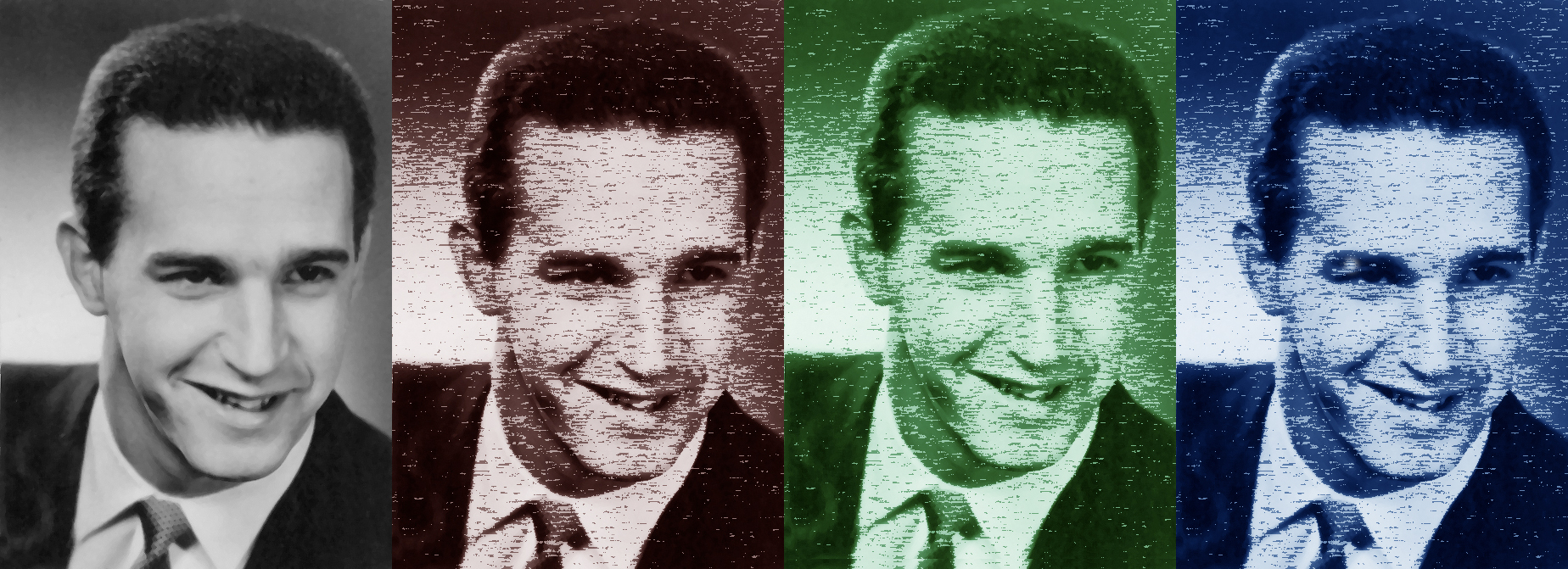
You guys, I’ve had a serious change of heart about something pertaining to the Ron Tammen case. It has to do with the length of time that had transpired before Carl Knox, Miami’s dean of men who was tasked with conducting the university’s investigation into Ron’s disappearance, stopped looking for him. This was despite the fact that Ron’s family and friends, not to mention Miami students, faculty, and staff; alumni; people living in the tri-state area; and anyone else who might have happened upon Ron’s story, were still devouring any piece of information the university could provide.
Recently, I had an email conversation with a reader on the topic of Dorothy Craig, and it occurred to me that, even though I’ve probably alluded to my evolved feelings on this website, I hadn’t really put them into actual words. It’s time to fix that.
What I used to think
In the past, I’ve cited two occurrences that enabled us to establish a before/after timeframe to delineate when Carl Knox had stopped looking for Ron. Mrs. Clara Spivey of Seven Mile, Ohio, provided the “before” date, the latest date on record when I believed Carl was still looking for him. Two months after Ron had disappeared, Mrs. Spivey had contacted investigators with the claim that a young man matching Ron’s description had shown up on her doorstep late at night on April 19, 1953, looking disheveled and confused and seeking directions to a nearby bus stop. At first, the time was reported as being around 11 p.m., but then the reporter, Miami journalism professor Gilson Wright, had changed it to midnight for subsequent articles. Mrs. Spivey had come forward shortly after June 20, 1953, after having read a recent article in the Hamilton Journal News in which Wright had basically retold the story and said there were no new leads. Oscar Decker of the Oxford Police had embraced Spivey’s story and the media were thereby alerted.
“It was a blustery night, with some snow flurries, and traffic was light,” Decker said. “He could have easily walked the 11 miles from Oxford to Seven Mile in two and a half or three hours.” (I beg to differ, chief, but please, do go on.)
The paper then paraphrased him saying that “If the youth in question was Tammen, it reinforces the theory that he suffered a sudden attack of amnesia.”
Because the university was publishing this new development in the Miami Student, it appeared to me as if Carl was still looking for clues as late as June 29, 1953.
The “after” date, the earliest date on record when we could conclude Carl was not still looking, was, in my view, one day after Miami housing official H.H. Stephenson had returned from his vacation in upstate New York. On August 5, 1953, Stephenson was having lunch in a hotel restaurant with his wife, in Wellsville, NY, when he was convinced that he spotted Ron, whom he’d actually known at Miami, eating at a table with several other young men. Weirdly enough, H.H. didn’t approach the young man at that moment, and by the time he returned to the dining room to find out if it was indeed Ron, he was too late. The young men had left.
According to a 1976 article by Hamilton Journal News reporter Joe Cella, Stephenson had told university officials—probably Carl himself—about his experience the next day, on August 6. However, as far as I can tell, Carl didn’t follow up on this lead. He didn’t call the hotel in Wellsville or notify the FBI or anything else he might have done to see if he could track down the young man. Likewise, unlike their reaction when Mrs. Spivey had stepped forward, university officials had kept H.H.’s potential sighting away from news reporters. Joe Cella had to chase that lead down himself 23 years later.
As a result, my earlier hypothesis was that Carl Knox had stopped looking for Ron Tammen sometime between June 29 and August 6, 1953, which I felt was surprisingly soon after Ron had disappeared.
What I think now
I think it was way sooner.
Why I’ve changed my mind
Carl was doing all the right things early in his investigation—conducting interviews, compiling notes, coordinating a campus search, talking to bank officials, and working with law enforcement. Best of all, he was following leads. If someone gave him the name of a person who might know something—someone like, oh, I don’t know…Doc Switzer, for example?—Carl would dutifully write down that person’s name on his pad of paper and contact them.
Another example was when Carl had jotted down the name of a girl Ron used to date as a freshman, Joan Ottino, along with the names of two of her family members. Joan had moved to Denver, Colorado, to attend nursing school over one year earlier, but Carl was undeterred by the distance. A week and a day after Ron disappeared—April 27, 1953—Carl had sent a telegram to Joan, asking “SHOULD YOU HEAR FROM, OR SEE, RONALD H. TAMMEN, PLEASE WIRE OR PHONE COLLECT.”

See what I mean? He’s not simply going through the motions to make it appear as if he’s doing something. He’s really doing something.
On May 4, 1953, an article appeared in the Hamilton Journal News informing readers that several of Ron’s fraternity brothers had recently traveled to Cincinnati in response to a landlord who thought her new tenant looked like Ron’s photo. Unfortunately, she was mistaken. Although the article doesn’t say this, I have it on excellent authority that the person driving those Delts to Cincinnati was Carl Knox. This means that, shortly before May 4, 1953, Carl Knox had been accepting phone tips and contacting his back-up witnesses and hitting the road in search for Ron. I’ve also learned that he was gathering info from his passengers on the drive to Cincy and back as well. It was on that car trip that Carl Knox learned of Paul’s (not his real name) and Chip Anderson’s late-night walk home from the Delt house to Symmes and Fisher Halls after song practice the night Ron disappeared.
But do you know what? That’s also roughly the point in time when the urgency in finding Ron Tammen seemed to wane for Carl. And it wasn’t as if he wasn’t discovering new information. Although we don’t know precisely when he discovered the information about Dorothy Craig’s check, I think it had to have been early in his investigation. Dorothy’s name is written at the top of a page of scribbled notes that establish what Ron was doing before he disappeared. It’s the sort of info an investigator would collect on day one—the condition of the room, an hour-by-hour breakdown of where he was, that sort of stuff. It could be that his note about Dorothy’s check was added at the top on a later date, though, even if that were the case, I’d still think it would have been early on.

I think Carl was instantly intimidated by Dorothy Craig’s check. Something about it—Was it the amount? Was it her powerful employer?—may have astonished him so much that he immediately stopped putting any further details into writing. I’ve thought for some time that as Carl was being informed by the bank official about the check, it was the pivotal point in which he’d halted his investigation. Now I’m thinking: if Carl had learned about Dorothy Craig’s check before May 4—and my hunch is that he had—maybe he did look into it, and someone else had put a stop to that part of his investigation. Maybe they said something like: “Look, Carl, if you want to drive to Cincinnati to check out the landlord’s tenant, fine, knock yourself out, but don’t go near Dorothy Craig.” No matter what happened or how, I think that Dorothy Craig’s check factored heavily into the reason the university soon lost interest in Ron’s case.
And let’s not forget about Dr. Garret Boone, the cranky Hamilton physician whose office Ron visited in November 1952 to have his blood type tested. In 1973, reporter Joe Cella had revealed that Boone had attempted to notify university officials about Ron’s visit but had been rebuffed. Although we don’t know exactly when Dr. Boone attempted contacting the university, I think it was also early.

As Boone told Cella, “I offered the information (the medical file card contents) to local authorities at the time, but it was always discounted.”
His use of the phrase “at the time” sounds as if he didn’t wait around for two months until approaching them, as Mrs. Spivey had done. Mrs. Spivey attributed her tardiness to the fact that she hadn’t seen the story in April and had only been reminded of her front-porch visitor after reading Gilson Wright’s June 20 article stating Tammen was still missing and there were no new leads. Dr. Boone’s situation was different though. In addition to being a practicing family physician, Boone was the county coroner, which means that he was an elected official. It was his job to keep up on the news of Butler County, especially anything having to do with a potentially life-and-death matter regarding one of its citizens. He would have seen the April news articles and he knew the importance of stepping forward as early as possible in such cases.
But when he did, university officials—I’m guessing Carl was one of them—had zero interest in what he had to say. That doesn’t sound like the old Carl—the one from before May 4. This tells me Doc Boone likely contacted them shortly after that date, after he’d had time to rifle through his files for Tammen’s medical card.
By then, Carl Knox was assuming a more passive role in the investigation and letting Oxford police chief Oscar Decker take over. When Mrs. Spivey’s potential Tammen sighting was announced on June 29, 1953, it was Decker who was the spokesperson ballyhooing the news.
And so, at the moment, I think Carl Knox and Miami University were no longer investigating Ron’s case by May 4, 1953—two weeks and a day after Ron went missing. Of course, if we ever find evidence that Doc Boone had reached out to university officials earlier than that day, we’re going to have to push our date up even further.

