Today we’re going to talk about the word injunction. Whenever I stumble upon the word, I think of a legal order, handed down by a court of law, telling someone that they need to do something or to stop doing something. In fact, it’s often used alongside the word court, as in a court injunction. Wikipedia has a very nice write-up on the word injunction, which you are welcome to read at your leisure.
But our friend Merriam Webster has provided a second meaning for the word injunction, as if we needed one. And that meaning is: an order or admonition.
P.S. Of any kind.
P.P.S. No court of law required. Just, you know…someone gives you an injunction to do something (or to not do something) and you do it (or not). The thing is: No one uses it this way.
No, seriously, I’ve been living on earth for a while now, and I’ve even been in the presence of some very smart people with very large vocabularies, and not a soul has ever used the word injunction in this way when I was with them.
Like have you ever heard a kid say: “My dad gave me an injunction last night to do my homework or else.”
Or has your boss ever said: “I need you to have the report on my desk by the end of the week. That’s an injunction.”
Or, after visiting the dentist, have you ever told someone, “The appointment went fine, except she kept giving me injunctions to open my mouth wider.”
Exactly. No one talks that way. That would be weird.
Except, there once was a person who did use the word injunction in this way…sometimes repeatedly.
This person was a hypnosis expert in the 1950s, when the federal government was on the prowl for as many hypnosis experts as it could find. Even though I’ve found no other hypnosis experts of that time period (or ever) who used the word injunction to describe a hypnotic instruction, command, or suggestion, it was this person’s go-to. For example:
“…a man might be given hypnotically (with injunction to ‘forget’ the incident) a strong compulsion to keep a secret diary.”
Or
“Injunctions to forget the hypnotic indoctrination might be tried.”
OR
“Injunction to accept subsequent non-hypnotic instructions from an ‘agent’ might be tried out.”
Those three injunctions were found on page one of a two-page write-up dated March 28, 1952, on how hypnosis might be used to gather intelligence from an enemy. While most hypnosis experts were never tempted to use the word even once in that way throughout their careers, he or she (Who am I kidding? It’s the CIA in the early ‘50s—I’m pretty sure it’s a he) found reason to use it three times in one two-pager.

We’ll talk more about this write-up shortly, because I find its timing to be noteworthy in addition to the route it took to reach the people in charge of Project Artichoke.
But right now, let’s jump to 1955…October 25, 1955, to be exact. On this date, an expert in hypnosis is writing a summary on the various ways in which the CIA could induce a hypnotic trance within a subject without their knowing it—what he refers to as disguised induction. In the memo, he discusses using such methods as anxiety-reducing drugs as well as medical instruments that serve as an object of fascination for the subject while providing an excuse for an operator to encourage the subject to relax without raising suspicion. Among the medical instruments he mentioned were an electrocardiograph (EKG), which measures electrical activity of the heart, and an electroencephalograph (EEG), which measures electrical activity in the brain.
In paragraph 7, he says this about the EKG and EEG: “These machines offer a situation where the subject is in a resting condition and amenable to direction of his sensory powers at the machine (fascination) which coupled with relaxation injunctions may result in achieving hypnosis.”

Relaxation injunctions? Could this be the same guy as the one on March 28, 1952?
Four months later, on February 28, 1956, someone is writing an interim report titled Hypnosis and Covert Operations. Disguised induction of hypnosis is still the end game. Among other techniques, the report leads with the use of the polygraph as a disguised pretest of someone’s hypnotic susceptibility, as well as a way to measure a person’s physiological changes as they are entering and exiting a hypnotic trance.
In paragraph 6, which discusses a far riskier technique involving a subject’s carotid arteries, the author says this: “It is possible to combine a stern injunction of ‘sleep!’ with carotid pressure to obtain hypnosis…,” before cautioning the reader about how dangerous the method is, how it requires a lot of practice and perfect timing, and in no way could it be considered a disguised induction of hypnosis. I mean, good grief, he’s got his hands around the subject’s neck!

In the very next paragraph, he’s back to describing medical instruments, and is singing the praises of a BMR machine, which measures basal metabolic rate. In addition to diverting the subject’s attention and helping them to relax, “the BMR has the added advantage of control of inspired air. Breathed through a mask (which is the measuring device), the amount of oxygen and carbon dioxide inhaled can be controlled. With the oxygen decreased, the subject is rendered more susceptible to hypnosis. This can be coupled with injunctions to ‘relax,’ ‘go to sleep if you like,’ ‘sleep,’ [sic] so that induction might be accomplished.”

I don’t know about you, but I generally don’t permit just anyone to control my oxygen intake, especially if someone with the CIA happens to be in the room. But hey, we’ve found one more “relax” injunction and three “sleep” injunctions, so that’s good news. Also, is it me, or is this guy beginning to sound as if he’s trying to make the word “injunction” catch on? Despite his efforts, I haven’t seen any evidence that it did.
I know what you’re thinking. You’re thinking: sure, it’s weird that the word keeps popping up from time to time, and it does appear that the writer in October 1955 and February 1956 is the same person, since he’s writing about the same topic. But how can we be sure that it’s the same person as the writer of the two-pager of March 1952? And if it is the same person, how can we figure out who the person is?
Two great questions. I suggest we address them backwards. First, I’m going to tell you who I think it is, and then I’m going to tell you why.
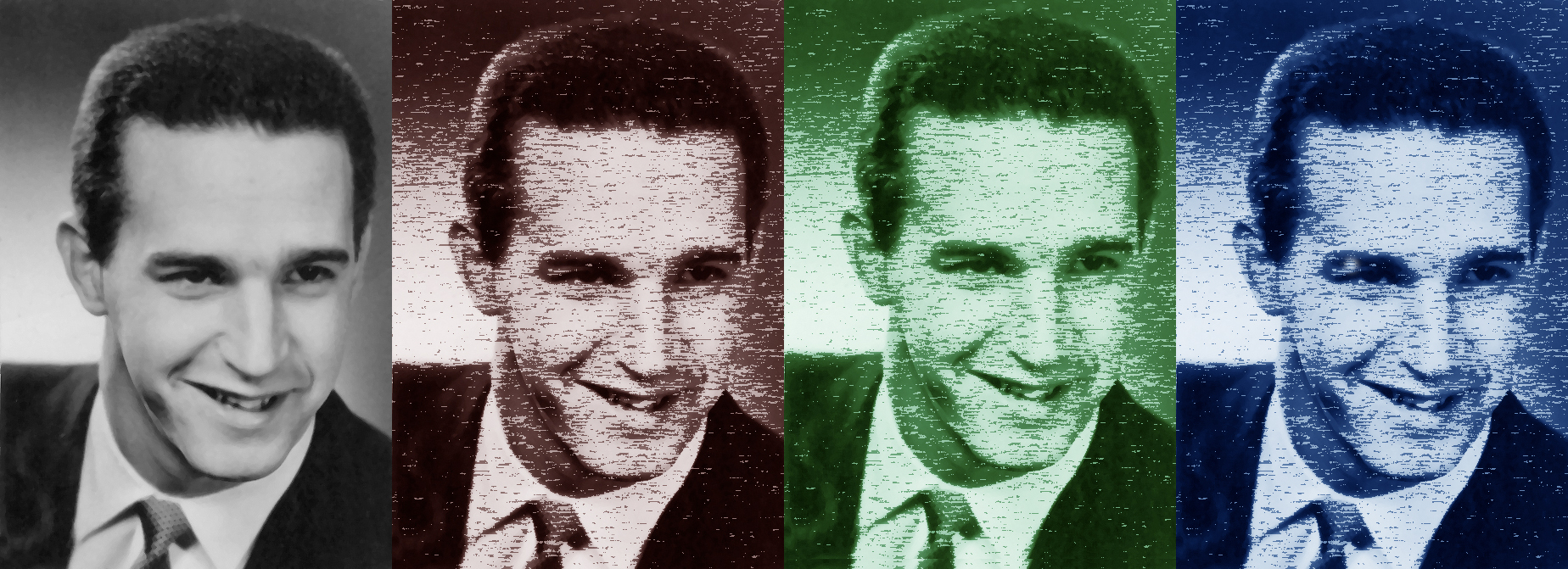
I think it’s St. Clair Switzer. (But I think you already knew that.)
My reason has to do with three clues:
Clue #1: The number/letter combo in the top right of the October 1955 and February 1956 memos
As we’ve discussed in the past, many, but not all, of the CIA’s MKULTRA documents that were released to the public have a combination of numbers and letters in the top right corner. Here’s an example:

Here’s another one:

The series starts with an A/B, which, according to Colin Ross, M.D., stands for Artichoke/Bluebird. Then, there’s a single number, often written as a Roman numeral, which I believe represents a major grouping. The range for these numbers is I (1) through VII (7). Then there are two numbers separated by either a comma or a slash. The first of the two numbers is a smaller category within the large grouping, while the second represents a document’s number in a series within that category.
The October 1955 memo has the following number/letter combo: III, 6/15

The February 1956 memo has the following number/letter combo: III, 6/19

Picture it like this: Think of a file cabinet with seven drawers. The III group occupies the third file drawer, and within the III drawer are (from my count) seven file folders. Each file folder within the III drawer contains a stack of documents, which vary in number. The thickest stack is in folder #2. It contains at least 135 documents. Within the #6 folder is a much smaller stack, numbered from 1 to 19, though several documents are missing. The October 1955 memo and the February 1956 memo both occupy the III file drawer in the #6 folder.
Do you know what other record occupies the III file drawer in the #6 folder? The March 25, 1952, memo in which Morse Allen tells Cmdr. Robert J. Williams that he’s spoken with legendary hypnosis expert Clark Hull, and Hull suggested that they contact his two prized former assistants, namely St. Clair Switzer and Griffith W. Williams. (The names are redacted, but I’m positive of this.)

The number at the top of the March 25, 1952, memo is III, 6/9. In other words, whoever did the numbering decided that the three memos have something in common and should be categorized accordingly. Note that I don’t think all of the memos in the #6 folder involved St. Clair Switzer, but I believe these three memos do.
Clue #2: The date of the March 28, 1952, two-pager
Three days after St. Clair Switzer and Griffith Williams were identified as individuals to be contacted for Project Artichoke, someone typed up the two-pager about possible ways to use hypnosis to obtain information from the enemy. What’s intriguing about this write-up, other than its over-the-top usage of the word injunction, is that it’s forwarded to someone at the CIA by way of a memo written by a third party. The cover memo is dated roughly six months later. We’ll get to that memo in a second.
Because Morse Allen wasn’t the type to sit around and wait, I think that he or perhaps another official reached out to both Switzer and Williams on or around March 25 (a Tuesday). By March 28 (a Friday), someone—it seems logical to infer that it would’ve been one of those two men—had typed up the document after giving the matter some serious thought. Based on what I know about Doc Switzer, my money is on him. He would have treated a phone call from Morse Allen or another official as an assignment to be handled with utmost urgency. (An injunction, if you will!) I’ve seen his response time in other situations—he could turn around a lengthy request from a person in a high place within a day. What the two-pager’s author did next offers up another important clue to his identity.
Clue #3: The date of the cover memo introducing the March 28, 1952, two-pager
Whoever wrote the two-pager had hand delivered it to someone who was in-the-know about Project Artichoke. Strangely, the cover memo is dated 1 October 1952, which seems like a long time for that entity to be sitting on something that the CIA and military were clearly interested in.
Here’s a copy of the cover memo:

It’s short, so I’m going to write it up here as well.
Memorandum for: [REDACTED]
Subject: Matter Possibly Related to Project ARTICHOKE
1. Attached hereto is a memorandum delivered to this office by [REDACTED]. This was one of a number of operational suggestions that Mr. [REDACTED] brought to this office which he understood was interested in new ideas. He has no knowledge of Project ARTICHOKE and has been informed that his suggestion has been forwarded to the interested office.
2. The memorandum is being forwarded to you since it is understood that your office has assumed overall direction of Project ARTICHOKE and the matter appears to be related to some aspects of Project ARTICHOKE.
Who I think wrote the cover memo
Unfortunately, the writer and their workplace are both redacted, but I still think I know its origin. I believe the cover memo writer was someone on a military base. Think about it: the only insiders regarding Project Artichoke were a select group of people within the CIA and the military, and no one would dare pull a pop-in at the CIA.
As for which military base, I think I know that too. We discussed above that the two most likely authors were either St. Clair Switzer or Griffith W. Williams. And of those two men, the only one who had an association with a military base was St. Clair Switzer.
Therefore, I think the origin of the cover letter was someone at Wright-Patterson AFB—most likely the Wright Air Development Center’s (WADC’s) Aero Medical Laboratory, where Switzer was well known. The person who called him on or around March 25 likely gave a broad description of the kinds of questions that they were seeking answers to, but they wouldn’t have given him the full details of the program—not yet. They certainly hadn’t disclosed the name Artichoke. They were probably assessing his interest and availability regarding a classified project having to do with hypnosis, and he wanted to show them just how interested and available he was.
Why I think it was so late
So why would someone at Wright Patt wait until October 1 to forward Switzer’s memo to the officials overseeing Project Artichoke?
I can think of two reasons. First, on September 30, 1952—the day before the cover memo was written—Project Artichoke was officially transferred from the Office of Scientific Intelligence to the Inspection and Security Office (I&SO), where Morse Allen was employed, with research support from the Office of Technical Services and Medical Sciences staff. (They’d been discussing this transfer for months, but this appears to be the final word.) The changeover involved a major reorganization in which duties were transferred from one person to another and copious files were handed over as well. To forward a memo on the first day of Artichoke’s new management structure doesn’t seem late at all. In fact, it seems really on the ball.

Second, a memo that was probably fresh in their brains, dated September 23, 1952, may have also played a role. In the last paragraph, it was mentioned that the Surgeon General of the Air Force—a man named General Harry G. Armstrong—had requested that someone be “cut into the picture” for Project Artichoke. Of course, that person’s name was redacted, but in my September 19, 2023 post, I go deep into why I think Switzer was the person named in that memo. Namely, Armstrong had strong ties to Wright Patterson Air Force Base, so they shared that connection. What’s more, Switzer had been stationed for a portion of the previous summer at the Air Research and Development Command (ARDC) in Baltimore, which oversaw the Wright Air Development Center. I think that carried a lot of weight, since someone had handwritten “air research” above the person’s redacted name.
My theory is: the people at Wright-Patterson AFB probably hadn’t waited six months to send the two-pager to the CIA. They’d likely forwarded it in March 1952 to someone at OSI. However, when Project Artichoke was switched over to I&SO’s purview, someone at Wright Patt probably thought it wouldn’t hurt to forward the two-pager to them as well, especially now that they knew that the Office of the Surgeon General would approve.
If I’m correct that St. Clair Switzer had written the injunction memos of 1952, 1955, and 1956, you can be sure that this will open up new areas of study. It also confirms one guess I’d made a long time ago concerning two other documents that I believe Switzer wrote. But we’ll save that discussion for another day.
Any thoughts? Have you ever used the word injunction in this way before? If not, try it out on your friends, coworkers, and anyone else you know and tell us about it!
Many thanks to The Black Vault for making these documents accessible.

I have never used the word injunction or heard it used outside of court. But I agree that it seems to fit Switzer’s need to sound extra competent.
However, way back in the day, there was a TV show called Schoolhouse Rock, which featured a well known song called “Conjunction Junction (What’s Your Function). It’s now hopelessly stuck in my head lol.
😆! I remembered that too! I listened to it, and it’s kind of why I went the Dysfunction route. Good catch!