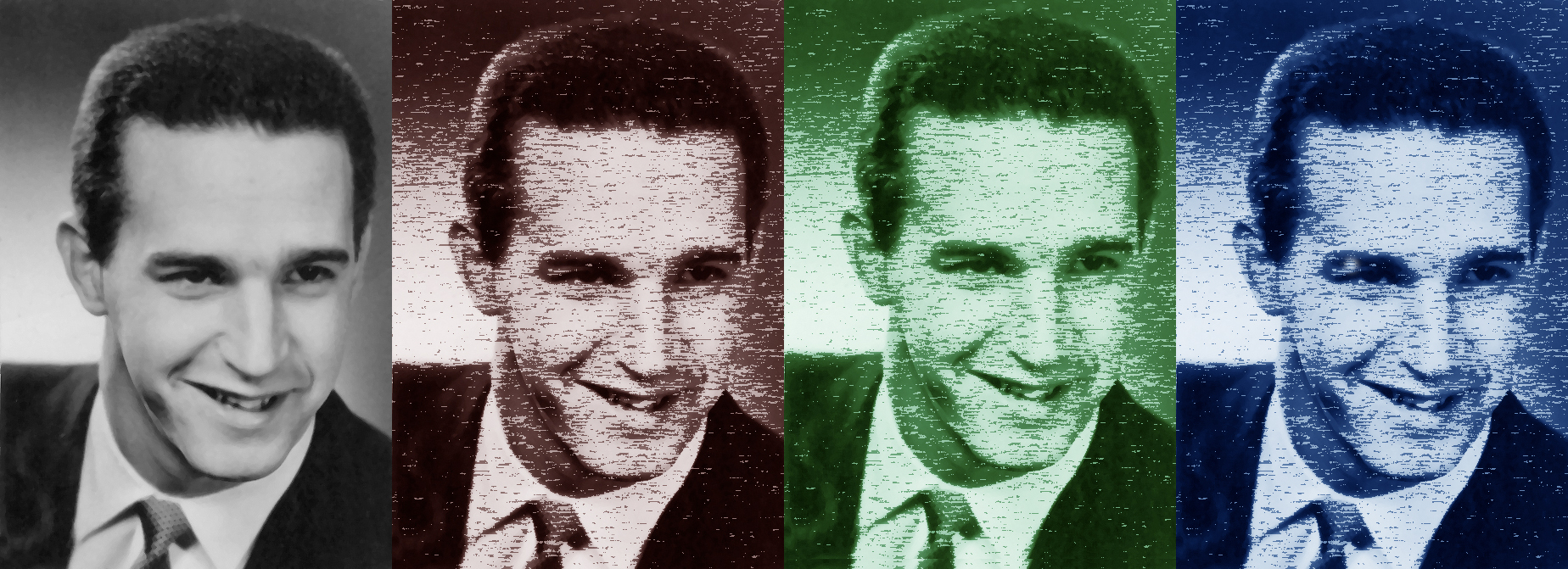
A new take on Ronald Tammen's 1953 disappearance from Miami University
Author: jwenger
I’ve been a science writer for more than 25 years in academia and the government. Currently, I’m researching and writing a book about an unsolved Ohio mystery.
This is going to be a quick one, since I really didn’t plan on writing anything today and I have other things I was hoping to do. However, what I’ve recently discovered is too big to sit on plus it’s gross outside, so the other things can wait.
For today’s post, let’s all think back to the halcyon days of Sunday, February 8, 2026. Temps in my neighborhood were around 20 degrees Fahrenheit, wind gusts approached 10 mph at times, and gas prices were averaging $2.91 per gallon at the national level and $2.67 in the Midwest. Speaking of gas prices, that’s roughly $1.65 less per gallon than we’re paying now at the national level and approximately $2.09 less per gallon in Ohio, which, P.S., is one of the “top 10 most expensive gasoline markets” nationwide. Yeah, those were some good times.
Anyway, it was on that date that I posted about a second tie to Las Vegas for Ronald Tammen. The first tie had to do with Hank Greenspun, about whom we’ve been getting to know quite a bit lately. We won’t be talking about Hank today. My announcement back on February 8 had to do with a scribble on Ron Tammen’s FBI record dated 5/9/73 that matches a scribble on Ash Resnick’s FBI record dated 1/8/74.
Ash Resnick was a greeter at Caesar’s Palace in whose parking lot someone placed a stick (or two) (or eight) of dynamite beneath Ash’s Lincoln four-door sedan. Thankfully, an informant had alerted the police before anything bad happened and three ATF agents had caught the alleged perpetrator in the act. For some reason, the FBI has elected to hide that person’s identity, but newspaper accounts have tied a couple names to the alleged bomb plot, one being James Carl whose fingerprints matched those of Donald Lee Wayton. In the end, Wayton was sentenced to six years in prison for the crime.
The scribble in question is the number 366 followed by an “m” followed by a space and then something that looks like “hau.”
Here’s Ron’s “366 m hau” on the document in which the Cincinnati Field Office asked FBI Headquarters to compare Ron’s fingerprints to the guy from Welco Industries:
Here’s the “366 m hau” on Ron’s FBI record……and here’s the whole document
Here’s Ash’s “366 m hau” on the document describing the suspect in the attempted car bombing:
Here’s the “366 m hau” on Ash’s FBI record……and here’s the whole document
Because the timeframe is different, I don’t know if Ash’s attempted car bombing had anything to do with Ron Tammen. Here’s what I do think: I think “366 m hau” was an informant who spoke to the FBI about both cases.
Why do I think this? I think this because the FBI had a lot of informants on its rolls whom they identified with letters and numbers. They did this so that they wouldn’t put a valuable source of information in harm’s way. Generally, the first two letters were the field office’s initials, which, in the case of Las Vegas, were LV. The initials would subsequently be followed by a number. Usually the numbers were fairly low, but they could climb pretty high in the bigger cities. If the number 366 belonged to an informant in Las Vegas, they would officially be known as LV 366 perhaps followed by a PC, which would stand for “potential criminal” informant. But was there such a person?
There was!
Recently, I found a July 20, 1970, record in which informant LV 366-PC was updating the FBI on the whereabouts of a mobster named Martin (Marty) Fenster. Here’s a summary of what LV 366-PC had to say about Fenster, which you can find on page 2, paragraphs 2 and 3, of the below document (circled in red):
On 2/19/70, LV 366-PC advised that MARTY FENSTER is now working for FRANK ROGER MILANO at the Clark County Vending Company, Las Vegas, Nevada. This target stated that at one time, FENSTER operated the Grace Ranch near Tucson, Arizona for PETE LICAVOLI. The target stated that FENSTER left the Grace Ranch about a year ago, moved to Los Angeles, California and about a month ago came to Las Vegas at the invitation of MILANO.
On 4/1/70, LV 366-PC advised that MARTY FENSTER was residing at 2030 McCarran Street, North Las Vegas, Nevada, apartment 2.
page 1 of the FBI record in which LV 366-PC is cited as an informantpage 2 of the FBI record in which LV 366-PC is cited as an informant; pertinent part is circled in red
Among other things, I’m looking into the Marty Fenster and Clark County Vending Company connection to see if I can learn anything more about the informant. For now, I think we can arrive at these conclusions:
The informant is in Las Vegas, as witnessed by the use of the phrase “came to Las Vegas.”
The informant has ties to the Mob.
Because of the “PC” in his informant number, he may be a Mob figure himself.
The informant likely knows Frank Roger Milano personally and does business with the Clark County Vending Company, whether as an employee or a customer.
My theory is that the scribbler left off the LV part of the informant number in order to be cryptic so that we wouldn’t catch on to its meaning. As for the “m hau” notation, it could be part of the informant’s name, also intentionally cryptic, which would be difficult to figure out. Nevertheless, I have a guess, but I don’t want to say what it is just yet.
As to whether FBI Headquarters thought the “366 m hau” notation was important, oh, they definitely did. Check out how they’ve underlined the “366 m hau” on Ron’s record with both a straight and squiggly line.
Note the straight and squiggly lines under Ron’s “366 m hau”
Now look at how they’ve drawn similarly straight and squiggly lines on page 2 of the 1/7/74 FBI teletype from Las Vegas in the descriptions of the bomb suspect and Resnick.
page 1 of the FBI teletype where they’ve used the same straight and squiggly lines to highlight key infopage 2 of the FBI teletype in which key descriptive info is highlighted with a straight and squiggly line; pertinent parts are circled in red
OK, that’s all for today. Interested in your thoughts.
I’ve been thinking long and hard about how to write this blog post and, to be honest, I don’t think this is something that can be told in the usual way, not even through our beloved Q&A format. There are just too many people to introduce, each bogged down with their own backstories, and I don’t think I could do them justice—not without a corkboard and a lot of red string. Also, I don’t want to make this too detailed because, after all, this is a Saturday, and who needs to wade through so many details on a weekend? So here goes: a broad-brush re-telling of how I’ve arrived at my latest theory without inundating you with too many names, facts, and figures. Those can all come later in the book, right? Let’s go!
It all started a week or two ago when I was trying to figure out what Watergate had to do with Hank Greenspun. To me, Greenspun’s office seemed to be a weird little side trip for the Watergate burglars. As most of you know, Hank Greenspun was the outspoken publisher of the Las Vegas Sun and a household name in the City of Lights, Dreams, Opportunities, Second Chances, and, oh yeah, Sin. Something was being stored in Hank’s safe that made the White House Plumbers and the president whom they served very nervous, and I really wanted to find out what that was.
The reason for my obsession is that Hank’s case seems pertinent to Ron Tammen’s case. After all, the acronym “Hac” is written in the top right corner of two of his records, just like Ron’s ten Hacs; an underlined “lf” is scribbled in the right margin of one of his records, just like Ron’s four lf’s; and the words “see index” are written in the left margin of one of Hank’s documents in handwriting that’s similar to the “see index” on page one of Ron’s records. For some reason, Ron Tammen and Hank Greenspun appear to have a connection.
See Hank’s “Hac” in the right corner, next to the checkmark above “Las Vegas”; click on image for a closer viewSee Hank’s “Hac” in the right corner, beneath “JFK” and see his “see index” in the left margin; click on image for a closer view See Ron’s “Hac” in the right corner, to the left of the “all files” note and see his “see index” in the left margin; click on image for a closer view See Ron’s “Hac” in the right corner; click on image for a closer view
There’d been a few possible reasons mentioned in government records for the 1972 break-in at Greenspun’s office. In his testimony before the Senate Watergate committee, James W. McCord, Jr., said it was to obtain blackmail material that was “racketeer-related” against one of the Democratic candidates and, if he were elected president, “the racketeers or national crime syndicate would have a control or influence over him.” According to an FBI report, another possible reason had to do with records that would make Edmund Muskie, the favored Democratic contender, look bad. Apparently, in the 1960s, Muskie had been on a group hunting trip in Maryland and was cited for scattering corn to attract game birds. Greenspun himself weighed in and, although he acknowledged that he had a document on the Muskie hunting incident on an office table, not in the safe, he waved it off as an unlikely reason for the attempted break-in, which, according to Greenspun, had occurred in August 1972. I will add here that this reason makes no sense if the break-in attempt indeed happened in August 1972, since Muskie had formally withdrawn from the presidential race on April 27, 1972. The most likely reason, Greenspun said, was the sizable stash of memos once owned by Howard Hughes that Greenspun was storing in the safe. In 1970, he’d agreed to store the memos for his friend Robert Maheu, who’d been in charge of Hughes’ Nevada operations until he was fired from that post shortly after Hughes moved from Nevada to the Bahamas in November 1970.
I found my answer in an illuminating article in the December 21, 2015, issue of the Las Vegas Sun, by Megan Messerlyand J.D. Morris. That article led me to a more in-depth 16-page article in the September 1976 issue of Playboy Magazine, titled “The Puppet and The Puppetmasters,” by Larry DuBois and Laurence Gonzales.
Howard Hughes during his younger years; public domain
Long story short: Hank Greenspun was right. It was the Howard Hughes memos that the Plumbers were after. Apparently, Howard Hughes was a political hot potato when it came to Richard Nixon. You could say that Hughes owned Nixon. Hughes had been paying large sums to Nixon and his brother Donald since 1956, seeking political favors in return. A $205,000 loan to Nixon’s brother in 1956, after being made public by investigative journalist Drew Pearson, likely contributed to Nixon’s election losses for president in 1960 and for governor of California in 1962. In 1969 and 1970, Hughes had donated $100,000 in two $50,000 installments to Nixon’s reelection campaign through Nixon’s longtime friend Bebe Rebozo, money that was also spent illegally. Nixon had been burned twice by Hughes’ loan to his brother and he didn’t want another hefty Hughes donation—a $100,000 bribe—to spoil his chances for reelection.
As for what Hughes wanted in return, one of his top priorities was for the Atomic Energy Commission to stop conducting underground nuclear testing near Las Vegas, since the explosions caused his penthouse at the Desert Inn to sway. He was passionate on this matter, and he would have supported either party to get what he wanted. In 1968, when Lyndon Johnson was still president, a representative of Hughes approached Vice President Humphrey and, according to DuBois and Gonzales, promised that “we will give him full, unlimited support for his campaign to enter the White House if he will just take this one on for us?” Humphrey didn’t bite.
The Hughes memos were a key reason for the June 17, 1972, Watergate break-in as well. A target for that break-in was Larry O’Brien, chair of the Democratic National Committee. Before he was the DNC chair, Larry O’Brien had worked for Howard Hughes as a lobbyist and he knew many of the same people in that tight circle. The Nixon team likely worried about what he knew about the Hughes memos as well.
On February 3, 1972, the memos in Greenspun’s safe were made known to the world by the New York Times. The next day, according to DuBois and Gonzales, “Mitchell met with Liddy and the result was Liddy’s belief that he had the go-ahead for two missions: the burglary of Greenspun’s safe and a mission into O’Brien’s office at the Watergate.”
You could say that, without Hank Greenspun, there would be no Watergate.
But let’s talk about those “Hacs” on Hank’s and Ron’s records. A subsidiary of the Howard Hughes empire was the Hughes Aircraft Company, commonly abbreviated as HAC. DuBois and Gonzales report that HAC was a cover for the CIA, having forged a relationship as early as 1949, two years after the CIA’s original charter. Hughes would give the CIA lots of money and the CIA would award Hughes with lots of lucrative contracts.
Could “Hac” refer to Hughes Aircraft Company? Maybe its presence on a person’s FBI record, rare as it was, meant that they worked undercover there as a CIA operative. Or maybe the FBI used it as shorthand for Hughes himself. Greenspun was a friend of Hughes beginning in 1966, when, upon his invitation, Hughes traveled to Las Vegas and decided to stay there and invest in a number of casinos over those four years.
But here’s the coolest part: do you remember this past summer how I posted about another “Hac” sighting? That notation appeared at the top right of a document for the New England chapter of the Committee for Non-Violent Action (CNVA). At first, I thought the “Hac” notation pertained to a peace activist named Marjorie Swann since that document was in her file, but she’s not mentioned in it. I was having a tough time figuring out what the organization’s link might be to Howard Hughes until I learned something: not only did the CNVA protest against the Vietnam War, but, according to Wikipedia, they were formed in 1957 to protest against nuclear weapons testing. Their first protest was held in August 1957 at Camp Mercury, 65 miles northwest of Las Vegas.
See “Hac” in the right corner, near the circled sd; click on image for a closer view
This brings us to my new theory: Maybe the FBI used the “Hac” notation to indicate an association with Howard Hughes, whether financial or personal.
As for how Ron Tammen would have come into contact with Howard Hughes, I have some ideas about that too. His name was Robert Maheu, and, in addition to being employed by Howard Hughes, he was a CIA contractor who’d spent a lot of time in Miami as a liaison to the CIA and Mafia in their efforts to assassinate Fidel Castro. Let’s save him for another day.
NOTE TO PEOPLE WHO ARE READING ON THEIR PHONES: IN ORDER FOR THE QUIZ TO APPEAR, YOU NEED TO CLICK THE LINK AT THE TOP OF THE EMAIL MESSAGE THAT SAYS “READ ON BLOG” TO THE RIGHT OF THE BLOG’S NAME. (DON’T CLICK ON “READER.”) THANK YOU AND APOLOGIES TO ANYONE WHO HAS HAD DIFFICULTIES.
Hey, great job! You made it to the end of today’s post, and now it’s time to tackle the quiz. About one-half of the questions deal with what I posted today, while the other half pertain to the rest of the site. I’ve tried to make the questions relatively easy for a typical AGMIHTF follower, but be sure to read them closely, because there are a couple tricky ones.
Also, I don’t want to tell you how to live your lives, but I’m using the free version of the quiz plug-in, so I have no way of knowing how many times you take the quiz. If you happen to learn something while taking it the first time and then decide to take the quiz again to get a perfect score, I’m 100% OK with that.
If you get a 10 out of 10, please email your results page pronto to rontammenproject@gmail.com. You can do that by taking a screenshot of the results page and attaching it to an email or sharing your results page via the share button on your screen.
The first 10 people who email me their score of 10 out of 10 will receive this ⬇️⬇️⬇️ string bracelet. Also, only one bracelet per person/mailing address. Good luck!
Ron Tammen 73rd Anniversary Quiz
How much do you know about Ron Tammen's disappearance? The first 10 people who answer all 10 questions correctly and who email me their results will receive a black and silver string bracelet, made in Turkey, with the words Ron Tammen spelled out in Morse code. C'mon! You can't win if you don't try!
Whew! This has been one enormous post, especially Part 3. Hopefully you’ve found some of this information to be useful. But we still haven’t answered the question that I led with in Part 1. Let’s address it first.
Who did Ronald Tammen call ‘friend’?
Of course, these are just guesses, but I’d put James McCord at the top of the list. Based on their shared ST-102, REC-19 stamps as well as their lf’s, it seems as though their paths had indeed crossed. Maybe they’d met in Miami, when McCord was sitting in on meetings at JM WAVE. Renowned JFK researcher and author James DiEugenio shared a fascinating anecdote about McCord in an article posted on the Kennedys and King website:
“But beyond that, when Lisa Pease and I were publishing Probe magazine in the nineties, we met up with former CIA pilot Carl McNabb. He said that prior to the Bay of Pigs, he had been briefed at the Miami CIA station, since he was part of the aerial facet. He noticed that McCord was in the room and he was struck by how taciturn he was. Afterward, he asked the briefer who he was. He told him his name. He then added that he was [then-CIA Chief of Operations/Plans Richard] Helms’ Zap Man. McNabb later showed me the very old notes with this information recorded on it. I asked him what the term meant. He replied McCord was his liquidator.”
Is it just me, or do the names “Zap Man” and “liquidator” sound like supervillains?
Speaking of supervillains, perhaps Morse Allen, who did much of the day-to-day work on Project Artichoke, and James McCord, who was right there with him as part of the CIA’s Security Research Staff, had known Ron as one of Project Artichoke’s star research subjects.
If they weren’t friends, maybe Ron considered McCord to be more of a boss figure. If so, perhaps Ron had signed on to work for McCord Associates, James McCord’s security firm at the time McCord was involved with Watergate.
Ron also may have been friends with some of the Cuban exiles as well as their American associate Frank Sturgis. As you may recall, Sturgis had 10s in the upper right corner of several of his FBI records, just like Ron did. Sturgis’s 10s on records from the 1950s and ‘60s mainly had to do with his counter-revolutionary activities in Cuba and Guatemala. A 10 from October 1973 deals with his conviction in a case in Florida involving an auto theft ring and whether his Watergate testimony had influenced that conviction. One 1977 document with a 10 in the right corner described how Sturgis, Bernard Barker, and Eugenio Martinez were seeking pardons from their Watergate convictions. My ongoing theory is that the 10’s signify a heads-up to the FBI’s liaison to the Secret Service. Ron Tammen, Frank Sturgis, Bernard Barker, and the others might have all been work friends whose antics were keeping the Secret Service on alert.
My third choice is that he may have been friends with Richard Cox. Do you remember how a former professor at Miami University had written to the Army’s Criminal Investigative Division in 1952 letting them know that he and his wife, also a professor, were familiar with someone who looked very much like Richard Cox during their time in Oxford? Both felt certain that it was he. In his letter to the CID, the man said that the individual was an employee “of a shop or restaurant or even, perhaps, of the university” in Oxford, Ohio, for the period of January through September 1950, before he and his wife moved to the Chicago area. In an FBI report, his wife told agents that she and her husband believed the young man worked in a “public or semi-public place such as a restaurant or filling station.” Maybe Richard Cox had been recruiting young college men in that town for the CIA for a few years, bonus points if they were gay, and he and Ron struck up a friendship. Or maybe they met in Florida working for the CIA and somehow stumbled upon the uncanny coincidence that they were both two young men from the Buckeye state who’d disappeared from their college dorms within three years of each other. Small world!
In all seriousness, can you imagine Ron Tammen hanging out with James McCord, Frank Sturgis, and Richard Cox in a secret Miami meeting spot? If that ever happened, I would’ve loved to have been a fly on that pink stucco wall.
Or maybe they met on the beach. Can you picture it?
left to right: James McCord, Ron Tammen, Richard Cox, and Frank Sturgis mingling in my imagination
Look, I’m sorry to have to change the subject, but I need to tell you guys something, and there’s no easy way for me to do it.
What’s up?
I recently realized that I was mistaken about something, and I’ve promised that I’d let you all know whenever that happens. It has to do with my post “Ron, Dan, Jim, and Hank: four all-American ‘bad boys’ in the summer of ’73.”Don’t get me wrong—I still stand behind most of that write-up, which also discusses Watergate, James McCord, Daniel Ellsberg, and Hank Greenspun, only less in-depth than we’ve done today. What I got wrong was the part about Richard G. Hunsinger, the FBI administrator who’d grown up in Oxford, Ohio. As it turns out, he didn’t sign the FBI report dated June 15, 1973.
I really did think that the initials RGH looked like how Richard G. Hunsinger wrote them. What’s more, I thought that the signature next to his initials looked like it came from Willistine Goode, Hunsinger’s capable assistant. It, too, resembled her signature. But I was oh so wrong, and the actual signer makes more sense.
The signer of that FBI report was the special agent in charge of the Chicago Field Office in 1973, Richard G. Held. In 1976, Held would be promoted to associate director of the FBI by Clarence Kelley after Nicholas P. Callahan had been fired for financial wrongdoing. Of course, it makes total sense that the SAC of the Chicago office would sign the form that they themselves had submitted to Headquarters. I’m embarrassed that I immediately jumped to Hunsinger. Please forgive. I will try to do better.
Wow. Who knew that you’d have to study so much handwriting in this project?
Do you know what would have been helpful before I got started with this project? It would have been helpful if I’d received training in handwriting analysis. I’m not talking about the kind of handwriting analysis in which you can tell someone’s personality by their handwriting. I don’t really care about that. I’m talking about forensic document examination in which you can identify whether two or more handwriting samples were written by the same person. Think about all of those scribbles and scrawls on Ron’s FBI records. Wouldn’t it be fantastic if we could identify the people who’d written them?
Why don’t you just hire someone?
Forensic document examiners aren’t cheap. It’s a lot like hiring an attorney. The science of examining handwritten letters on documents takes hours and hours, with every one of those hours costing several hundred dollars. Because I’m not rolling in dough, I need to be judicious, and to consider hiring one only when the outcome of that examination would be most worthwhile. But that’s just me.
Pro tip: If you’re someone who’s just starting out career-wise, and you’re also considering doing some FOIA research of your own, I’d highly recommend getting certified in forensic document examination. Imagine having that skill at your fingertips as you were poring over old FBI or CIA records. It could set you way ahead of the pack.
Have you ever hired a forensic document examiner?
I have.
And?
Totally worth it. But that’s a story that’ll have to wait until another day.
In honor of Ron Tammen’s anniversary, comments are being opened up free-for-all style. Ask me anything you want to about Ron Tammen. No question is too stupid. No comment is too weird. Just nothing mean, please. I don’t respond to mean. Also, I won’t be revealing any people’s names that I’m protecting, so please don’t try. Also, I can’t say anything about the lawsuit either.
Lastly, don’t forget to fill out your quiz and hopefully win one of those bracelets. I’m loving mine!
Let’s go!
***********************
ADDENDUM
Oh. Em. GEE, Kenneth W. Whittaker and E. Howard Hunt were neighbors??
As you can imagine, I’ve been learning as much as I can about the White House Plumbers, since, oh, I dunno, I think Ron Tammen may have known one or more of them. Well guess what? Remember Kenneth W. Whittaker, the special agent in charge of the FBI’s Miami Field Office whose 1-gamma scribble looks a lot like a notation on one of Ron’s FBI records? (See part 1.) Well, today I learned that Kenneth W. Whittaker was neighbors with E. Howard Hunt of Watergate fame (see part 3) beginning in 1977, after Hunt was released from prison for his Watergate escapades.
Neighbors.
Look, I understand that it’s a small world and all. I even make a point of saying that to people when the situation calls for it. But neighbors?
Here’s Kenneth Whittaker’s affidavit that he wrote on behalf of E. Howard Hunt when Hunt was seeking a pardon for his Watergate escapades. (He didn’t get it.) I don’t know about you, but there are coincidences, and then there are coincidences, and I’m not so sure I believe that having Howard Hunt move in next door to the former SAC of the FBI’s Miami Field Office would qualify as a bona fide coincidence. Would you?
Image from the FBI Vault; click on image for a closer viewImage from the FBI Vault; click on image for a closer view
I know what you’re thinking. You’re thinking that I tend to picture Ron Tammen as some kind of Forrest Gump–type character, living his mysterious life in the foreground of America’s most momentous events of the mid-to-late 20th century. I was never a fan of that movie, by the way, and not just because of the way Forrest said the name Jenny, which people have kiddingly been subjecting me to on occasion since the movie came out in 1994. I’m pretty sure that that movie is one of the reasons why anyone named Jennifer who was born after the year 1980 has opted to be called Jen. But yeah, agreed. I’ve managed to insert Ron Tammen into some iconic moments in American history. But I’m not doing this on purpose. It’s where the evidence has led me. And right now, for what it’s worth, Ron’s FBI records have led me to Watergate.
Do you think Ron Tammen might have had something to do with Watergate?
If he did, he seemed to escape detection during the investigation. To date, I’ve found no one who fits his description in books and government records I’ve read on the June 17, 1972, Watergate break-in. I’m not saying he wasn’t somehow involved. I just haven’t been able to locate him.
With that said, when Ron’s records were making the rounds at the FBI, their work was essentially done regarding the Watergate break-in. In January 1973, James McCord and G. Gordon Liddy were convicted for their crimes weeks after E. Howard Hunt, Eugenio Martinez, Virgilio Gonzalez, Bernard Barker, and Frank Sturgis had pleaded guilty. But that doesn’t mean the FBI’s work pertaining to Watergate was completely over.
On May 25, 1973, Harvard law professor Archibald Cox was sworn in as the special prosecutor charged with investigating the additional Watergate-related matters that were coming out daily in the news and during the televised Senate hearings. Watergate was now one very large, writhing can of worms, and man oh man…right away, dude was digging into the dirt, worm by squirmy worm, in search of rock bottom.
Special Prosecutor Archibald Cox; Source: Library of Congress, no known restrictions on publication; Chick Harrity, photographer
Meanwhile, over at the FBI, L. Patrick Gray (pictured below at left) had stepped down as acting director on April 27, 1973, after it was revealed that he’d willfully destroyed crucial evidence pertaining to the Watergate break-in. At the onset of Archibald Cox’s appointment, he and his staff were communicating frequently with the FBI’s acting director, William Ruckelshaus (pictured in the center). In July 1973, with the swearing in of FBI Director Clarence Kelley (pictured at right), the Special Prosecutor’s Office was requesting that FBI agents follow up on all sorts of questions pertaining to Cox’s multipronged investigation.
Were Richard Cox and Archibald Cox related to one another?
Wouldn’t that be crazy? Nah, I’m sure they weren’t. But because I’m lucky enough to be writing about two men with the same last name in one four-part blog series, I’ll be sure to make it very clear which one I’m talking about from here on out.
What sorts of things was Archibald Cox investigating?
The special prosecutor immediately set his sights on prohibited contributions, illegal wiretaps, election law violations, and other criminal acts by the Committee to Reelect the President, commonly referred to as the ever-so-apropos acronym CREEP, as well as others in CREEP’s corrupt orbit. One obvious area for exploration was the other suspicious break-ins that had been reported at roughly the same time as the break-in at DNC Headquarters.
Tell us more about the additional break-ins
According to FBI records, Archibald Cox sought the FBI’s assistance in investigating roughly 20 break-ins that appeared to be related to Watergate. Although I’m unable to find the original memo with his instructions, I’ve found references that state that he made such a request on June 19, 1973. But look, he and his assistants sent the FBI scads of memos, many one case at a time. It’s possible that they sent several memos versus one omnibus memo. Let’s not sweat it, OK?
First and foremost, Archibald Cox wanted to know more about the break-in at the office of Daniel Ellsberg’s psychiatrist, Dr. Lewis Fielding, in September 1971. As we’ve discussed in the past, Daniel Ellsberg had leaked what became known as the Pentagon Papers to the New York Times and Washington Post, and Nixon was so incensed about it, his DOJ charged Ellsberg and his associate Anthony Russo with such crimes as theft of government documents and espionage. The Fielding break-in had initially flown under the radar because a career burglar named Elmer Davis had confessed to the crime and, shortly thereafter, the Beverly Hills PD had quietly closed the case. It was E. Howard Hunt’s testimony before the Watergate grand jury that brought the Fielding break-in into the light, placing Hunt, G. Gordon Liddy, and “two of the men from Miami” at Fielding’s office. When prosecutors alerted Judge William Matthew Byrne, Jr., who was presiding over Daniel Ellsberg’s and Anthony Russo’s trial in Los Angeles, about what Hunt had told the grand jury, Byrne ordered that he be given access to Hunt’s testimony, which was also released to the public on May 4, 1973. One week later, on May 11, 1973, all charges were dropped against Ellsberg and Russo because of government misconduct.
Archibald Cox considered the Fielding break-in significant. Stephen Trott, deputy district attorney for the City of Los Angeles, said this about what Archibald had told him: “…as far as constitutional matters were concerned, he thought our case was much more important than the Watergate case itself.” Here was the U.S. government breaking into a private citizen’s office without a warrant hoping to find evidence that they could use to discredit his patient because they felt he’d crossed the line. Said Trott, “Archibald Cox thought these claims raised a significant issue: Can the President authorize the break-in of a psychiatrist’s office to steal the file of someone on trial in order to give it to the Detroit News?”
Archibald also wanted more information about the purported break-in at Hank Greenspun’s Las Vegas Sun office in 1972. Although FBI records claim that it was merely planned and didn’t happen, John Ehrlichman, White House assistant for domestic affairs, had told Nixon that “I guess they actually got in.” Archibald also wanted to know more about a break-in at Dan Rather’s home on April 9, 1972, as well as about 17 others.
Here are 10 additional noteworthy break-ins singled out by William Ruckelshaus for Clarence Kelley as he was passing the baton to him in July 1973. Because Ruckelshaus was giving Kelley a birds-eye view of the most pressing issues pertaining to the Watergate investigation, I have to presume that these were also on the special prosecutor’s A-list. (Note that the last one was later withdrawn.)
Chilean Embassy and Chilean officials residing in New York City
Law firm of Fried, Frank, Harris, Shriver, and Kampelman (Ruckelshaus referred to it as Sargent Shriver’s law firm, though the offices of Patricia Harris and Max Kampelman were also broken into)
Robert Strauss, Democratic National Committee Chairman, NAACP
Richard Gerstein, Dade County prosecutor
Carol Scott, attorney for Vietnam Veterans Against the War (VVAW)
Michael Lerner, defendant in the Seattle Seven case
Lee Holley, attorney for the Seattle Seven
Gerald Lefcourt, activist and attorney for the Detroit Weathermen and Chicago Seven (also wiretaps)
Washington Free Press
National Committee Against Repressive Legislation (this was later withdrawn by special prosecutor)
But the break-ins didn’t end there. According to “The Unsolved Break-Ins 1970-1974,” by Robert Fink, in the October 10, 1974, issue of Rolling Stone magazine, additional victims included those on the list below. Fink points out that “Since the break-ins continued after the Watergate arrests—indeed into this summer [of 1974]—it is a reasonable speculation that other teams of burglars were involved: either additional ‘plumbers’ or special FBI or CIA investigative units.” Fink also estimated that “at least 100 break-ins, apparently political in nature, occurred during the Nixon administration.”
Charles Garry, San Francisco attorney who was general counsel to the Black Panthers, and represented Bobby Seale and Huey P. Newton
Egbal Ahmad, Pakistani scholar at the University of Chicago’s Adlai Stevenson Institute of International Affairs
United States Servicemen’s Fund
Federal Reserve Board’s Bank Operations Office, on the eighth floor of the Watergate building
NAACP Legal Defense Fund
Intertel (Howard Hughes was a client)
Tad Szulc – former New York Times investigative reporter specializing in intelligence
Sen. Lowell P. Weicker, Jr., Republican member of Senate Watergate Committee
Finance office of the National Welfare Rights Organization, a lobbying group representing welfare recipients
Potomac Associates, research organization that had published a report critical of the Nixon administration
CBS correspondent Marvin Kalb’s office in the State Department
Washington Society of Friends Meeting House and adjoining Quaker House – the group was planning a prayer vigil for peace to take place in the White House
Institute for Policy Studies – led by former members of the Kennedy administration; one victim’s roommate, Carole Cullums, also had her antiwar office broken into at the same time
Offices of Common Cause, including John Gardner, director
Senate Permanent Investigations Subcommittee
Goddard College
Louis Harris, pollster
Mortimer Caplin, who was commissioner of the IRS under Kennedy administration
Sol Linowitz, former U.S. ambassador to the Organization of American States, and former adviser to Senator Muskie (alleged break-in)
Archibald Cox’s top-20 list of break-ins wasn’t all that he asked the FBI to investigate. He had other requests as well.
What else did Archie request?
Oh! So we’re now using his nickname that was generally reserved for friends and family? That’s fine—he was a good guy, and I think he’d be OK with it.
Archie was also interested in the infamous “dirty tricks” that Nixon and his cadre of criminals were up to. The chief trickster was an L.A. attorney named Donald Segretti, who’d acquired a skillset in such areas as character assassination, subterfuge, and general assholery while he was a student at the University of Southern California. Segretti’s main purpose was to sabotage the campaigns of the Democratic primary candidates, including Hubert Humphrey, George McGovern, Henry Jackson, and Edmund Muskie—especially Muskie, since Nixon and CREEP considered him to be the most challenging to beat if he’d won the Democratic nomination. Segretti accomplished this through a variety of nefarious means, from spreading rumors about the candidates’ sex lives to hiring operatives to infiltrate opposition headquarters to distributing false propaganda about their campaigns. He and his minions managed to bring Muskie’s candidacy down with a fraudulent letter published in the Manchester (NH) Union Leader accusing him of laughing when someone on his staff made a disparaging remark about French-Canadians. Muskie’s emotional rebuttal speech to what’s now known as the “Canuck letter” finished Segretti’s job for him since people said Muskie looked like he was crying even though I honestly don’t see it and Muskie said it was just snow on his cheeks. Later on, at the Democratic convention in Miami Beach, Segretti hired people to cosplay as “hippie” protestors, employing antics such as rock throwing and urinating in public to make Democratic nominee George McGovern look bad. Among those who were assisting Segretti with his dirty tricks were several White House Plumbers, including, you guessed it, idea men E. Howard Hunt and G. Gordon Liddy.
Who at the FBI conducted the investigations?
The division that took the lead for investigating the June 17, 1972, break-in at the Watergate Hotel was Division 6, the General Investigative Division. The Washington Field Office, being the office of origin for Watergate, conducted much of the legwork as well. For the follow-up investigations, those two groups were joined by the Domestic Intelligence Division, Division 5, especially for the other break-ins. This makes sense since I’ve suspected that the scribbles on Ron’s FBI records, including his “see index” notation, appear to have originated in Division 5.
What do you make of all of this?
I see it this way: During the exact same time period in which the likes of James W. McCord, E. Howard Hunt, and Donald Segretti were being investigated by the FBI at the request of the Special Prosecutor’s Office, Ronald Tammen’s records were being scrutinized by agents in the same division and were receiving the exact same notations that the Watergate guys received.
The notation shared by all the major players as well as Ron is the underlined “lf” (a script lowercase l and f), which appears in the righthand margin about midway down the page. Here are a few examples of the lf in its natural habitat:
Subject: CIA Involvement in Ellsberg Case; thanks to the Mary Ferrell Foundation website for making this record available; click on image for a closer view Subject: Subpoena of Donald Segretti’s American Express records; thanks to the Mary Ferrell Foundation website for making this record available; click on image for a closer view
Subject: McCord et al — teletype from Miami Field Office to Acting Director Ruckelshaus; thanks to the Mary Ferrell Foundation website for making this record available; click on image for a closer view
Subject: Watergate, Ellsberg, and related matters — did Acting Director Gray cause delays in Watergate investigation; thanks to the Mary Ferrell Foundation website for making this record available; click on image for a closer view
Subject: Memo for Mr. Felt re possibility of testifying before Watergate committee about relationship with Liddy and Hunt; thanks to the Mary Ferrell Foundation website for making this record available; click on image for a closer viewSubject: L. Patrick Gray — Material maintained in his office when he resigned; thanks to the Mary Ferrell Foundation website for making this record available; click on image for a closer viewSubject: Ruckelshaus to Cox — items for consideration re Watergate; thanks to the Mary Ferrell Foundation website for making this record available; click on image for a closer viewSubject: Ron Tammen’s missing person case; click on image for a closer view
If only there were some kind of timeline we could look at…
You’re in luck! I’ve created a timeline that lists several key dates tied to Ron’s records (in blue), several key Watergate milestones (in black), and my tally of FBI records covering the additional Watergate-related break-ins or dirty tricks that were given an underlined lf mark during the interim time periods (in italics inside gray box). Note that the Watergate players received lf marks beyond this timeframe, mostly before May 9, but this is where they overlap with the dates on Ron’s documents. After July 11, 1973, the lf’s appear to have stopped.
5/9/73 – Cincinnati Field Office submits Welco man’s fingerprints to FBI Headquarters and inquires if they match Ron’s.
On 5/9/73 and 5/10/73, 6 memos and teletypes were written having to do with Daniel Ellsberg and Anthony Russo, James McCord and illegal wiretapping, and materials that were in L. Patrick Gray’s office before he left the FBI. All received an underlined lf.
5/11/73 – All charges are dropped in Daniel Ellsberg and Anthony Russo’s trial due to government misconduct.
5/22/73 – FBI HQ sends fingerprint results to Cincinnati Field Office.
5/22/73 – James McCord tells the Senate Watergate Committee that G. Gordon Liddy and other White House Plumbers had planned to burglarize Hank Greenspun’s office.
Between 5/22/73 and 5/24/73, 3 memos and teletypes were written about James McCord and illegal wiretapping as well as FBI testimony concerning the agency’s prior relationship with G. Gordon Liddy and E. Howard Hunt. All received an underlined lf.
5/25/73 – Archibald Cox is sworn in as special prosecutor of the Watergate investigation.
Between 5/31/73 and 6/4/73, 11 memos and teletypes are written on several Watergate-related matters, including the investigation by the Special Prosecutor’s Office. All received an underlined lf.
6/5/73 – Ron’s missing person records are removed from the “Ident” [Identification] files.
Between 6/5/73 and 6/18/73, 22 memos and teletypes are written on Watergate-related matters, including the investigation into Donald Segretti. All received an underlined lf.
6/19/73 – Archibald Cox asks the FBI to investigate ~20 burglaries that could involve the White House Plumbers.
Between 6/19/73 and 6/27/73, 26 memos and teletypes are written on Watergate-related matters, including, a new request from the special prosecutor, James McCord and illegal wiretapping, and Donald Segretti. All received an underlined lf.
6/27/73 – This is the last date stamp on Ron’s FBI records. Note that that’s when they arrived on someone’s desk; we don’t know when they were done looking at his file.
7/9/73 – Clarence Kelley is sworn in as FBI director.
Between 7/9/73 and 7/11/73, 3 memos and teletypes are written on the FBI’s investigation into the burglary of Hank Greenspun’s office as well as James McCord and illegal wiretapping. All received an underlined lf. They are also the last records that I know of in which the lf’s appear.
7/13/73 – Alexander Butterfield reveals the existence of the White House tapes during a closed-door session of the Senate Watergate Committee, and then, three days later, during televised hearings.
7/23/73 – Archibald Cox subpoenas President Nixon for the White House tapes.
For those readers who may not know how this saga ends, on Saturday, October 20, 1973, Richard Nixon instructed Attorney General Elliot Richardson to fire Archibald Cox for his relentless pursuit of the White House tapes. Richardson resigned in protest and William Ruckelshaus, who became Richardson’s deputy AG after his stint as acting FBI director, was fired for also refusing to sack Archibald Cox. Solicitor General Robert Bork followed through with Nixon’s order. The event is infamously known as the Saturday Night Massacre, and history will forever look kindly upon Archibald Cox, Elliot Richardson, and William Ruckelshaus for standing up to political corruption and government malfeasance. As for Richard Nixon, who resigned from the presidency on August 9, 1974, and Robert Bork, whose Supreme Court nomination went down in flames in 1987, not so much.
Attorney General Elliot Richardson
Back to the timeline. During the short window in which at least 71 Watergate-related records were given underlined lf’s, Ron Tammen’s FBI records received 4 of the same distinctive lf’s. With that said, I suppose I should let you know about one outlier document that received an underlined lf during this same period.
What document was that?
It’s an FBI laboratory report dated June 15, 1973, and it had to do with a bomb threat to a federal courthouse in Madison, Wisconsin. The way I see it, the person who was monitoring the FBI’s investigations into the Watergate-related burglaries and dirty tricks was also interested in bomb plots against federal buildings. What can I say? He was a multitasker. Although my opinion may change sometime down the road, I continue to believe the person making the underlined lf’s was Leon Francis (Frank) Schwartz, the FBI’s liaison to the CIA.
Incidentally, the bomb plot was given lots of 10s on subsequent records, and one of the persons who was investigated for the bomb plot had the first name of Ronald. But I don’t think he was our Ronald.
Subject: Ronald Dean Kessenich bomb threat; thanks to the Mary Ferrell Foundation website for making this record available; click on image for a closer view
What makes you so sure?
Don’t get me wrong—I find him interesting. The bomb suspect’s full name was Ronald Dean Kessenich, and judging from the news articles I’ve read, he made some poor choices during his life. These include robbing a Las Vegas bank in 1967 and, in 1976, sending threatening letters to the judge who presided over the trial as well as the prosecutor and defense attorney. The threatening bomb plot letters were mailed while Kessenich was incarcerated in Leavenworth Prison.
Ronald Kessenich was born in September 1944 in Madison, Wisconsin, which would make him roughly 11 years younger than Ron Tammen. He died in January 2008, which falls within the same window of time in which I believe Tammen died.
Ronald Kessenich was a son, two-times husband (possibly three), and stepfather, so I think he was a real person, not a pseudonym provided to someone else courtesy of the CIA. The most compelling reason that I think Ron Tammen was associated with the Watergate crowd versus the bomb plot is because of the stamp combination that Ron shared with James McCord. As you longtime Good Man readers know, I’m talking about the stamp combo that first launched me down the FBI “stamp and scribble” rabbit hole: ST-102, REC-19. According to my records, James McCord received the ST-102, REC-19 stamps beginning on July 26, 1973, roughly a month after the last date stamp on Ron Tammen’s FBI records. From what I can tell, there are 21 records with the two stamps on McCord’s records and they end sometime on or before August 10, 1973. (The last date is partially concealed.) The topics aren’t consistent, but many involve requests made by the Special Prosecutor’s Office and the FBI’s reports on those requests.
In contrast, eight of Ron Tammen’s records have the ST-102, REC-19 stamps on them, with the most recent record dated May 9, 1973. That was the Cincinnati Field Office’s request for a comparison between Ron’s and the Welco man’s fingerprints. To the best of my knowledge, only records pertaining to the FBI’s investigation into James McCord’s potential involvement in Watergate-related break-ins and Ron Tammen’s missing person records were ever given that stamp combination.
Have you learned anything new about the ST-102, REC-19 stamp combination?
Two of the documents with that stamp combination focus on a letter that had been sent to the Department of Justice on July 26, 1973, by a prisoner in San Quentin State Prison named Vladimir A. Zatko. In his letter, Zatko claims that he’d been given $25,000 by “two close associates of President R. Nixon” to kill Sirhan Sirhan, the man convicted of assassinating Robert F. Kennedy. Zatko also said that “I still have in my possession (at my residence in Beverly Hills) several letters written to me by E. Howard Hunt (who is also involved in the Watergate affair).” (Apparently Vladimir Zatko enjoyed using parentheses as much as I do.) Naturally, Archibald Cox found this allegation to be of interest, and, on August 6, 1973, he requested that the FBI interview Zatko. If the San Francisco Field Office followed Cox’s and FBI Director Clarence Kelley’s orders, and I have to presume they did, I’m unable to find their report online.
Subject: Letter of Vladimir A. Zatko — from Assistant Attorney General Henry E. Petersen to Special Prosecutor Archibald Cox; note the ST-102, REC-19 stamps in the center of the page, which happen to be in the same general location as the ST-102, REC-19 stamps on Ron’s missing person document included with the lf examples; thanks to the Mary Ferrell Foundation website for making this record available; click on image for a closer viewVladimir A. Zatko’s letter; thanks to the Mary Ferrell Foundation website for making this record available; click on image for a closer viewVladimir A. Zatko’s envelope; thanks to the Mary Ferrell Foundation website for making this record available; click on image for a closer viewSubject: McCord et al, p1 — from FBI Director Clarence Kelley to the SAC in the San Francisco Field Office; note the ST-102, REC-19 stamps at the top left side of the page; thanks to the Mary Ferrell Foundation website for making this record available; click on image for a closer viewSubject: McCord et al, p2 — from FBI Director Clarence Kelley to the SAC in the San Francisco Field Office; thanks to the Mary Ferrell Foundation website for making this record available; click on image for a closer view
But have you guys ever heard of Mae Brussell? She was an independent investigative journalist and radio personality who began her investigative journey when she had serious doubts about the Warren Commission’s conclusions about JFK’s assassination. Don’t let the term “conspiracy theorist” on her Wikipedia page throw you. Mae herself would be fine with that label. She embraced it even. Her radio program was called “Dialogue: Conspiracy.” But she was a tenacious researcher who managed to dig up some fascinating details about JFK, RFK, Watergate, mind control, Operation Paperclip, and other subjects that, as it turns out, we’ve discussed on this site as well. Her delivery of accusations can be dizzying and I couldn’t possibly buy into all of her claims, but I respect her tenacity for research.
According to the book “The Essential Mae Brussell: Investigations of Fascism in America,” written and compiled by Alex Constantine, Vladimir A. Zatco (Mae spelled it with a ‘c’) wasn’t the man’s real name. Rather, it was the name of a man who’d died in a car accident in Italy in 1968. According to Brussell, the man’s true name was Eugen (I’ve also seen it spelled Eugene) Wrangell, who Brussell claimed was “sent to San Quentin for the purpose of murdering Sirhan Sirhan.” Furthermore, she said that “$25,000 cash is in an account, deposited by one of the White House Plumber teams from the CIA,” which coincides with the information contained in Zatko’s letter.
I’ve done some looking into this matter as well. I’ve found one man named Eugene Wrangell who’d worked in pulp mills in Alaska for 25 years starting in the 1950s. But there were no vital records for him on Ancestry—no Census records, no birth or death records, nothing. I’ve found no one by the name Eugen Wrangell. Likewise, I found no Vladimir Zatco, but I found Vladimir A. Zatko. According to his Social Security Death Index listing, he was born in 1946 in what’s now the Czech Republic, or Czechia, and he died in California in 1999. I also found numerous news articles, other FBI records, and lawsuits concerning a prisoner named Vladimir A. Zatko. Apparently, he was well known among prison staff for his copious complaints about prison conditions as well as for making some oversized claims about himself, and not in a complimentary way. He once told a federal court in Memphis that he was responsible for MLK Jr.’s assassination. In 1988, he wrote a letter to Senator Robert C. Byrd, informing him of a KGB assassination plot against him and the Pope. He was also litigious, and he wasn’t afraid to aim high. In October 1973, a few months after he wrote to the DOJ about Sirhan Sirhan, he filed a lawsuit against the United States of America, including Congress and Richard Milhous Nixon. (The Congressional Record doesn’t tell us the basis of that suit.) I guess he also sued the Shah of Iran at one time. When Clarence Kelley was passing along Archibald Cox’s request to the San Francisco SAC, Kelley told him that Zatko was described as being “schizophrenic” and a “compulsive liar “ and that Archibald Cox was aware of his “unstable background.” (Those descriptions have all been redacted from the above version.) Still, the special prosecutor requested that he be interviewed. As for Eugen or Eugene Wrangell, I don’t know where Mae Brussell got her information. Because Brussell was known to correspond with inmates regarding how they were being treated in prison, Vladimir Zatko may have been her source. I don’t know.
Based on the additional information I’ve learned, I’m going to go out on a limb and say that Vladimir A. Zatko’s allegations about a plot to kill Sirhan Sirhan were likely untrue. But I do have to ask: how wild is it that Ronald Tammen’s FBI records carry the same elusive stamp combination found on two records having to do with Archibald Cox’s investigation into an alleged plot by the White House Plumbers to kill Sirhan Sirhan? I still find that interesting.
Did any of the other break-in victims receive an lf?
Not that I can tell. I’ve looked up the cases listed in William Ruckelshaus’ memo to Clarence Kelley as well as the additional cases described in the Rolling Stone article, and, as of today’s date, the only lf marks that I could find were on the records that I’ve described here. By all appearances, these were also the most high-profile cases under investigation. That someone at the FBI would somehow tie Ron Tammen’s missing person records to the most notorious of the White House Plumbers and dirty tricksters remains inexplicable to me. I will say this—at least it could help us understand why Ron was given a 2-D on the first page of his FBI records.
What 2-D?
In the left margin of the first page of Ron’s FBI records, beneath the words “see index,” is the notation 2-D. In a former post, I discussed my belief (in which I remain 100% confident) that the D refers to the Department, as in the Department of Justice. The 2 indicates that the DOJ received two copies of either that first document or the entire file. The DOJ wasn’t notified about every FBI investigation—only the more sensitive or extreme cases. Those D’s signify an elevation in importance, with a 2-D being even more elevated than a 1-D.
In addition, the FBI is adamant that it doesn’t investigate missing persons cases, so it wouldn’t make sense for the DOJ to receive two copies of someone’s missing person records unless it was something major. It’s rare for any missing person case to warrant even a 1-D on their FBI records, though it sometimes happened. One of Richard Cox’s records had a 1-D. So did one of Charles McCullar’s. But if Ron was somehow lumped in with the Special Prosecutor’s Office investigations, then his 2-D would make sense. After all, Archibald Cox had been appointed by the attorney general, Elliot Richardson, head of the DOJ. If Ron Tammen’s name and alias had bubbled up in the FBI’s investigations called upon by the special prosecutor, they would have likely needed to alert the DOJ to this discovery. Maybe one of those two copies went to Elliot Richardson and the other went to Archie himself. It’s just a hypothesis, but it’s a fun one.
OK. Time for a breather. Maybe we should get a snack or something before moving to Part 4. You’ve earned it.
In Part 1, I cheekily claimed that I thought Ron Tammen was living in Miami, Florida, in the early 1970s, and possibly much earlier, and I based my claim on two scribbles on his records that, in my view, looked as though they either originated from the FBI’s Miami Field Office or were somehow related to the city of Miami, Florida. One unresolved issue you might have with that theory is that one of those symbols, a face-down z, was also found on several of Richard Cox’s FBI records. As I recall, at the end of Part 1, you asked a question…can you ask it again?
Richard Colvin Cox
Did Richard Cox live in Miami too?
I think Richard Cox lived in Florida for at least part of his life after he disappeared, and, more specifically, he’s been identified as having been in the lower-eastern side of the state. Whether he was living in Miami proper or somewhere near there, I don’t know.
But I definitely think he was living in Florida. On May 27, 1960, an FBI report was submitted describing a potential sighting of Richard Cox in a popular dive bar in Orlando. The report was written by the Miami Field Office’s special agent in charge (SAC), who at the time was Lee O. Teague, and his source was a trusted PCI—FBI-speak for a potential criminal informant. A potential criminal informant was an informant who was described as “under development” by the FBI. I know that this potential criminal informant was trusted because a reliable source that I’ve spoken with had access to a separate FBI record that referred to the person as “an informant of known reliability.” So, in a nutshell, my reliable source was in possession of a document quoting the FBI’s reliable source, which is double the reliability in my view.
Which is just…so…interesting. Because, even though, in 2013, I requested all of the FBI’s Richard Cox records that had been released in the past, my reliable source’s record wasn’t released to me personally. Or if it was, most of the words were covered up on my version.
And that brings us back to the May 27, 1960, report, which is quite the wild read, but you wouldn’t know it from the record the FBI had sent me in 2013. What they sent me, three decades after they’d sent an unredacted version to my reliable source, contains big blocks of redactions and page 2 is missing entirely. Here’s what they sent me:
Page 1 of Richard Cox’s May 27, 1960, FBI Report, as sent to me in 2013; click on image for a closer viewPage 3 of Richard Cox’s May 27, 1960, FBI Report, as sent to me in 2013; click on image for a closer viewPage 4 of Richard Cox’s May 27, 1960, FBI Report, as sent to me in 2013; click on image for a closer view
I get it. Not helpful. What version did they send your reliable source?
Here’s the version that they sent to my reliable source and should have sent to me, with the name and personally identifiable information of the informant and several others redacted.
Page 1 of Richard Cox’s May 27, 1960, FBI Report, as given to me by a reliable source; click on image for a closer viewPage 2 of Richard Cox’s May 27, 1960, FBI Report, as given to me by a reliable source; click on image for a closer viewPage 3 of Richard Cox’s May 27, 1960, FBI Report, as given to me by a reliable source; click on image for a closer viewPage 4 of Richard Cox’s May 27, 1960, FBI Report, as given to me by a reliable source; click on image for a closer view
The only thing I can surmise from their decision to redact all of those details after they’d already released them to a member of the public is that either the FBI thinks it might have been Richard Cox sitting in that bar or that they absolutely, without a doubt know that it was Cox. If they didn’t think it was him or if they still didn’t know whether it was or wasn’t, why would they care if I saw that report? It would just be one of many red herrings in the case. But to declassify information and then turn around and reclassify it? That tells me that they felt the need to rescind their earlier decision because the information contained within it was too hot for you and me to handle. It also tells me that the FBI doesn’t have its heart in the Freedom of Information Act. To them, FOIA is a nuisance, the American public doesn’t have a right to know the truth, and redacting pertinent information for reasons other than what’s permitted by law is how they maintain control over our national narrative. (Note: As always, if you happen to be with the FBI and you feel that I’ve depicted you and your colleagues unfairly, please don’t hesitate to contact me. If all remains quiet, I’ll presume you agree.)
I encourage you to read the report, because it really is fascinating. For now, here are the most pertinent details: The informant was at the Sho-Bar Tavern in Orlando, Florida, sometime “shortly before 5/16/60,” when he met a woman named Allie, from Key West. Allie was there to meet up with her date, a guy who, upon his arrival, introduced himself as R.C. Mansfield, though Allie called him Richard. Mansfield had arrived with a white male by the name of Welch, who appeared to be about 40 years old. The report doesn’t state Richard’s age or race, but you get the impression that he was younger than 40 and was probably also white. Welch soon left the bar and didn’t return until much later that night. The informant had no idea where he went.
This left Richard, Allie, and the informant with hours to kill talking and drinking, which I imagine is an ideal scenario for any informant. The conversation wound its way to the topic of military service, and, as two manly men who’ve been drinking are inclined to do, Richard and the informant got into a (ahem) pissing contest over whose was better—Richard’s service in the Army or the informant’s service in the Marines. (Answer: all branches are equally valuable, and we are grateful to all who have served.) Richard then bragged about his unit in Germany being the finest, and when the informant said, “Oh, yeah? Well, if it was so great, why don’t you go back to the Army?” (or something to that effect), Richard said that he couldn’t. He said that, as far as his family and the Army were concerned, he’s been dead for roughly eight years. He then admitted that his last name wasn’t Mansfield. It was Cox.
This all tracks for several reasons. First, Richard Colvin (aka R.C.) Cox was from Mansfield, Ohio, so it would make sense for him to choose his hometown as an alias. Second, Richard Cox had served in the Army from September 1946 through late 1947, right before he received his congressional appointment to attend West Point. In February 1947, he was stationed in Germany, first in the Sixth Constabulary Squadron in Marburg, and later transferred to the 27th Constabulary Squadron at Schweinfurth, which, according to one document, was renamed the 28th Constabulary. (This could explain why I’ve noticed discrepancies in this detail in some Richard Cox write-ups, a fact-checker’s nightmare.) While he was in Schweinfurth, he worked in intelligence. And third, although he was declared dead by the state of Ohio in 1957, seven years after his disappearance, Cox likely was unaware of that development. In his mind, he probably figured that everyone had presumed him dead a couple years after he went missing. So his “eight years” estimate fits too.
Harry J. Maihafer, author of the book “Oblivion” about Marshall Jacobs’ research into Richard Cox’s disappearance, pointed out that Richard’s story is believable because all of the details he’d shared came completely out of the blue. There hadn’t been newspaper articles concerning Cox’s disappearance for years, so it’s not as if the guy had just read something about the case and was intentionally misleading the informant. Maihafer and Jacobs were right, by the way. I checked Newspapers.com, and the only newspaper that had written anything on Cox’s disappearance during 1959 or 1960 was the Mansfield News Journal. What’s more, it was a short item that appeared on December 8, 1960, about a book that had recently been published about people who’d disappeared. That book, titled “They Never Came Back,” by Allen Churchill, was published on October 7, 1960, according to the New York Times. There’s no way Richard Cox, or Richard Mansfield, or R.C. Mansfield for that matter could have read the book five months earlier, in May. (Strangely enough, Churchill didn’t discuss Ron Tammen’s case in his book. Go figure.)
The juiciest part of the May 27, 1960, report was when Richard Cox had a few things to say about Fidel Castro. He told the informant that Castro’s time in office was “limited, and that the Cubans would be getting rid of him in a matter of weeks. Keep in mind that Cox was ostensibly saying these things in May 1960, 11 months before the failed Bay of Pigs invasion. It makes me wonder where he was getting his info. Marshall Jacobs had wondered the same thing. My reliable source once told me that he suspected that Richard Cox had taken part in the Bay of Pigs.
The report goes on to say that, at Cox’s request, the two men met again days later, in Melbourne, Florida, so that the informant could introduce Cox to several people the informant knew. Later, the informant asked one of those persons about Richard Cox’s whereabouts and was told that he might be “on the lower east coast of Florida,” though they didn’t specify where. Although the informant attempted to find him again due to the FBI’s piqued interest, he ostensibly never saw Richard Cox after that day in Melbourne.
Are you sure you haven’t found any more face-down z’s?
Actually, I might have found one more. I think a record concerning Antonio Veciana may have a face-down z, though you have to look hard and a portion of the z’s loop at the end is cut off. The memo originates with the FBI’s field office in San Juan, Puerto Rico, and it has to do with a double agent operation called Ocelot involving the CIA, Veciana, and Cuban Intelligence. Antonio Veciana was an anti-Castro Cuban exile who took part in the failed Bay of Pigs invasion. He and several others started a group known as Alpha-66, a counter-revolutionary group dedicated to the overthrow of the Castro regime. According to his autobiography, he was recruited by the CIA in 1959 to assassinate Castro. Veciana also lived in Miami.
Circled in red on Antonio Veciana’s FBI record is what appears to be a face-down z with the loopy part cut off; thanks to the Mary Ferrell Foundation website for making this document available; click on image for a closer view
So what are you saying…that Ron Tammen was friends with Meyer Lansky, Antonio Veciana, and Richard Cox?
At this point in our series, let’s just say that Ron’s face-down z’s and 1-gamma are indicators that he may have been a known commodity in the FBI’s Miami Field Office. Maybe he was an operative working out of the CIA’s highly clandestine Miami field office known as JM WAVE; maybe he helped plan the Bay of Pigs invasion with Cuban exiles and the CIA; maybe he was assisting the Mafia and CIA in plotting Castro’s assassination—heck, maybe he was doing all of the above. Or, alternatively, maybe he was doing none of the above.
Whatever Ron was doing, the possibility that he was living in Miami could help explain why his FBI records closely resemble those of the White House Plumbers, a nickname used for the men who broke into the Democratic National Committee headquarters at the Watergate Hotel on June 17, 1972. With the exception of G. Gordon Liddy, every other man who’d been linked to the Watergate “burglary” had Miami ties, including E. Howard Hunt and James McCord. When it came to Watergate, Miami was the epicenter of where it all began.
Watergate?
Yeah. This seems like a good stopping point. See you for Part 3.
Back in Ron Tammen’s day, long before social media forced us to remain in continuous contact with everyone we’ve ever met, even the bullies and mean girls, I think friendships came and went organically. If someone you liked was in your immediate proximity—if they lived on your block, or worked at the same place, or bowled in the same league—you would likely call that person your friend. Once they moved away, unless you both were extraordinarily gifted at staying in touch, that friendship would probably fizzle out. It was what it was, and people were fine with it. Before I specify who I think Ron’s friends were, I need to establish when and where I believe those friendships took place.
The time
The time period I’m referring to is roughly five years before I was moving into Brandon Hall as Kenny and Stevie belted out their “forever and evers” in the background.
The year was 1973, 20 years after Ron disappeared. Serendipitously (and I’ll be forever and ever grateful to him for this), Joe Cella, a reporter for the Hamilton Journal News, had written an anniversary article about Ron’s disappearance, and he included the photo of Ron that he’d been carrying around in his wallet since 1953.
Ron Tammen’s senior high school photo
The very same day that the article ran, on Monday, April 23, 1973, someone placed an anonymous phone call to the FBI’s Cincinnati Field Office to report that a worker at Welco Industries was indeed Ron Tammen, and, a few days later, a special agent drove to Blue Ash to fingerprint the guy. A couple weeks later, on May 9, 1973, Cincinnati’s special agent in charge (SAC) sent the Welco man’s prints to FBI Headquarters to run a comparison, and a couple more weeks later, on May 22, 1973, they were told that Ron and the Welco man weren’t the same person.
The agents in the Cincinnati Field Office might have been disappointed by the outcome, but I, for one, am not. We’ve all benefited from that seemingly pointless effort made by the Cincinnati Field Office, because, thankfully, the FBI wasn’t finished looking into Ron Tammen. For more than a month after FBI Headquarters had sent its response to Cincinnati, Tammen’s FBI records had made the rounds to various divisions and people within the Bureau, as witnessed by the scribbles and stamps that were placed in key locations on his documents. Those markings tell a story that runs from May 9, 1973, when Cincinnati sent in the Welco man’s prints, through at least June 27, 1973, the last date-stamp on Headquarters’ response to Cincinnati, a snippet in time that also happens to be historically significant. Of course, his story began long before that and extended long after, but this is our starting point.
But I’ve also had suspicions that Ron was living somewhere else. And that place was……………….
……………Miami.
No, not the Ohio Miami, as in Miami University. I can’t imagine him ever showing his face there again, though the thought of that happening decades after his disappearance is rather tantalizing.
No, I think he may have been spending most of his time in Miami, Florida. And guess what? I think I may have discovered new evidence to support that theory.
What new evidence?
As you well know, I’ve been writing about the scribbles on Ron’s FBI records for a while now, but what you don’t know is that I’ve been holding back. I haven’t mentioned two of the scribbles to you yet because I’ve found them to be particularly baffling. Oddly enough, they appear on the same page, dated June 5, 1953. It’s the FBI Headquarters’ response to the Cleveland Field Office after they submitted a write-up on Mrs. Tammen’s phone call reporting her son missing. In their response, Headquarters informed Cleveland that Ron already had an FBI number–#358 406 B—from the time he’d been fingerprinted in 1941 as a second grader, which, incidentally, is another serendipitous occurrence in this case for which I will be forever (and ever) grateful.
The June 5, 1953, response from FBI Headquarters to the Cleveland Field Office; click on image for a closer view
Down near the bottom of the page on the righthand side are three marks—two that are similar to each other and one that looks different. The two similar marks look like script z’s that have been tipped over so that they’re facing downward, which tells me that their off-kilter position was on purpose and not a fluke. The third mark looks like the number 1 with a loopy gamma symbol next to it. I suppose it could also look like a stylized letter H, but, to my eyes, it’s more the former and less the latter. Let’s examine these pieces of evidence more closely.
Ron’s 1-gamma and two face-down z’s
Evidence #1: The 1-gamma also appears on documents originating from the Miami Field Office
To date, I’ve found only three other documents that have the 1-gamma symbol on them, and all three of them originate from the FBI’s Miami Field Office. Also, they’re all from 1972. The symbol appears next to the KW made by the SAC of the Miami Field Office during the early 1970s, Kenneth W. Whittaker. Maybe Kenneth made the 1-gamma or perhaps it was another agent or an administrative assistant of his, also out of Miami.
In the first two documents, it appears in the “From” line, next to “SAC, Miami.” In the third document, it’s written at the bottom of the page, on the line that says “Approved.”
Kenneth Whittaker’s initials plus the 1-gamma symbol appear in the From line of this FBI Memorandum; thanks to the Mary Ferrell Foundation website for making this document available; click on image for a closer viewKenneth Whittaker’s initials plus the 1-gamma symbol appear in the From line of this FBI Memorandum; thanks to the Mary Ferrell Foundation website for making this document available; click on image for a closer viewKenneth Whittaker’s initials plus the 1-gamma symbol appear in the Approved line near the bottom of this FBI report; thanks to the Mary Ferrell Foundation website for making this document available; click on image for a closer view
That symbol seems intentionally cryptic to me. I wonder if Kenneth or his assistant chose to use it on its own at times when they wanted other people in the FBI to know that the folks in Miami had reviewed a certain record but they didn’t want outsiders to know. Could that be what happened on page 3 of Ron Tammen’s missing person records? I realize it’s a gamble to suggest here that Miami is its likely origin. I don’t recall ever seeing the initials of a special agent from one of the field offices on a report that hadn’t originated with them. Nevertheless, I’m putting myself out there this time because…
Evidence #2: The face-down z also appears on at least one Miami-related document
The face-down z’s are even more perplexing. As I’ve said, Ron has two of them. Do you know who else has a bunch of face-down z’s on his records? Richard Cox, the sophomore cadet from Mansfield, Ohio, who disappeared from West Point Military Academy on January 14, 1950.
Here’s a sampling:
Click on image for a closer viewClick on image for a closer viewClick on image for a closer view
See what I mean? They’re all written the same way, and they’re all in the bottom righthand corner of the document, or at least in its general vicinity. For a while I thought it might have been made by someone in the Identification Division since both Ron Tammen and Richard Cox had gone missing. Also, Richard Cox’s z’s appear next to a stamp for the FBI Reading Room, which sounded like an innocuous library-type room where someone could go, you know, read, though I had no idea what it was. For those reasons, I didn’t dwell on the z’s too much.
Recently, however, I stumbled upon a face-down z on a record concerning someone with very strong Florida ties. His name was Meyer Lansky, and, in case you didn’t notice, he was the subject of two of the earlier 1-gamma documents above. The record in question is from J. Edgar Hoover, long-time director of the FBI, to the assistant attorney general in charge of the DOJ’s Tax Division. Meyer Lansky’s face-down z also looks like a near match to Ron’s. We haven’t spoken of Meyer Lansky yet on this blog site.
Source: FBI Vault; Meyer Lansky’s face-down z looks like a near match to Ron Tammen’s; click on image for a closer view
Who was Meyer Lansky?
Meyer Lansky was a Jewish-American mobster who’d immigrated to the United States at a young age from Belarus, which at that time was part of the Russian empire. Despite his small size—he was 5’4” tall as a grown man—he was huge in the Mafia world. If the Mob had a CFO, he would have been it, and he’s credited with making the Mafia a national and even global financial phenomenon. In his earlier days, he was friends and business partners with Bugsy Siegel and, together, they started the Bugs and Meyer Mob, precursor to the less-adorable-sounding Murder, Inc., which was responsible for committing hundreds of murders in the 1930s and early 1940s. Lansky invested in casinos in Las Vegas and Havana, Cuba, and he oversaw illegal gambling houses in south Florida as well. When Fidel Castro came to power on January 1, 1959, Lansky lost a boatload of money. He was linked to the Mafia-CIA plots to assassinate Castro, along with his longtime associates Santo Trafficante, John Roselli, and others.
In 1970, Meyer Lansky was indicted for tax evasion, a crime that had brought down many of his fellow mobsters. He fled to Israel, hoping to be welcomed there at a time when that country was encouraging people of Jewish ancestry to make their home there. But his criminal record made him ineligible for citizenship and, in 1972, Israel sent him back to the U.S. Kenneth Whittaker was the man who arrested Lansky upon his arrival at the Miami International Airport. He was acquitted for some tax evasion charges, while others were dropped. Lansky spent his retirement quietly in Miami Beach until his death in 1983.
What’s interesting about Lansky’s face-down z is that it’s written on a document dated December 21, 1953, which could mean that Ron Tammen’s z’s were written during that same time period versus the 1970s. If so, it could introduce a datapoint regarding Ron’s whereabouts shortly after he disappeared. It’s something worth pondering.
Source: FBI; Here’s a photo of Meyer Lansky. Is that a gun in his pocket, or…yeah, that is definitely a gun in his pocket; click on image for a closer view
Could it be that everyone’s face-down z’s originated from the FBI Reading Room and not the Miami Field Office?
I’m really happy you’re asking this question, because I’ve done a little digging. Now that we have the Freedom of Information Act, the term Reading Room has a different connotation. Today, it’s frequently used to describe a location, real or virtual, where the public can access FBI records. The FBI Vault, which stores electronic versions of their records online, is considered the FBI’s electronic reading room.
But before FOIA became law in 1966 and people were permitted access to FBI records, the FBI used the term Reading Room differently. Individuals in the FBI Reading Room were tasked with reviewing special agents’ outgoing reports and other communication pieces and scrutinizing them for typographical and grammatical errors. This was J. Edgar Hoover’s team of crackerjack copyeditors, and an agent could, and would, be reprimanded with letters of censure if they made an error.
From what I can tell, I don’t think the Reading Room was used for just any outgoing FBI mail though. Otherwise, I’d be seeing a lot more “Reading Room” stamps from that era. I do know that it was used for correspondence from the director and it was also used by special agents who were conducting special investigative work and reporting on that work, some of which was classified, to high-level recipients, such as the U.S. president, assistant attorneys general, officials in the State Department and CIA, and foreign dignitaries. The Reading Room was a last stop for a report after it had gone “up the chain of command,” in one special agent’s description.
So yes, it could be that the face-down z’s came from someone in the Reading Room. But even if that were the case, and we still don’t know if it is, the fact that these three individuals have the same mark on their documents, a mark that I haven’t come across anywhere else, seems to link them together somehow. And because we know that one of the three men was based out of Miami, my current theory is that the city of Miami may be what ties them together. Granted, it’s just a theory, but I think it’s worth looking into. As it turns out, there are other reasons to suspect a Miami connection as well, which we’ll be discussing soon.
What about Richard Cox? Do we know if he lived in Miami?
It’s April 19, 2026, which makes it 73 years since Ronald Tammen disappeared from Miami University at the age of 19. That would make him 92 if he’s still living, but I really don’t think the term “living” applies to him at this point. As I’ve stated before, I think Ron died sometime between June 2002, when the FBI purged his fingerprints 30 years ahead of schedule, ostensibly because he asked them to, and December 2010, when the FBI sent me his missing person records without bothering to ask me for third-party authorization. Rest in peace, Ron. You were quite the enigma, that’s for sure.
But that doesn’t mean we shouldn’t dig deep into what we think happened to him. From what I can tell, Ron Tammen lived an exciting, eventful life—maybe a historically significant one. It’s a story that needs to be told. We just need to pin down the pesky details. Thankfully, I think I have a couple of those aforementioned details to share with you today.
Before we get started, I have a memory to share about Miami from the time I went there. It was the end of August 1978, and I’d returned to campus to start my junior year. I was moving into Brandon Hall, in the North Quad, and the area was swarming with students. Everyone was busy carting their dorm stuff to their new rooms or hanging around outside talking to friends they hadn’t seen since spring. I remember it being nice out—hot, but nice.
Somewhere down the street, on Tallawanda, several guys were playing Frisbee on the front lawn of their fraternity house, shorts on and shirts off, blasting the tunes. By far, the most memorable part of that moment was the song that was being blasted. Those guys, who were probably attempting to look cool for the women moving in, were playing “Whenever I Call You Friend,” sung duet-style by Kenny Loggins and Stevie Nicks, on their speakers full blast. Even back then, I remember thinking “huh” 🤔. I admit that it’s a catchy song with a distinctive intro and killer vocals, but if looking cool was the objective, there were way cooler songs from that summer, all of which (to my amazement as I fact-checked this post) appeared on albums that were released during the first nine days of June that year. They could have been playing “Miss You” by The Rolling Stones, “Just What I Needed,” by The Cars, or, good Lord, “Prove It All Night” by Bruce Springsteen and the E Street Band. Instead, they were cranking Kenny Loggins (released in July) all the way up and, to this day, the memory stands out for me as rather sweet. And now that we all have that catchy little earworm playing on a continuous loop in our brains, let’s move on to the topic for today, which is the people who Ron Tammen had called “friend” after he disappeared from Miami University.
Of course we’ll be doing this as a Q&A. Also, as always, I’ll be using the word “who” instead of “whom” indiscriminately throughout this blog post because I don’t have time to think about which one is right and, moreover, that’s how people talk. Sorry, but it just is.
Also, because we’ll be discussing a number of interrelated topics and I have a lot to say about each one, this is going to be a four-part series. The last part—the epilogue, so to speak—will be a quiz in which you can win a very cool black and silver unisex string bracelet, made by an artist in Turkey, with the words “Ron Tammen” spelled out in Morse code. There’s also a bonus red string bracelet for luck and a pop of color. The first 10 entrants who email me after getting all of the answers correct will be our winners. It’s by far the best prize I’ve ever given away on this blog site, so please give it a try.
As I’ve done in the past, I’m releasing all four parts plus the quiz today so you can read them whenever you have the time. As for the quiz, some of the answers to the questions will be contained within the four parts, so I encourage you to read all the way through before taking it. OK, I’ve said enough. On to Part 1!
Lately, for some reason, I’ve been thinking a lot about perjury. Or, more specifically, I’ve been thinking about people who, during a legal proceeding, hold their right hand up in the air and swear to tell the truth, the whole truth, and nothing but the truth, but then who…don’t.
Who would even do that? Is there a self-respecting person out there (other than this guy, presumably) who could possibly be that brazen? What’s more, is there a normally reputable place of business that would even think of asking an employee to do it? Is this even in the realm of the possible, or am I talking crazy?
And what about an employer’s team of lawyers? Are there bona fide lawyers out there who know that a person they’re representing is lying and are fine with it? Is there—and I’m just spit-balling here—some kind of secret insider’s guide to lying under oath that would embolden a lawyer to tell his or her client that there’s a way to say untrue things on the stand without the penalty of perjury? One of the insider tips might be that if the client were to use certain code phrases immediately before a lie is told—something like “to my knowledge,” for example—it would be a free pass to lying. I mean, has a member of the bar ever said something like that to their client or is this, again, crazy talk?
Mind you, we’re just speaking hypothetically here, but to my knowledge, lying under oath is considered a no-no.
To my knowledge, it’s illegal even.
To my knowledge, if you’re lying about what you know to be true, then you’re not using the phrase “to my knowledge” correctly. To my knowledge, it’s still a lie.
A more nuanced, indirect approach to lying under oath might be a hypothetical organization’s choice in who answers questions on its behalf. What if the organization were to purposely choose someone with a limited amount of knowledge about whatever the issue might be? What if the hypothetical organization were to purposely keep that person in the dark, prepping them with a minimal amount of intel or even a false narrative?
After all, the person answering questions under oath would be telling the truth as he or she knows the truth to be. They’d be providing the information they were given. It would be their truth. It just wouldn’t be what the hypothetical organization whom they represent knows to be true—the authentic, unmitigated truth.
These are just a couple random, again, purely hypothetical thoughts I’ve had on this topic.
Thanks for listening. I won’t be taking comments at this time. However, in the meantime, I have a puzzle for you to ponder:
Does it look to you as if the green E and the two blue E’s were written by the same person?
I’d like to begin this post by saying that I would never think of lying to someone from the FBI. Not only would it be obvious to them that I was lying because I happen to be a terrible liar, but I’d be committing a felony. The FBI can do bad things to you if they catch you in a lie.
But what if they lie to us, the American public? Well, that’s different. Based on the number of times I’ve caught them lying, both to me personally as well as to the public by way of a deceptively worded report, I’d hypothesize that they do it anytime it suits their purpose. NOTE: If you happen to be with the FBI and you feel I’m depicting you and your colleagues unfairly, please don’t hesitate to reach out. Otherwise, if all remains quiet, I’ll presume that you agree with me.
The subject we’ll be addressing today is a lie that was told under oath by someone from the FBI as part of the House Select Committee on Assassinations’ investigation into JFK’s murder. Because the lie was told under oath, people automatically believed him, and for good reason. Most people wouldn’t dream of lying under oath. Most of us have been taught that the penalties for perjury are no fun.
However, as a government agency that may have a lot to cover up, particularly regarding the assassination of the country’s 35th president, the FBI might view things differently. They might consider lying under oath as the quickest, most efficient way to alter the narrative. Even now, almost 48 years after he delivered his testimony, the lie has become solidified into the country’s consciousness regarding JFK’s assassination.
However, I’d argue that the FBI records underlying his testimony tell a different, more nuanced story. I don’t know about you, but if given a choice between what an FBI guy said to some lawmakers during a Congressional hearing and what the raw, unfiltered data say, I’m going with the unfiltered data 100% of the time.
We’ll be doing this as a Q&A, and, dear Good Man readers, I swear to tell the truth, the whole truth, and nothing but the truth.
What lie are you referring to?
I’m referring to the lie of omission that was made by James H. Gale during his testimony to the House Select Committee on Assassinations in September 1978. In 1963, Gale was an FBI inspector who was assigned to review how FBI agents had handled Lee Harvey Oswald’s case prior to JFK’s assassination and to report on any deficiencies in their actions. In his testimony in which he read from a report he’d written on December 10, 1963, he claimed that Oswald hadn’t been placed on the Security Index because agents at the time didn’t feel he’d met the criteria, though he himself disagreed with their assessment. That’s what he’d written in his report and that’s the story he told the committee members in September 1978.
But Gale didn’t tell the whole truth, which is one-third of the truths he’d sworn he’d be upholding that day. If Gale had been telling the whole truth, he’d have said that, even if he was no longer on the Security Index at the time of JFK’s assassination, Lee Harvey Oswald had indeed been on the Security Index at around the time of his attempted defection to the Soviet Union. He would have added that, somewhere along the line, Oswald had been removed.
How do you know Oswald was on the Security Index?
Since July 2024, I’ve been building my theory that the words “see index” written sideways in the left margin of someone’s FBI records indicate they were on the FBI’s Security Index. In addition to Ronald Tammen’s “see index,” I’ve discovered dozens of people, many with rather seamy reputations, who had those two words written on their FBI records. In my September 1, 2024, post, I revealed that the words “see index” were also written in the left margin of one of Lee Harvey Oswald’s FBI records dated November 9, 1959, shortly after he attempted to defect to the Soviet Union.
Credit: Thanks to the Mary Ferrell Foundation for making this document available; click on image for a closer view
More recently, I presented a more detailed argument that the words “see index” written sideways in the left margin were indeed FBI code for the Security Index. I provided multiple examples that enable us to say with confidence that (to the best of my knowledge) the theory is true.
(You may want to skim through that post to refresh your memory on some of the terms, especially the difference between the Security Index and the Reserve Index. If you don’t have the time, in a nutshell, the Security Index consisted of individuals thought to be especially dangerous or a threat to national security who were to be rounded up and incarcerated during a national emergency. The Reserve Index consisted mostly of alleged communists and were second in priority to the Security Index in a national emergency, with those in section A being of higher priority than section B.)
But that’s not all. I have additional evidence that Lee Harvey Oswald had been on the Security Index.
What additional evidence?
It has to do with something called a Security Flash Notice, which had been put out on Lee Harvey Oswald by way of a memo dated November 4, 1959, five days after he officially attempted to renounce his American citizenship and defect to the Soviet Union.
Credit: Thanks to the Mary Ferrell Foundation for making this document available; click on image for a closer view; note the word “flash” written in handwriting, to the right
It’s well known among JFK researchers that Oswald’s Security Flash Notice had been canceled several weeks before JFK’s assassination, on October 9, 1963. The timing of that action is suspicious, to be sure. According to James Gale’s December 1963 report, the agent who was censured and put on probation for canceling Oswald’s Security Flash Notice was Marvin Gheesling, who oversaw Oswald’s case in the FBI’s Domestic Intelligence Division, also known as Division 5.
But, to my knowledge, what hasn’t been brought out until today, on this website… (cue trumpets)
Sound Effect by Benjamin Adams from Pixabay
…is that the FBI didn’t put out Security Flash Notices on just anyone undergoing a security investigation. The person had to already be on either the Security Index or the Reserve Index.
We’ll get to the question of how we know Oswald was on the Security Index and not the Reserve Index momentarily. For now, let’s just say that Oswald’s Security Flash Notice is another indicator that he’d been on the Security Index but was for some reason removed. Canceling Oswald’s Security Flash Notice was a big deal, no question. I’d contend that his removal from the Security Index would have been far bigger.
What’s a Security Flash Notice?
A Security Flash Notice was a notice distributed by the FBI’s Identification Division at the request of an agent or field office who wanted to be alerted about any updates concerning a person on the Security Index or Reserve Index.
We’ve talked about the Identification Division a lot in the past. They’re the division that maintained all of the FBI’s fingerprints—both criminal and civilian, including anyone in the military. They were one of the first divisions if not the first division to be alerted about any arrests that were made concerning someone on the FBI’s radar on any given day across the country.
The Identification Division would disseminate the Security Flash Notice to all field offices asking to be alerted about any arrests or other information regarding the Security Indexer of interest. They would then forward responses to whomever submitted the request.
In Oswald’s day, it was required that the Identification Division already have a set of the person’s fingerprints in order for a Security Flash Notice to be placed. Later, in 1971, officials sent out a memo saying that if someone on the Security Index didn’t have a set of fingerprints already at the FBI, agents should submit a Security Flash Notice anyway. If one of the field offices discovered that the Security Indexer had been recently arrested, they could obtain a set of prints that way.
What form was used for the Security Flash Notice?
God bless you and your obsession with minutia. The Security Flash Notice form was number FD-165. This form was essential because the Identification Division was generally out of the loop when it came to security cases. They occupied a separate building from the agents in Division 5 and they had a different filing system than the rest of the Bureau. People in Identification probably never had the opportunity to stumble across a “see index” notation on an FBI record or to hold a Security Index card in their fingerprint-inked hands. They needed to be alerted separately about someone on the Security Index, and the Security Flash Notice form was how that was accomplished.
Weirdly, so far, I’ve found only two filled-out FD-165s online for actual cases. More often, I’ll find mentions of either the Security Flash Notice or the FD-165 in an FBI report, saying that it was either submitted, canceled, or something else. I’ve also found mentions of a Security Flash Notice on someone’s rap sheet, which is how we learned that Oswald’s Security Flash Notice had been canceled on October 9, 1963.
Credit: Thanks to the Mary Ferrell Foundation for making this document available; click on image for a closer view
And here’s where the cancelation of Oswald’s Security Flash Notice is mentioned on his rap sheet.
Credit: Thanks to the Mary Ferrell Foundation for making this document available; click on image for a closer view
How do you know that they only used Security Flash Notices for the Security Index or Reserve Index?
If you’ve ever wondered why I sometimes spend large chunks of my day reading rules and regs manuals, this is why. We know that Security Flash Notices were only used for individuals on the Security Index or in section A of the Reserve Index because Section 87 of the FBI’s Manual of Rules and Regulations in November 1960 says so. I expressly chose the November 1960 version because it was updated three years before President Kennedy was assassinated, and therefore it was the version that was ostensibly followed to the letter by agents in Division 5 during Lee Harvey Oswald’s time.
Allow me to reproduce the relevant passage here, paying particular attention to item C:
Security flash notice (form FD-165)
(A) Flash notices shall be placed with the Identification Division on security index subjects (and reserve index A subjects) who have identification records. Form FD-165 is used to place and cancel these notices and to obtain a transcript of subject’s record.
(B) Do not maintain a security flash notice for security index (or reserve index A) subject when no identification record for subject exists in the Identification Division.
(C) Do not place a security flash notice on a subject of a security investigation who is not included in the security index or reserve index A. (bold added)
Credit: Thanks to the Mary Ferrell Foundation for making this document available; this is the full page from the 11-14-60 Manual of Rules and Regulations; the pertinent section is item IV, at the bottom; click on image for a closer view
So…yeah. James H. Gale, as the FBI inspector charged with reviewing the Oswald case, would have seen the November 9, 1959, memo with the “see index” written sideways in the left margin. But even if I’m wrong about the meaning of “see index,” and I don’t believe I am, he would have seen the November 4, 1959, memo with the recommendation and handwritten notation to put out a Security Flash Notice on Oswald. He would have seen the October 9, 1963, notation on Oswald’s rap sheet stating that the Security Flash Notice had been canceled. And, in his position as inspector, he would have been fully apprised of the rule (or was it a regulation?) that Security Flash Notices should not be placed on someone who wasn’t already on the Security Index or in section A of the Reserve Index. Why was none of this mentioned in his December 1963 report? Why didn’t he bring it up during his testimony in September 1978? Why did we have to wait until today to learn it? (My guess? See paragraphs 2 and 4 of this post.)
How do you know that Oswald wasn’t on the Reserve Index instead of the Security Index?
Let’s refer once again to the FBI Manual of Rules and Regulations. I should probably state here that this manual isn’t for the feint of heart, not just because of the boredom involved, although there’s certainly plenty of that to be had. It’s because all of the pages in the online document have been mixed up by both page number as well as version. It is, for want of a better term, a sh*tshow. So…you know…you’re welcome.
The reason we know that Oswald was on the Security Index and not the Reserve Index was because someone filled out an FD-128 form on him as well as Marina in September 1963. (Marina’s case was also interesting, but we’re only focusing on Lee today.) As you’ll recall from our earlier discussion, the form FD-128 was used when the Office of Origin for someone on the Security Index was transferred to another field office. On September 10, 1963, an FD-128 was completed by the Special Agent in Charge of the Dallas Field Office transferring the Office of Origin for Oswald’s case to New Orleans. You’ll note that none of the lines are checked—not the one for being on the Security Index and not the one for the Security Flash Notice, which is…interesting. But to answer your question, if he were on the Reserve Index, the SAC would have submitted an FD-128a, not an FD-128.
Credit: Thanks to the Mary Ferrell Foundation for making this document available; click on image for a closer view
But don’t just take my word for it. Here’s some pertinent language from the 11-14-60 manual:
“When the office of origin for a security index (or reserve index A) subject against whose identification record a notice has been placed is changed, form FD-128 (or FD-128a), submitted to change office of origin, should show that a security flash notice has been posted with the Identification Division. An extra copy of the form FD-128 (or FD-128a) should be specifically sent to the identification Division in order that its records will show the new office of origin to which future records will be submitted.”
Hold on. Oswald’s FD-128 is dated September 10, 1963, but there’s no checkmark saying that a Security Flash Notice had been placed. Shouldn’t there be a checkmark, since it hadn’t been canceled at that point?
Good catch. Based on the above paragraph from the 11-14-60 manual, it appears that there should be a checkmark if the Security Flash Notice hadn’t been canceled. What’s more, just a few minutes ago, I discovered a rap sheet dated five days earlier, September 5, 1963, and that Security Flash was still open. So yeah, I think there should definitely be a checkmark there.
Credit: Thanks to the Mary Ferrell Foundation for making this document available; click on image for a closer view
So what do you think? Is it just me, or do we have some breaking news here? And if so, who do I need to tell?