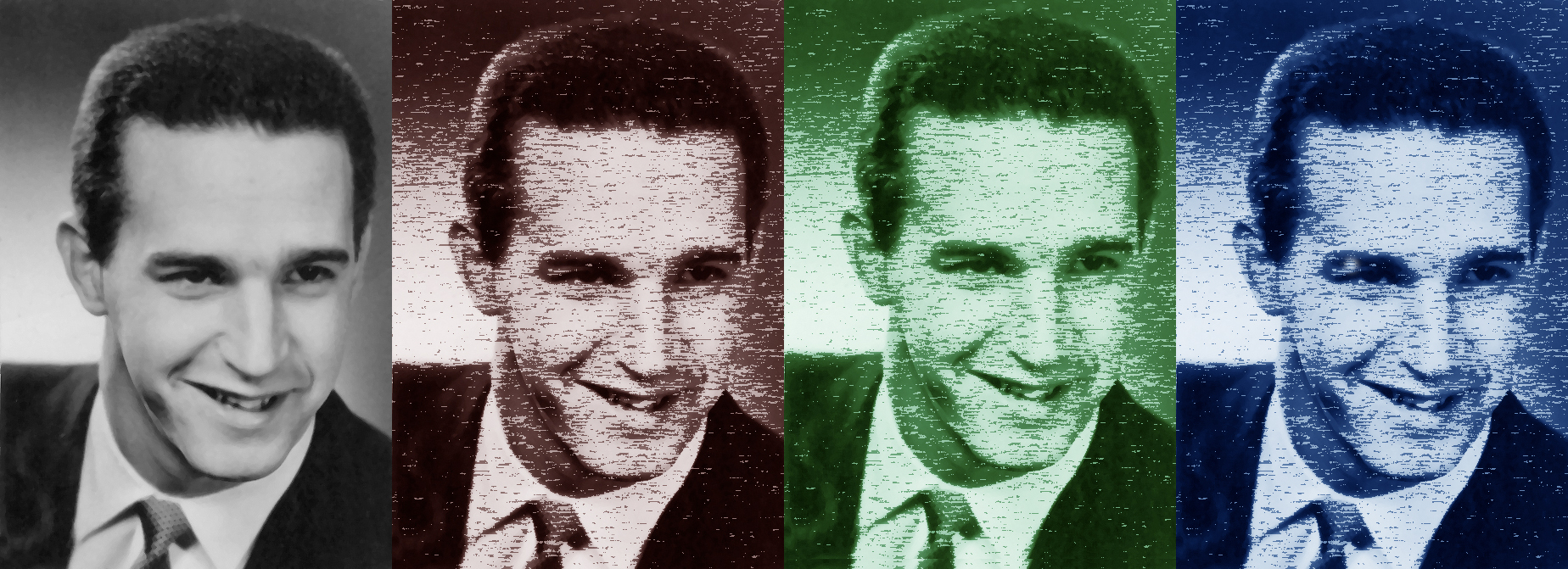
For Marjorie, the woman who brought Ron Tammen into the world

Marjorie McCann Tammen

July 23rd would be Ron Tammen’s 88th birthday if he’s still living. To commemorate the day, I thought it would be fitting to discuss one of the more complicated and, as it turns out, pivotal figures in Ron’s life—his mother, Marjorie. 

Of all the members of Ronald Tammen’s family, Marjorie Tammen is the one that people have been most reluctant to speak openly about—the one we’ve all been tiptoeing around. Throughout her married life, whenever Marjorie’s name came up in conversation, details would have likely been dodged and euphemisms employed. Only the nonverbals (the head shakes, the tsks) would convey the simple truth. I’m sure some people judged her as unfit. Others, usually women, felt deep sympathy for her. All too soon, her three oldest sons—John, Ronald, and Richard—considered her weak and unworthy of their respect. She embarrassed them.

It had to do with all the drinking. Even when her three oldest boys were small, and well before Ron went missing, Marjorie Tammen had an addiction to alcohol. Her day drinking affected her housekeeping and other wife and mom duties, which in those days had no end. Her dependency seeped into every crevice of her life. It’s what she died of at the age of 52—not of a broken heart, as some would say, but of cirrhosis of the liver. There. I said it. Now you know.  

But addictions of any sort don’t define who we are. We’re a person first; the disease comes in at a distant second. And there’s always a starting point—there’s always a reason.

One of Marjorie’s main strengths lay in her family, where the bonds were tight and the safety net vast. It was Marjorie’s side of the family that supplied the relatives who were most influential to Ron and his siblings as they were growing up—the relatives they would go to for help without a moment’s hesitation, the people they tried to emulate. 

And even though she embarrassed them, Marjorie’s three oldest sons would have been hard pressed to find a fiercer advocate for them. Which parent went running to school every time Richard bullied his way into a fresh world of trouble? Marjorie did. Who took it upon herself to call the Cleveland office of the FBI—the FBI!—to tell them about her son who’d gone missing while he was away at college? Marjorie. Who gave those FBI guys Ron’s fingerprints in 1953 to help with their investigation—the fingerprints she’d saved on a card since 1941? I’m sure it was Marjorie, since she’d mentioned those prints in an interview with a Cleveland Plain Dealer reporter in 1960. 

Say what you will about Marjorie, she wasn’t afraid to throw on a coat or pick up a phone in the interest of her kids.

Marjorie was born Marjorie Jane McCann on September 4, 1911, in Sharon, PA, less than 20 miles from Youngstown, OH, near the western edge of the Pennsylvania border. She was the baby of the family. Her brother John was three years older than she was and her sister Mary was one year older. When Mary was a toddler, she came down with polio, a deadly disease that, happily, was eradicated in the United States and throughout most of the world by a vaccine. (Speaking of vaccines, are you fully vaccinated against Covid-19 yet? If not, please do your part pronto. Personally, there’s no way I’d want to face the delta variant unvaccinated. And until there’s a vaccine for the under-12 crowd, I’ll still be masking indoors. Here’s that link again. Thank you for coming to my TED tirade. I’m afraid we don’t have time for questions.) 

Mary’s bout with polio left her with a severe limp that lasted her whole life. Marjorie was her sister’s helper, especially during the hard early years, which cemented the bond between them. When Mary became a career woman with no kids of her own, her “favorite aunt” status was elevated to an art form—practically to the point of being an auxiliary mom. She was a giver—of her time, her money, whatever she had—and what she didn’t have to give, she’d loan to them. The latter included her car if the Tammen family needed to drive beyond where the city bus would take them. Among Ron’s siblings with whom I’ve had the chance to speak, Aunt Mary’s name was the one most frequently mentioned when they described the people who were there for them as children. 

Mary McCann at her teaching job

The McCanns moved from Pennsylvania to Lakewood, Ohio, in 1922, when father Albert was hired to work for an electrical company. Soon, he’d get a job in elevator manufacturing and would learn the ups and downs of that trade. Floranell, Marjorie’s mother, worked in a profession nearer and dearer to my heart: she was a librarian at the Cleveland Public Library as well as the Western Reserve Medical Library.

Albert and Floranell McCann

When it was time to start thinking about college, Marjorie’s brother John chose Miami University, thus setting the whole Miami legacy train into motion. By 1933, John McCann had received both a bachelor’s and master’s degree in business at Miami. Two years later, he married a fellow Miami grad, Eleanora Handschin, who’d studied psychology there. John’s and Eleanora’s ties to Miami were especially tight, since Eleanora’s father, Charles Hart Handschin, was a renowned German professor at Miami, and he and his wife Helena lived in Oxford. In 1934, Mary graduated from Miami in home economics education, which prepared her for a lifelong career in teaching. Marjorie would attend Miami too, and she would also study home economics, though she wouldn’t graduate. (More on that in a bit.) And of course, three of Marjorie’s five children—Ron, then Richard, and later Marcia—would attend Miami. (When Ron was at Miami, he was known to visit the Handschins, whose home was behind the Delta Tau Delta house.)

John and Eleanora’s engagement photo, circa 1934 or 1935

In June 1929, Marjorie graduated from Lakewood High School. Her yearbook photo shows a cute grinning girl in a flapper haircut beneath which were three adjectives the yearbook staff felt summed her up best: mutable, jocular, and modest. Jocular and modest are great traits for any high schooler, but if Marjorie was mutable in any way, I’d say it was photographically. Whereas Mary usually looked the same way in photos—elegant and beautiful—Marjorie seemed to morph into someone else over the years. Still, she usually smiled. 

Marjorie’s senior picture in high school

Say what you will about Marjorie, she would smile for the camera, even when she was hurting.

Marjorie and Mary McCann — according to writing on the back of the photo, it was taken when they were attending Miami University, in Oxford, Ohio

Speaking of photographs, it probably goes without saying that Ron Tammen, Sr.—the soon-to-be love of Marjorie’s life—was handsome. Whether he was a young man with deep-set eyes in his 20s, or a Ronald Colman clone in his 30s and 40s, or a graying Mr. Chips-type in his 50s and upward, the man never seemed to take a bad picture. Marjorie met him at a dance when she was a freshman at Miami and he was playing in a band that had rolled into town for the night. Let’s just say that it was part kismet and part pyrotechnics that brought the two of them together. The fact that he was wailing away on a sax when she first laid eyes on him didn’t hurt one bit.

Ronald Tammen Sr.’s high school photo

Marjorie was younger than Ron Sr. by four years, which at that stage of life was considerable. She decided not to return to Miami the following year, and in the words of Johnny and June Carter Cash, she and Ron Sr. “got married in a fever” and were indeed “hotter than a pepper sprout” for each other. They were married on January 31, 1931, though not everyone was happy about it.

“Grandfather McCann was very rigorously and religiously Catholic,” John Tammen once told me, and he “wouldn’t let her get married. And so my mother and father had to elope.”

The way John told it, Albert had wanted Marjorie to wait until Mary got married, since Mary was older, but I think there may have been more to the story. In our first interview, Marcia Tammen had recalled that Ron Sr. was raised as a Christian Scientist, which wouldn’t sit well with Albert. Back then, religions didn’t do a lot of commingling. Unless he became Catholic, I can’t imagine that Ron Sr. would have ever been a suitable mate as far as Albert was concerned. Marjorie probably thought it would be hopeless to try to convince her father otherwise. Besides, if Marjorie had abided by Albert’s rule to merrily wait for Mary to marry, Marjorie’s life would’ve been on pause until 1955, when Aunt Mary became Mrs. Edward Spehar.

So they eloped. And by “eloped,” I mean they got married in Mr. Tammen’s home on Ednolia Avenue in Lakewood, officiated by a local Presbyterian minister. Although the marriage license says she was 21, Marjorie was only 19—barely—by four months. It was a premeditated fib. According to Ohio marriage law at that time, Marjorie would have needed parental permission, which she most certainly did not have, if she’d given her true age. 

Say what you will about Marjorie, she had a mind of her own.

Marjorie McCann Tammen

I know what you’re thinking, and relax, everyone. It appears as though they made things right with the state of Ohio sometime after John was born. Also, I guess lying about one’s age on a marriage license was somewhat of a thing in those days. There’s even a Dick Van Dyke episode where Laura Petrie had lied about her age when she married Rob and they had to get married a second time. (You may want to watch the two-part episode sometime. I forgot how funny that show was, but then Carl Reiner was one of the best screenwriters ever.) [Part 1: Laura’s Little LiePart 2: Very Old Shoes, Very Old Rice]

We already know that times were hard during those years. It was the Depression, after all. Most people had it hard. Ron Sr. hadn’t gone to college, so he taught himself the skill of actuarial science, how to calculate risk in the insurance business. He landed himself a job as an insurance adjuster, which helped during the lean years.

But there was another hardship. Back then, people had fewer options available to them for birth control, especially if they’d been raised Catholic. Mr. and Mrs. Tammen’s method may well have been something akin to keeping track of the days of the month and hoping for the best. Turns out, whatever method they were using wasn’t foolproof. Each year of marriage would yield another brand new baby boy. On May 25, 1932, John was born. Five months later, Marjorie was pregnant again with Ron Jr. Six and a half months after giving birth to Ron, she was once again pregnant, this time with Richard. For someone in her early 20s, it was a lot—too much really. John seemed to think that this was the reason that his mother began drinking. There were too many rambunctious boys running around the house. 

“Our mother was really very ill-prepared to handle us,” said John. We just absolutely drove her crazy from the time we were up and walking until our middle teenage years when kids begin to get focused on other things in life… Because we were forever into doing stuff. We were very active. We drove my mother really nuts. We literally drove her to drink.”

Maybe. Or it could have been a thought planted deep in Marjorie’s psyche, as if she’d convinced herself that her prolific baby-making ability was the sole reason that the family was struggling. As if she alone was the problem. At least that was the opinion of one woman who knew both Marjorie and Mr. Tammen well. 

According to the woman, after Marjorie had the three boys, Mr. Tammen basically turned off. He criticized Marjorie for not using protection, she said. The woman recalled another person who’d felt the same way—as if Marjorie’s morale had been broken.

If Marjorie felt responsible for the family’s financial burdens, she must have also felt guilty about her inability to bring home a paycheck. It wasn’t as if she didn’t want to work. In 1930, before she got married, Marjorie had been a librarian, just like her mother. (Marjorie loved to read.) But how could she get a job when she needed to tend to three preschoolers?

Marjorie thought of an alternative. She knew how to sew. In the years that followed, she sewed clothes for all of her children—first for the three boys, then Marcia, and later Robert. She mastered sleeves and collars, pant legs and pockets, pleats and hems, not to mention the accompanying buttonholes and zippers. Marjorie sewed up a storm, and, as a result, her kids always stood out from the others. Marjorie’s kids looked amazing.

Say what you will about Marjorie, if she had no other means to help out, she’d go straight to her wheelhouse.

Things probably improved for John, Ron, and Richard as they got older and were working in various jobs away from home. I have no doubt that they loved their mother. And yet I can also imagine them looking forward to the day when they’d be heading to college and no longer living with her. To be able to invite a friend over on the fly or to walk home from class without a feeling of dread would be motivation enough to move to a school several hours away. 

John’s memory is harsh. In a letter he wrote to Marcia in 2014 discussing the family’s most difficult years, he said: “Because of [Mom’s] bad habits, poor organization of the house, and what we saw and [sic] an almost total lack of caring for us, we all came to usually disregard what she said so that she had no effective control over what we did, where we went, and when we returned; we became almost emancipated at 15, 14, and 13.”

“Almost emancipated,” he said. Almost. Because despite all the sadness that the Tammen brothers had to endure—despite learning to adapt to Marjorie’s varying degrees of normal—they also knew that they could rely on Marjorie’s mother Floranell and sister Mary, both of whom lived nearby. (Albert McCann died in 1944.)

And even though he was farther away, Ron Jr.’s end-all, be-all role model, his influencer uncle, also maintained a strong connection with them. Uncle John McCann is probably one of the main reasons Ron chose to attend Miami. I’ve mentioned elsewhere on this blog site that Uncle John had sold bonds, which is why Ron felt that he wanted to have a career in bonds too. Uncle John was a business major; Ron was a business major. But John McCann was also a highly decorated colonel in the U.S. Air Force, which probably impressed Ron a great deal. Here are just a few of Uncle John McCann’s impressive military credentials:

  • Col. McCann worked in intelligence with the Army Air Corps during World War II.
  • In 1950, at the start of the Korean War, he was called back to the Air Force Reserves as an executive officer of a troop carrier wing in Greenville, South Carolina. 
  • He later joined  the Air University’s War College at Maxwell Air Force Base (AFB), first as a faculty member, and later as vice commandant. 
  • In the mid 1960s, he was deputy commandant of the Air Force Institute of Technology at Wright Patterson AFB. 
  • Col. McCann is buried in Arlington National Cemetery (Section 60) with his wife Eleanora. 
  • Miami University’s Air Force ROTC has a scholarship in Col. McCann’s name.
Col. John McCann

Weirdly enough, Ron’s Uncle John died on April 20 in 1995, one day after the 42nd anniversary of Ron’s disappearance from Uncle John’s alma mater. His children were great friends to the Tammens, their closest cousins. They’ve remained in touch with one another to this day.

The Tammen and McCann cousins — Second row (l-r): Richard, Ron, and John; First row (l-r): Robert, a McCann cousin, Marcia, another McCann cousin

I think we all know how Ron’s disappearance affected Marjorie. It devastated her, but I’d argue that it didn’t destroy her. She still had Marcia and Robert living at home—ages 10 and 7—and there was no way she could give up then. She also wanted to keep looking for Ron, which she vowed to do, granting interviews about her son when reporters asked and quickly responding to the periodic FBI letters asking whether Ron had been located yet or was he still missing. (Answer: always B.)

Family photos in the late 1950s and early 1960s. Click on photos for more info.

On September 30, 1962, Marcia’s 20th birthday, Marjorie Tammen wrote her daughter a letter. As usual, the resources available to her were limited. No Hallmark Greetings here—just a sheet of stationery with the Brotherhood of Locomotive Firemen and Enginemen letterhead (Mr. Tammen’s workplace), and a blue ink pen. 

Dearest Marcia,

By the time you recieve [sic] this you will be twenty. First and foremost, “Happy Birthday.” 

I am not sure you are aware how older people tend to reflect. Now by “older” I don’t mean those with a foot in the grave.

But September 30th has always held a special meaning for me. That was the day it was our good fortune to be blessed with a girl.

As you have progressed through the years, we have seen you develop so well.

As of Oct. 1th [sic], you will take a step again toward the future. This is the day you leave your teens and enter the twenties. This is not a large step but just approaching the future.

If your next twenty years will see you develop as well as the first twenty, you will be fulfilling all that can be asked of anyone.

So again to you, Marcia, the very happiest of birthdays. With this goes all the love of all of us.

Love, Mama

P.S. This doesn’t mean I won’t fight with you tomorrow. Mama

Here’s what I love about this letter: First, it came from Marjorie’s heart. She had no idea what to give her daughter on this momentous day, so she grabbed a sheet of stationery from a drawer and she wrote. Because feelings are free. 

Second, the letter held so much meaning for Marcia, she saved it until the day she died. Do you have a card stored away from your 20th birthday? Yeah, me neither.

And best of all, 9 ½ years after her golden-boy son had disappeared and about 1 ½ years before she would die, Marjorie Tammen was still able to joke around with her daughter. 

So, say what you will about Marjorie. 

But she was still jocular, still modest, still mutable, and she still had some fight in her, right to the end.

*************************

Many of these photos and stories were part of Marcia Tammen’s genealogy files and were graciously shared with me by Marcia’s forever friend Jule Miller, who was practically a family member herself. Other photos were shared with me by one of Ron’s cousins, and I thank her so much for them. The remaining stories I obtained from interviews and additional research.

The FBI’s plagiarized narrative

A word-by-word comparison of the 2008 FBI narrative to the source from which it was copied

For my last post this weekend, I want to hammer home just how similar the narrative that I received from my 2014 lawsuit settlement is to a write-up on Tammen’s case on The Charley Project website. Because The Charley Project write-up has been edited over the years and now includes information obtained from this blog, let’s time travel back to the halcyon days of 2008, a simpler time when all of us were 13 years younger and perhaps a little more naive, including the folks at the FBI. Who knows, maybe they had no idea back then that the use of another person’s words without attribution is frowned upon.

Thanks to the website Wayback Machine, I’m including a screen shot of the verbiage from The Charley Project’s web page on Tammen from March 23, 2008—an arbitrary date in 2008 for which they had a page capture—as well as a link to that page. I’m also including the two pages of the narrative that the FBI emailed to me in 2014, claiming that I had unprecedented access to such information. The true author of the verbiage is Meaghan Good, who has told me that she first posted the Tammen write-up to The Charley Project website on March 1, 2005. What the FBI and Department of Justice (DOJ) seem to think I’ve had unprecedented access to has been available to literally every man, woman, and child since 2005. Can you see why I’m bitter?

Screen capture of The Charley Project’s write-up on Ron Tammen, dated March 23, 2008
Page 1 of FBI narrative on Tammen case, ostensibly typed in 2008, based on its case number
Page 2 of FBI narrative on Tammen case

To make things easier on you, I’ve copied the write-up from The Charley Project page, and have inserted in blue the places where the FBI narrative strays from the original. If a word is omitted or a sentence is moved, I indicate that as well. Here you go:

Tammen [*THE VICTIM] was last seen in old Fisher Hall, a former Victorian mental asylum converted to a dormitory at Miami University in Oxford, Ohio on April 19, 1953 [4/19/1953]. He was a resident hall advisor at Fisher Hall, and lived in room 225. At 8:00 p.m., he requested new bedsheets because someone had put a dead fish in his bed.

Sometime around 8:30 p.m., Tammen [*THE VICTIM] apparently heard something outside his room that disturbed him, and went out into the hallway to investigate. He never returned. His roommate came in at 10:00 p.m. and found him gone. The roommate originally assumed Tammen [*THE VICTIM] was spending the night at his Delta Tau Delta fraternity house, and did not report his disappearance until the next day.

There is no indication that Tammen left of his own accord. [*previous sentence moved to end of paragraph] His clothes, car keys, wallet, identification, watch, high school class ring and other personal items were left behind in his dormitory room, and he also left the lights on, the radio playing, and a psychology textbook lying open on his desk. His gold 1938 [*year missing] Chevrolet sedan was not taken from its place in the school parking lot, he left his bass fiddle in the back seat of the car, and he left behind $200 (the equivalent of over $1,300 in today’s money) in his bank account. Tammen is believed to have [*IT IS BELIEVED THE VICTIM] had no more than $10 to $15 on his person the night he disappeared, and [*ALSO, HE] was not wearing a coat. [*first sentence in paragraph moved here;]

However, authorities have not found any indication of foul play in Tammen’s [*HIS] disappearance either. They do not believe he could have been forcibly abducted, as he was large enough and strong enough to defend himself against most attackers. They theorize that he could have developed amnesia and wandered away, but if that was the case he should have been found relatively quickly.

A woman living outside of Oxford, twelve miles east of the Miami University campus, claims that a young man came to her door at 11:00 p.m. the evening Tammen [*THE VICTIM] disappeared and asked what town he was in. Then he asked directions to the bus stop, which she gave him, and he left. However, the bus line had suspended its midnight run, so he could not have gotten on a bus. The witness says the man she spoke to was disheveled and dirty and appeared upset and confused. He was not wearing a coat or hat, although it was a cold night and there was snow on the ground. He was apparently on foot, since the woman did not see or hear a car. The man matched the physical description of Tammen [*THE VICTIM] and was wearing similar clothes, but it has not been confirmed that they were the same person, and Tammen’s [*THE VICTIM’s] brother stated he did not believe the man the witness saw was Tammen [*HIS BROTHER].

Five months to the day before Tammen [*The VICTIM] vanished, he went to the Butler County Coroner’s office in Hamilton, Ohio and asked for a test to have his blood typed. The coroner claims that this was the only such request he ever got in 35 years of practice. It is unknown why Tammen [*THE VICTIM] wanted the test done and why he did not have it conducted in Oxford, where local physicians or the university hospital could have typed his blood for him. Tammen [THE VICTIM] was scheduled for a physical examination by the Selective Service for induction into the army, but inductees did not need to know their blood type in advance of the physical.

Tammen’s [*THE VICTIM’S] parents, who lived in the 21000 block of Hillgrove Avenue in Maple Heights, Ohio in 1953, last saw him a week before he disappeared and say he did not appear to be troubled by anything at the time. He was on the varsity wrestling team in college, played in the school dance band, and was a business major and a good student. He dated at the time that he vanished but did not have a steady girlfriend.

In the decades after Tammen’s [*THE VICTIM’S] disappearance, students at Miami University claimed his ghost haunted Fisher Hall. His parents are now deceased. Fisher Hall was torn down in 1978 and an extensive search was conducted in the rubble for Tammen’s [THE VICTIM’S] remains, but no evidence was located. His case remains unsolved. [*THE VICTIM’S OH DL IS C-779075.]

In running my little comparison, I noticed a few things:

  • The Charley Project write-up is well-written, so I can understand why someone from the FBI thought it provided a good summary of the case in few words. Nevertheless, there are several inaccuracies and areas of conjecture that have accrued by way of other media outlets over time. The FBI, who should have access to the most accurate source information on the case, allowed those inaccuracies to remain in their narrative for law enforcement.
  • Only one detail was omitted from the FBI narrative: the year 1938 in the description of Tammen’s car (actually, his car was a green 1939 Chevy).
  • The only information that the FBI added to its narrative is Ron’s driver’s license number.
  • As we’ve discussed in an earlier post, even though the FBI obviously had new intel from 2002 that led to the expungement of Tammen’s fingerprints, that information didn’t make it into this narrative for law enforcement, which, ostensibly, was written in 2008. Perhaps it and other details were somehow mentioned in the full report, but alas, only law enforcement can access that. Judging by their unwillingness to disclose that information to former Butler Co. cold case detective Frank Smith when he inquired about Tammen’s fingerprints in 2008, I doubt it.

As long as we’re talking about 2008…why did the FBI destroy a file on Tammen in the middle of a reopened investigation?

Hello! Tired of hearing from me so much? My apologies. Sometimes I get gabby. There’s another document I’ve been wanting to mention, but it falls slightly outside of last night’s theme—slightly—though the year 2008 is pertinent. This document was written in 2014 as part of my lawsuit settlement. The intended audience wasn’t law enforcement, just my lawyer and me.

The document is part of a declaration written by the chief of the FBI’s Record/Information Dissemination Section (RIDS) informing us of all the different places they searched for records on Tammen. The 2002 expungement of Tammen’s fingerprints isn’t mentioned anywhere, but I’m not sure that information is available in document form, which is a criterion of the Freedom of Information Act (FOIA). It has to be a document. (Of course, even if there were a document on the expungement, I’m doubtful that they would have let me know about it if they weren’t willing to tell their friends in law enforcement.)

In the declaration, the RIDS chief created a table that listed search terms, the automated or manual indices searched, and the potentially responsive files. It also included the status of their search, such as “unable to locate” or “located, processed and released X pages” or “destroyed on X date.” One file that leaps out at me is numbered 190-CI-0, Serial 967, which I’ve circled in red.

On or about May 17, 2008—a Saturday—the FBI decided to destroy documents that had originated in the Cincinnati (CI) field office. Because the file number is preceded by the number 190, I believe it had something to do with the Freedom of Information/Privacy Acts. The book Unlocking the Files of the FBI, by Gerald K. Haines and David A. Langbart tells me that. The book goes on to say that “The Bureau established this classification in 1976 to handle citizen requests for information under the Freedom of Information Act (FOIA) of 1966 as amended and the Privacy Act (PA) of 1974, which together provided for the expungements of records upon the request of an individual.”

Hmm. Those words have a familiar ring, don’t they?

With the case being reopened by Butler County, OH, and Walker County, GA, in 2008, and with the FBI opening a new file on Tammen that same year (not to mention the special file with the plagiarized narrative), doesn’t it seem a little curious that the Cincinnati office—just one county over from Butler County—would destroy a file on Tammen in mid-May of 2008? 

Let’s take a closer look at the timeline, shall we?

January 14, 2008 – The Atlanta office of the FBI is contacted by the Walker County (GA) sheriff’s office to request the “opening of a police cooperation matter.” The Atlanta office was told of Walker Co.’s interest in reopening a cold case having to do with a dead man who was found in a ditch near Lafayette in the summer of 1953. The Walker Co. sheriff’s office wanted to find out if the dead man might be Ron Tammen. According to the resulting FBI report, dated January 29, 2008, Walker Co. was “requesting Federal Bureau of Investigation (FBI) assistance with positive identification and investigation.” The report ends with “In view of the above, it is requested that a Police Cooperation matter be opened and assigned to SA [redacted].”

February 8, 2008 – The remains of the unidentified man are exhumed from Lafayette City Cemetery, in Lafayette, GA, to obtain his DNA. That DNA would be compared with the DNA of Ron Tammen’s sister Marcia to see if it might have been Ron. Representatives of the Butler Co. (OH) and Walker Co. sheriff’s offices, the Georgia Bureau of Investigation, the media, and other onlookers are present.

February 26, 2008 – Frank Smith, Butler County cold case detective, writes to the FBI’s Criminal Justice Information Services (CJIS) requesting a hand search for Ron’s fingerprint card.

February 28, 2008 – CJIS writes back, saying (and I’m paraphrasing): sorry, we’ve looked everywhere for Tammen’s fingerprints. They’re not here. The author neglects to mention that they’d expunged Tammen’s prints in 2002 in response to a court order or Privacy Act conflict.

March 14, 2008 – The dead man’s remains are received by the FBI Laboratory, DNA Analysis Unit.

May 17, 2008 – File number 190-CI-0, Serial 967 is destroyed in the FBI’s Cincinnati office.

June 2, 2008 – The FBI notifies the two sheriff’s departments that the DNA was not a match.

June 3, 2009 (one year later) – The Atlanta office of the FBI closes the case into the Police Cooperation matter.

So, to put this as simply as I can: a few months after the dead man’s remains had been exhumed, and while the two sheriff’s offices were eagerly awaiting the DNA results and wondering if they’d actually managed to solve both cold cases at once, an FBI file having something to do with Ronald Tammen was destroyed. On a Saturday. Just a short drive from the Butler Co. sheriff’s office, or, come to think of it, Oxford, Ohio. 

Also, the file in question just so happens to concern a possible FOIA or Privacy Act request from an individual. Yeah, I’m sure it’s just a coincidence. Nothing to see here.

Have a good weekend, everyone! I’m happy to entertain questions and comments.

Why did subsequent FBI reports fail to mention what officials had learned in 2002?

This is going to be a short post. What I’d like to do is compare several documents that were produced by the FBI after Ron’s fingerprints were expunged in 2002. The first one should be fresh in your mind: it’s the email sent to the National Archives and Records Administration (NARA) by the FBI’s records and information management specialist in April 2021. Even though the email’s language is vague about key details, such as what caused them to expunge Tammen’s fingerprints, it does provide some specifics that the specialist had obtained as she “researched [NARA’s] request for information.” (I wonder where she looked, since I was asking the FBI for everything they had on Tammen since 2010, and didn’t get nearly as much of the juicy stuff that she got.)

So that’s Exhibit A: The email written April 15, 2021, by the FBI’s records and information management specialist.

Exhibit B is the narrative that I received from my lawsuit settlement—you know, the settlement where I signed my life away so that I can never utter the name Ronald Tammen to the FBI ever again? The narrative about Tammen’s case is maintained in a database that members of law enforcement can access all over the country. I’m not allowed to say its name because they’ve told me I’m the first non-law-enforcement type to access anything from that database, which I seriously doubt, but I’ll play by the rules, even though they clearly aren’t.

The narrative contains some inaccuracies, which proved useful, because they led me to its source: The Charley Project, a website dedicated to missing persons. I also learned that the write-up was first posted on March 1, 2005, so it was available to the entire world at that time. Although the Charley Project write-up has since been updated, when I compared it to my narrative in 2014, it was almost a word-for-word match. The case number of the narrative begins with 2008, so I believe that’s the year it was created (i.e., plagiarized) by the FBI, though I couldn’t get confirmation on that. At the bottom of the pages, it says that it was “current as of 10/25/2012.” 

So, in 2002, something of consequence caused the FBI to expunge Tammen’s fingerprints 30 years ahead of schedule, and whoever typed up this “report” in 2008 didn’t consider it worthwhile to inform fellow law enforcement professionals about what it was. But then, come to think of it, why do you suppose they created this file so late in the game? 

Exhibit C is a fax that was sent from the FBI’s Criminal Justice Information Services (CJIS) to Frank Smith, former cold case detective for Butler County, Ohio, who had reopened the Tammen case in 2008. Smith had noticed the fingerprint shorthand on Tammen’s FBI files and requested a “hand search to see if any fingerprint cards can be located.” 

The fax, dated February 28, 2008, said “A SEARCH OF OUR CRIMINAL AND CIVIL FILES HAS FAILED TO REVEAL ANY FINGERPRINTS FOR YOUR SUBJECT. A COMPLETE SEARCH OF OUR ARCHIVE MICROFILM FILES HAS FAILED TO REVEAL ANY FINGERPRINTS FOR THIS MISSING SUBJECT AS WELL.”

Gosh, if they’d just done what their records and information management specialist had done and looked up Tammen’s name and birth date, they would have immediately discovered that his fingerprints had been expunged in 2002. All of that searching high and low for Tammen’s fingerprints could have been avoided.

Actually, I’m being facetious. I’m quite sure that the author of this memo had looked up Tammen’s name and birth date and knew that his fingerprints had been expunged. The person just elected not to inform Detective Smith—a fellow law enforcement professional—of that information. 

If I had to guess why in 2008 the FBI created the file for law enforcement with the plagiarized narrative, I’d say that it was Detective Smith’s efforts that had motivated them to do that as well. When Smith and his counterparts in Walker County, GA, were asking the FBI to compare the DNA of the dead body in Georgia with Marcia Tammen’s DNA, the FBI may have deemed it necessary to create the file—if for no other reason than for show.

The eager, anguished fingerprint expungement of June 2002

In June 2002, I was living at a place called the Car Barn of Capitol Hill, an old red brick fortress that used to house trolley cars in the northeast section of Washington, DC. Every weekday, I’d step out of the apartment, head right on East Capitol Street, stroll past the dogs and kiddos at Lincoln Park, and then turn up North Carolina Avenue on my way to Eastern Market to take the train to my job as a technical writer for the federal government. (Update: you can now see a photo of the Car Barn, courtesy of @StreetsOfDC, at the bottom of this post.) I was living my dream—immersed in the historic urban-ness of Capitol Hill, doing work I believed in, and feeling attuned to the inner-workings of our democracy. But, as it turns out, I was also sadly oblivious.

Oblivious, because I had no idea that on one of those June days, the FBI would be expunging the fingerprints of Ronald Tammen, the person who’d famously disappeared from my alma mater in 1953 and who, according to his friends and family, was still very much listed as missing. 

What about you? Where were you in June 2002 when the FBI purposely expunged Tammen’s fingerprints forever and always—gone in a flashno take-backs, no quitsies?

We’ve since learned a little bit about that expungement—namely that it was carried out in accordance with the National Archives and Records Administration’s (NARA’s) records schedule known as N1-65-88-3, Item 1a, which means that his fingerprints were expunged in response to either a court order or a conflict with the Privacy Act of 1974. If it’s because of the Privacy Act, and the odds are good that it was, then Tammen was likely alive when his fingerprints were expunged. (As you may recall, an expert I spoke with said that the Privacy Act far outweighs the court order as the reason for expungements.)

As much as the above revelations have told us, they’ve also managed to generate more questions. Therefore, I recently submitted a Freedom of Information Act (FOIA) request to NARA. I wanted to see whatever documents the NARA representative was reading when he or she informed me that: “The fingerprints in question were expunged from the FBI system as per N1-65-88-3, Item 1a,” and then quickly followed up with “NARA does not have any further information regarding the expungement of this file.”

Specifically, I wanted to get my hands on the relevant Request for Records Disposition Authority form, aka Standard Form 115, aka SF 115, that I believed someone must have filled out before they could expunge Tammen’s fingerprints. (To preserve ink, I’ll be referring to it as the SF 115 from here on out.) I also asked for “any additional documentation associated with the FBI’s action.”

I submitted my FOIA request on June 8 of this year and yesterday, July 6, I received a response. Theirs wasn’t one of those evasive “we can neither confirm nor deny” or “we can’t find anything” sort of responses I get from the CIA or the FBI. It was a responsive response. NARA sent me 24 documents totaling 80 pages. These people are big believers in FOIA and it shows. 

The majority of the documents don’t have anything to do with Tammen’s case per se, but they offer insight into how the FBI was handling its expungement cases before and after the fateful day in June 2002, which offered good background. However, one key document does tell us about Tammen’s case. That’s right. Someone from the FBI actually provided a short synopsis about Tammen’s fingerprints and what led to their being expunged. We’ll get to that synopsis in a second. 

First, let’s discuss some of the things I learned about court-ordered or Privacy Act expungements in general.

Let’s begin with this fun fact: The 1988 SF 115 that’s cited for all Privacy Act/court-ordered expungements was signed by Robert W. Scherrer, who led an interesting life before he was in charge of records at the FBI. He’s kind of famous.

You’ve already seen N1-65-88-3 on this blogsite, however a memo dated 11/30/87 is extremely helpful in describing that records schedule, particularly the meaning of Item 1a. (Don’t ask me what the acronyms at the top of the memo stand for—I’ve been all over NARA’s website, and can’t find a document that spells out NIRM or NIR. Just know that they appear to be in the Records Administration side of NARA and they seem to be charged with the proper disposition of records. If you happen to be from NARA and can solve this puzzle, please let us know in the comments section.)

Click on document for a closer view

Based on that memo, we now know that Item 1a refers to records that were already considered temporary, meaning they were slated to be destroyed after a given retention period had ended. Ron Tammen’s fingerprints were in this category. As you may recall, in my write-up Purged, I discuss at length how Tammen’s prints were expunged at a time when the FBI was operating under the records schedule that required holding onto fingerprints until an individual would have reached 99 years of age. In Tammen’s case, that would have been the year 2032. 

Because Item 1a records have already been approved for disposal (after the person is 99 years old in this case), if the FBI were presented with a court order to expunge or with an expungement request due to a Privacy Law conflict, they would be able to expunge those records immediately.

Here’s the most interesting part of this very helpful memo:

This will obviate the need to submit an SF 115 to NARA for each individual accelerated disposal action, thereby lessening the Bureau’s workload and ours. Also, it will speed the actual disposal of the records by eliminating our processing time and the 45 day waiting period while a job is at the Federal Register. In some cases, this waiting period causes anguish to individuals eager to see their file destroyed. For these reasons, NARA should approve this item. Records already have been appraised as lacking in historical value and there is no problem from the legal rights standpoint since the disposal of records has either been ordered by a court or is being done with the approval of the individual to whom the records pertain.

So to sum things up: for Item 1a records, no additional SF 115 is needed in order to expunge them before their normal retention period is over. Simply recording somewhere that the expungement was conducted on the basis of N1-65-88-3, Item 1a, is all the information the FBI would need to supply to NARA as back-up. As a result, there isn’t a specific SF 115 for Ron Tammen’s fingerprints. 

In contrast, Item 1b refers to files that are permanent or otherwise not scheduled for disposal. If an expungement request should come in, either because of a court order or Privacy Act conflict, 1b files did require an additional SF 115, and they would have to go through the lengthy process described above. Beginning in 2003, however, the FBI began inquiring about whether they needed to continue submitting SF 115s for the expungement of permanent records due to the time element, and they and NARA sought legal guidance on that question. As far as I can tell, in 2011, the FBI stopped sending in SF 115 forms for the expungement of permanent records.

So the question that’s probably on everyone’s mind is: if the FBI didn’t have to submit an SF 115 to expunge Ron Tammen’s fingerprints, what was the NARA rep looking at when he or she sent me an email saying that Tammen’s prints had been expunged as per N1-65-88-3, Item 1a? (On second read, if that’s the question that’s on everyone’s mind, my goodness, you are a brilliantly wonky bunch, aren’t you?)

This. NARA had contacted the FBI on April 15, 2021, a couple weeks before I received NARA’s email, and here’s what the FBI’s records and information management specialist had to say about Ron Tammen’s case:

Click on document for a closer view

So, that’s pretty cool, right? Do you think the FBI would have bothered telling me any of this if I’d reached out to them directly? I’d asked them at the outset why they expunged his prints and was told “no other info available,” so I’m fairly certain that they wouldn’t have. But I can ask NARA and NARA can ask the FBI, and voila, we have more answers. 

Here are my thoughts regarding the FBI email:

  1. We now know that Ronald Tammen’s parents had given Ron’s fingerprint card to the FBI when he disappeared. This question was always perplexing, since my FBI sources had said that children’s fingerprints were routinely returned to the parents, and it appeared as if the FBI had kept Ron’s prints since 1941. However, it doesn’t answer why they had an FBI number for him when Mrs. Tammen had reported him missing, #358406B. I’d been told that they wouldn’t create FBI numbers for fingerprints that were returned. But so be it.
  2. The FBI records specialist says that Ron’s fingerprints were filed with the civil prints. I’m pretty sure she’s mistaken on that. One, his missing person file had “crim” written on it—short for criminal—next to the fingerprint shorthand, and two, my sources said missing persons were routinely filed in the criminal file, since that was the most active one to check against incoming prints.
  3. The most loaded, convoluted sentence in the email is this one: “The prints in question would have been retained until the subject was 99 years of age had they not been responsive to an expungement initiated in or prior to 2002 with the final action taken in June of 2002.” So, I was right when I guessed that Tammen’s fingerprints should have originally been retained until he was 99. Woohoo! I love when that happens!
  4. As for her remark about an expungement that had been “initiated,” let’s consider the language that’s commonly used when describing the two reasons for expunging under N1-65-88-3. You either have a court order, an order coming from the court, or you have an expungement request, a request coming from an individual that’s decided and acted upon by the FBI. She uses neither word, but her phrasing sounds far more like a Privacy Act expungement where the FBI, not the courts, had control. Here’s what she also doesn’t say: she doesn’t give NARA a benign reason for Tammen’s prints to have been expunged, such as if it were part of a large number of missing persons who were expunged for Privacy Act reasons when the FBI automated their fingerprints. This tells me that Ron’s case is special.
  5. Despite her ambiguous language regarding the timeframe, I strongly suspect they expunged his record immediately. I’m sure it wasn’t a “let’s initiate an expungement sometime in or prior to 2002,” and then wait a few months. Remember why the FBI wanted to do away with submitting SF 115s for the 1b files? Time. They didn’t want to wait around.

I submitted a second FOIA request to NARA in hopes of finding out if there had been a mass expungement sometime between January 1, 1999, and December 31, 2002, due to their transition to automation. Namely, I asked for all SF 115s that had been submitted during that period for the expungement of fingerprint records ahead of their retention date. As we now know, I won’t be receiving any SF 115s from the 1a crowd, which I would think are the ones I’m most interested in. I’m not sure if I’ll be seeing anything from the 1b crowd either, but I’ll let you know if I do.

Does the FBI know more about Tammen’s case? Oh, most definitely. Why do you think the records and information management specialist went to great pains to construct such a vague and confusing paragraph? 

As far as how we can find out more about the FBI’s expungement of Tammen’s fingerprints, unfortunately, my FOIA settlement prevents me from requesting any more documents on Tammen from the FBI, and I’m quite sure they’d push back hard on this question. (I’ve come to know them pretty well by now, and something tells me that they feel as though they know me pretty well too. 🥰) If there are other possible sources of information, I will seek them out. However, if anyone reading this now or in the future is interested in submitting their own FOIA request to the FBI concerning the “expungement initiated in or prior to 2002 with the final action taken in June of 2002,” here’s where to go: https://efoia.fbi.gov/#home

I only ask that, if you choose to submit a FOIA request, please don’t do it on my behalf, and please don’t tell me or announce it on this blog.** You’d be doing it out of your own curiosity and interest in knowing the truth. You’re also welcome to use whatever records I’ve posted online as supporting documentation, since it’s public information. That’s how researchers work. We share things.

Of all the documents that NARA sent me, one of my favorites was the 11/30/87 memo, especially where it discusses how a lengthy wait to expunge records “causes anguish to individuals eager to see their file destroyed.” Further down, it notes that expungement due to the Privacy Act is “being done with the approval of the individual to whom the records pertain.” If Tammen’s fingerprints were expunged due to the Privacy Act, and, again, the odds are with us that they were, then it’s my belief that Tammen was likely the eager and possibly even anguished person who was insisting that they be expunged ASAP.

OK, the floor’s now open. I’m eagerly awaiting your thoughts!

*************

**If you should decide to submit a FOIA on the June 2002 expungement of Ronald Tammen’s fingerprints and you’re successful at obtaining information, by all means, please let us know. However, I’m just not permitted to be part of the FOIA process. Thanks!

*************

I saw this tweet today and had to share it with you all. This is the Car Barn where I lived in 2002, when Ron’s fingerprints were expunged.