
On Thursday, April 26, 1973, someone placed an anonymous phone call to the Cincinnati office of the FBI. According to a memo from the special agent in charge (SAC), the caller said that “he was aware the FBI has an interest in one Ronald H. Tammen. The caller advised he has strong reason to believe that captioned subject is identical with one [whited out], who is employed with Welco Industry, 9027 Shell Avenue, Blue Ash, Ohio.” The SAC went on to say that “The caller based his opinion upon physical description and ‘other reasons which he cared not to discuss.’” The caller then hung up the phone.
We’ll never know what additional reasons the caller had for thinking that a man who worked at a plant that built motors for the aerospace industry in a Cincinnati suburb was Tammen or, moreover, why he didn’t care to discuss those reasons with the FBI. Did the Tammen lookalike act all weird and evasive when asked if he went to college? Did he drive around with a string bass in his back seat? Did he have an irrational aversion to fish? Or perhaps had the man pulled the caller aside one day and said, “Don’t tell anyone, but the guy they’re talking about in this news article? Yeah, that’s me.”
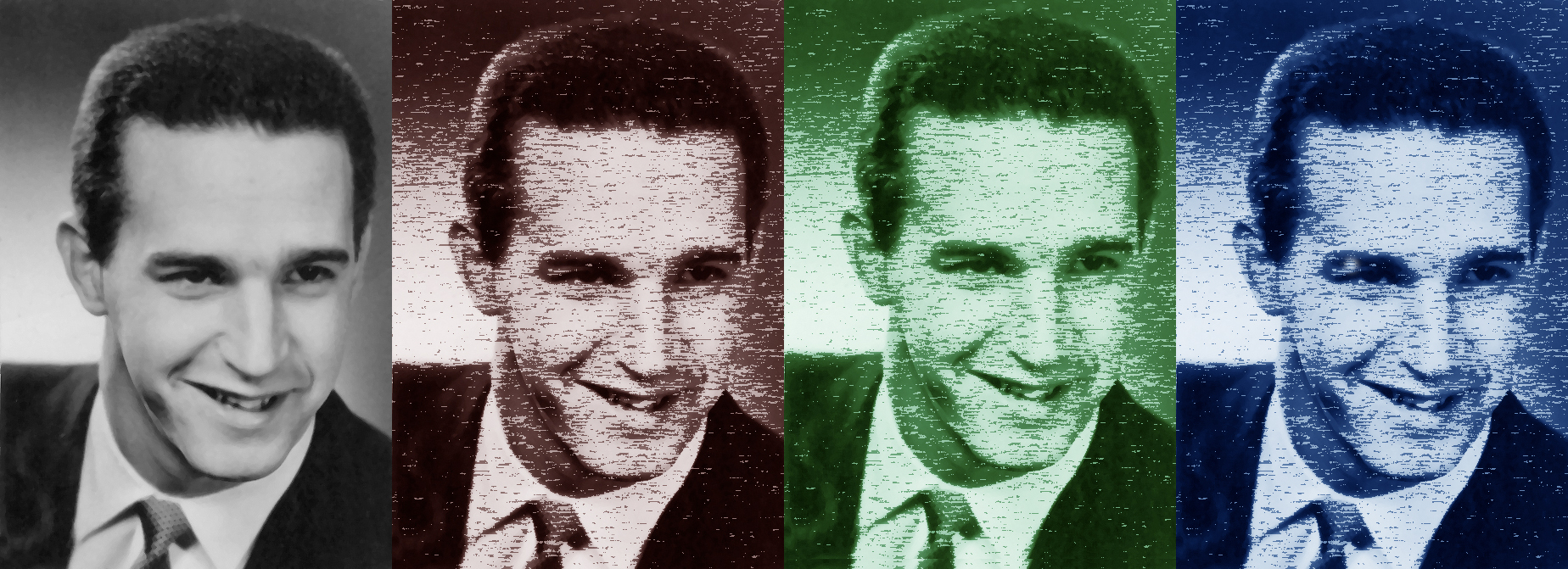
One thing that we can be pretty sure of is what triggered the unknown man to make his anonymous phone call on that particular day. Note that his call took place one week to the day following the 20th anniversary of Tammen’s disappearance. It was also three days following the article that ran in the Hamilton Journal News—the same article in which Joe Cella revealed that Ron had visited Dr. Garret Boone requesting a blood type test five months before he disappeared. (From what I can tell, no anniversary articles ran in the Cincinnati Enquirer on Tammen that year.) Although no physical description of Tammen was included in that article, it did provide a college photo, which is probably why the SAC referred to the “captioned subject.” So it’s not a stretch to conclude that the FBI’s caller first learned about Tammen in the newspaper and thought the photo looked a lot like someone he knew.
Which is totally fine. In fact, that’s how many missing persons cases are actually solved. Someone spots an old photo of an acquaintance in a news article or on TV and alerts the authorities. It’s the FBI’s actions after that call was placed, however, that are most telling.
Let’s examine the two FBI memos that I received from my FOIA request pertaining to this potential lead. (Link to them here.)
The first memo was written on 5/9/73—almost two weeks after the initial call had been made. The memo was from the SAC in Cincinnati to the acting director of the FBI, who, thanks to Google, we are able to ascertain was William D. Ruckelshaus. Ruckelshaus was the first administrator of the EPA who was subsequently brought over to the FBI as Watergate was heating up. He was only in his position as acting director for a couple of months, before continuing on with his esteemed career (he was awarded the Presidential Medal of Freedom in 2015). But for our purposes, he was the man in charge when the question about the guy at Welco came to the forefront; in parentheses, the SAC had added “ATTN: IDENTIFICATION DIVISION.”
The first line reads: “Re Bureau airtel to CI, dated 12/19/58.”
This cryptic little sentence fragment is an example of FBI codespeak, a system of pretend words and abbreviations that keeps their employees informed and the rest of us in the dark. Thankfully, through a variety of means, I’ve been able to decipher at least some of what the G-men of yore were communicating to one another through their typewritten words and their scribbles and scrawls all over my FOIA documents.
In FBI parlance, “Re” is easy. It means “in reference to,” just as it does in any email or memo you might read these days. “Bureau,” as you probably already know, is an unofficial way of referring to the FBI. “Airtel” might sound like a trendy type of overnight accommodations, but it was one of the methods that the FBI used to communicate internally back then. Think of it as a letter that, according to Wikipedia, is mailed the same day that it was typed, which doesn’t sound all that extraordinary, but it is what it is.
So who is “CI”? Fortunately, I own a book titled “Unlocking the Files of the FBI: A Guide to Its Records and Classification System,” written by Gerald K. Haines and David A. Langbart, and published in 1993. According to Haines and Langbart, CI does not mean “criminal informant” or “counterintelligence” or anything exciting like that, at least not in this case. No, the abbreviation CI stands for the FBI’s Cincinnati field office, just as the abbreviation for the Cleveland field office is CV.
Last but not least comes the date, 12/19/58. The SAC was referring to an airtel that had been sent from Headquarters (most likely) to the Cincinnati field office about 5 1/2 years after Tammen disappeared. Don’t bother looking for that airtel in the FOIA documents I’ve posted online, however. It wasn’t included in the first batch of documents that the FBI sent me in December 2010, nor was it in the documents sent to me on appeal or in my lawsuit settlement. Ostensibly, the FBI doesn’t have it anymore. As its name might indicate, that airtel seems to have been teleported into thin air. (If you’re thinking that I should ask the Cincinnati office directly if they might have the memo, I’d already contacted them and the Cleveland office before I filed my lawsuit. Both said that FBI Headquarters had everything on the Tammen case.)
The second and third paragraphs refer to some personal information about the Welco employee that the Cincinnati field office had sent to Headquarters for both its use and the use of the folks in Cleveland. We learn in the accompanying pages (which are almost entirely redacted) that they’d obtained this information from his personnel file, when a special agent paid a visit to the company the same day in which they’d received the phone call.
Paragraphs four and five summarize Tammen’s case, though the SAC erroneously states that a missing persons notice was filed with the Identification Division on 5/26/58, when it was actually filed 5/26/53. (Does that mean that our 12/19 airtel was also from 1953 instead of 1958? We’ll never know, although I don’t have a document from 12/19/53 either.) The writer also says that the Cleveland office was the “Office of Origin in SSA, 1948 case.” Translation: The writer is referencing the Selective Service Act of 1948 and he’s saying that the Cleveland field office had opened an investigation into why Ron didn’t show up for the draft after he disappeared. The FBI called off that investigation on 4/29/1955. The SAC also mentioned Ron’s fingerprint file from 1941, #358 406 B.
The last paragraph on page one and the first paragraph on page 2 discuss the phone call concerning the Welco employee, the details of which we’ve already mentioned at the beginning of this post.
The memo ends with this:
“The Identification Division is requested to compare the fingerprints of [whited out] with those of subject and advise Cincinnati and Cleveland of the results.”
In memo #2, dated 5-22-73, Acting Director Ruckelshaus responded to Cincinnati’s SAC. True to FBI form, he opened with the pretend word “Reurlet,” which, according to Haines and Langbart, means “Reference is made to your letter.” He then said that, in a nutshell, they compared the Welco guy’s fingerprints with Tammen’s prints, and there was no match. In a note at the bottom he’s included some background information on the case that we already know and, in the last sentence, he said “MP,” which stands for missing person, “placed in 1953 to be brought up to date.”
And that’s it. If you were to glance at the next memo to appear in our FOIA docs, you’d see that there is nothing more until 2008, when the Walker County Sheriff’s Office in LaFayette, Georgia, contacted the FBI about the dead body that had been found in a ravine in June 1953, and they were checking to see if it might have been Tammen.
As we’ve already discussed in the January 16, 2018, post, Tammen’s father had written the FBI in October 1967, saying that he could swear a soldier in an AP photo might be his son. But J. Edgar Hoover didn’t bother asking his Identification Division to compare the soldier’s fingerprints with Ron’s, even though he was a big believer in fingerprints for solving missing persons cases and they could have easily run the comparison. Five and a half years later, with Hoover out of the picture, the Cincinnati office had approached the Identification Division directly with the request to compare Ron’s prints with the Welco employee’s. This time, the Identification Division ran the comparison and it turned up negative. FBI Headquarters wrote its memo to Cincinnati’s SAC on Tuesday, May 22, 1973. Two weeks later, on June 4 or 5, 1973 (there are notations that mention both dates, but most say June 5), something related to Ronald Tammen’s case was “Removed from the Ident files.”

Coincidentally or not, June 5, 1973, also happened to be exactly 20 years after the memo was sent from Headquarters to the Cleveland office in which they acknowledged that the young man who had been reported missing by his mother was the same person who had been fingerprinted back in 1941. For this reason, some readers may conclude that the removal of whatever it was from Ron’s record is not coincidental—that the FBI may have had a protocol in which, if there were no promising leads in 20 years, the FBI would make some sort of status change in the case, perhaps to the point of calling off the search.
This makes sense, except for a couple factors: I’ve received no indication from any source that there ever was a 20-year cut-off. When I asked Stephen Fischer, chief of multimedia productions and the media liaison for the FBI’s Criminal Justice Information Systems (CJIS), if he had a suggestion regarding the meaning of the phrase “Removed from Ident files,” he said, “Sorry, but we do not.” If they had a 20-year rule, it would have been easy enough for him to say so. Also, if there were a 20-year deadline, wouldn’t it have coincided with the date in which the missing person report was filed, which was May 26, 1953?
I do think that the 20-year timeframe is significant, but not because of FBI protocol. I think it’s significant because of the news article that ran on the 20th anniversary of Tammen’s disappearance, which brought about the Welco lead.
So the question remained: What was removed from the Ident. files, and why?
There’s something that I need to share with you at this point, and I do so with a great deal of embarrassment. Sometimes, when a lot of information comes at me firehose style, I’ll focus on what I believe to be the most crucial take-home message—such as the fact that Ron’s fingerprints were expunged in 2002 and the FBI had probably confirmed him dead seven years prior—while accidentally letting some of the other details slip by, even though they may be even more important in answering a question at hand. As I was writing this blog post, I revisited emails from 2015 in which I was discussing the “Removed from Ident files” language with members of the FBI. Even though Stephen Fischer said that they didn’t know what it could refer to, Dr. John Fox, the FBI’s historian, did have something interesting to say.
“The reference to ‘Removed from Ident File,’” he wrote to me in an email, “refers to the missing person notice on file.”
Ron’s missing person file was the one that begins with the number 79—#7931966, to be exact—that you see scribbled on many of the FOIA documents, and it contained correspondence between FBI Headquarters and its field offices as well as the Tammens. It was different from the fingerprint card that was contained in Ron’s #358 406 B file. Fox also said that Tammen’s missing person file was managed by the Identification Division.
At that moment, nearly three years after first reading Fox’s email, the significance of the Identification Division became clear to me. John Fox wasn’t telling me anything that I hadn’t read many times elsewhere. The division’s name had been written in the 5th paragraph of the 5/9/73 memo and in the first paragraph of every form letter leading up to it. It had been written at the top of the May 26, 1953, document in which the Cleveland office summed up its conversation with Mrs. Tammen—ATT: IDENTIFICATION DIVISION. For so long, I had been fixated on the fact that the Identification Division was known informally as the fingerprint division, which housed the hundreds of thousands of fingerprint cards in the enormous building that’s now the D.C. Armory. (Listen to two brief audio clips about the history of the Identification Division and its fingerprint records: Part I and Part II.) All along, I had been grappling with the question of how the FBI could remove Ron’s fingerprints from the Identification Division, but not expunge them until 2002. But it wasn’t just Ronald Tammen’s fingerprints that were maintained by the Identification Division. It was also Ron’s missing person file.
Could it be that Ron’s entire missing person file was removed from the Identification Division on June 5, 1973? Nearly every one of the letters of correspondence regarding Tammen’s case had the words “Removed from Ident files” written on them. In addition, stamped at the bottom of the June 5, 1953, memo are the words “Return to Ident Missing Person File Room,” and a number that looks like 429. The October 11, 1967, letter from Hoover to Mr. Tammen and the 5-22-73 memo from Ruckelshaus to the Cincinnati field office have a similar stamp, but the room has been moved to 1126. In all cases, the stamps are crossed out.
I believe that the reason for the removal of all of those pages was that Ronald Tammen was no longer considered by the FBI to be missing.
Here’s my theory: When J. Edgar Hoover chose not to compare the soldier’s prints with Ron’s in October 1967, he likely already knew what had happened to Tammen and he felt it would have been a waste of time to compare the two men’s fingerprints. It’s also my belief that Ron’s whereabouts were to be kept secret, even from his family members, for whatever reason. (Heck, 65 years after Tammen’s disappearance, I believe that’s still the case.)
In 1973, the Cincinnati SAC didn’t know what Hoover had known. He innocently submitted the fingerprints to Headquarters, and, just as innocently, the Identification Division ran their comparison. But something happened between May 22 and June 5, which led to the FBI’s decision to remove Ron’s missing person file from the Identification Division. Could that be what Ruckelshaus (or whoever authored the 5-22-73 letter for the acting director’s signature) had meant when he said that “MP placed in 1953 to be brought up to date”?
I think someone discovered what Hoover had known in 1967 and ordered that Ron’s missing person file be placed elsewhere, so they would no longer be bothered by additional MP-related requests. His fingerprints, on the other hand, would remain on file with the Identification Division, and later CJIS, until 2002, at which point the prints were expunged.
To sum up where my head is right now: not only do I think that the FBI knew when Ronald Tammen had died—seven years prior to 2002, or around 1995—but I also believe they knew what he was doing when he was still very much alive. They just don’t want us to know they knew.
But it’s still just a theory. I need to talk to a few more people.
________________
On a side note, I’ve come to learn the name of the person who worked at Welco as well as the details that were included in his personnel file. I won’t be revealing his name in order to protect his privacy and the privacy of his family, but I will say this: his name had a similar ring to Tammen’s. It would have been logical for the caller to make that connection because people who run away and change their names often use new names that sound like the old ones. The other details I’ll divulge here are his height and weight, which were recorded in his personnel file as 6 ft. 2 ½ in. and 185 pounds, respectively. Unless Tammen had experienced a major growth spurt after he disappeared—his medical records at Miami listed him as 5 ft. 9 in. in April of ‘53—there was no way this man could be confused with Tammen.
